 Post by
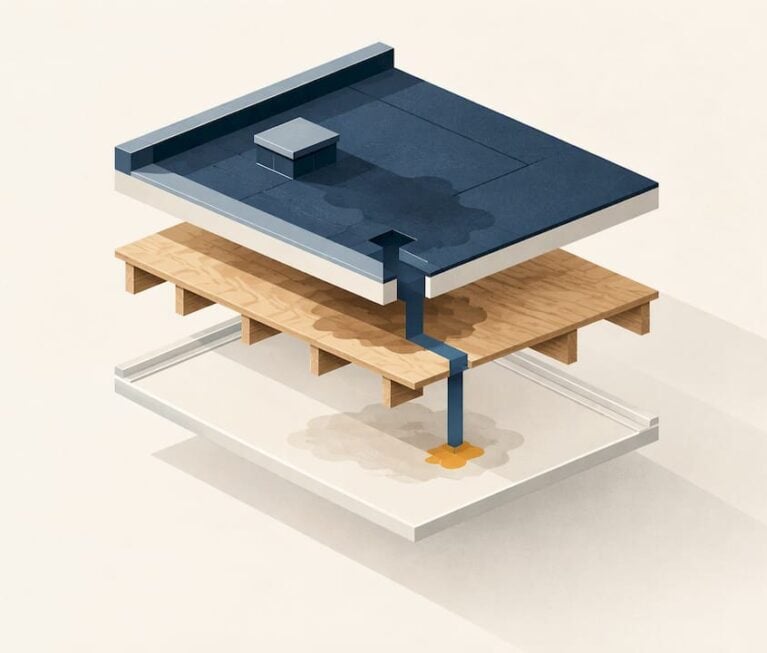
A failing roof drain rarely stays a drain problem. Water that cannot leave the roof ponds, loads the structure, and finds its way through seals, flashing and seams into the building. The best repair is a full one: clear the blockage, fix the damaged part, and correct whatever let water collect in the first place. That is a job for a licensed, insured roofing contractor, and it is the way we approach drain work at GenX Roofing for homes and commercial buildings in Florida and Missouri.
This guide explains what a roof drain does, how to spot trouble early, what usually causes failures, how repairs differ by problem, and when a drain issue points to something bigger.
TL;DR
- Roof drains, scuppers and gutters carry rain off the roof. When they clog, crack or leak, water ponds, adds weight and gets into the building.
- Water that stays on a low-slope roof for 48 hours or more is classed as ponding, and it is a signal to act.
- Small amounts of debris cut drain capacity sharply, so a quick cleaning is not the same as a repair, and a repair is not the same as fixing the cause.
- Seals, flashing and drain connections are the usual leak points, and the visible stain is often not directly under the entry point.
- Inspect twice a year and after major storms, and bring in a roofer when ponding, repeat leaks or interior stains appear.
Table of Contents
- What a roof drain does and why it matters
- Signs your roof drain needs repair
- What causes roof drains to fail
- How drain problems are repaired
- Parapets, scuppers and the walls around them
- What you can check yourself, safely
- When drain trouble means a bigger roof problem
- How many drains should a roof have?
- Preventing repeat clogs and leaks
- Our perspective
- Get your roof drains inspected and repaired
- FAQ
- Sources
What a roof drain does and why it matters
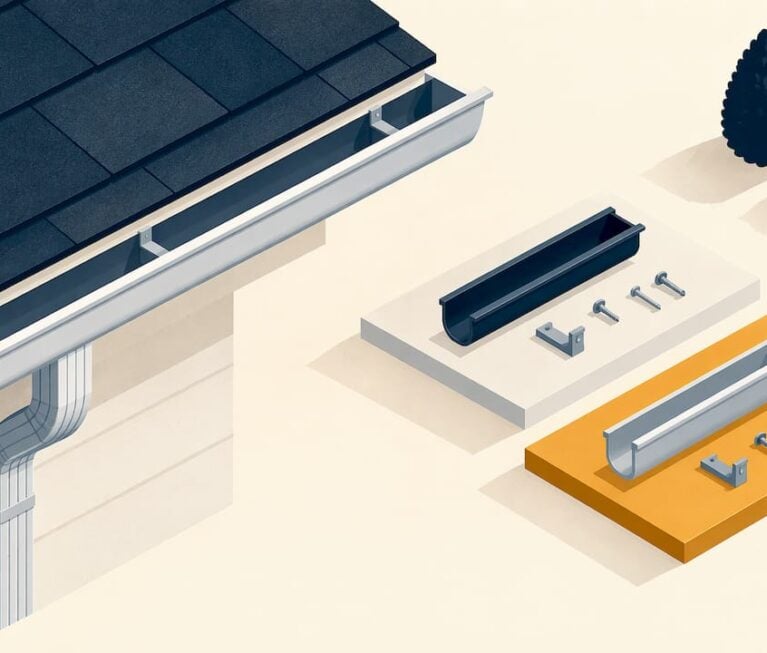
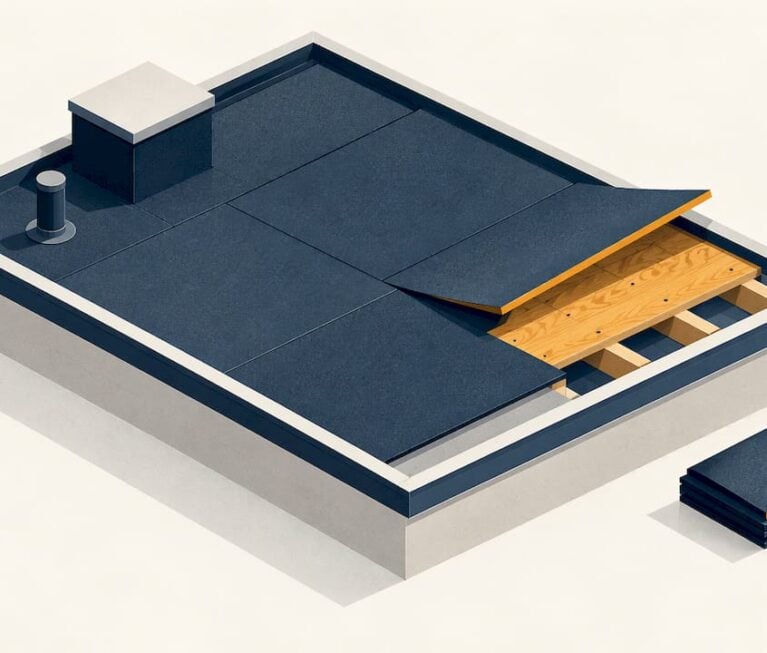
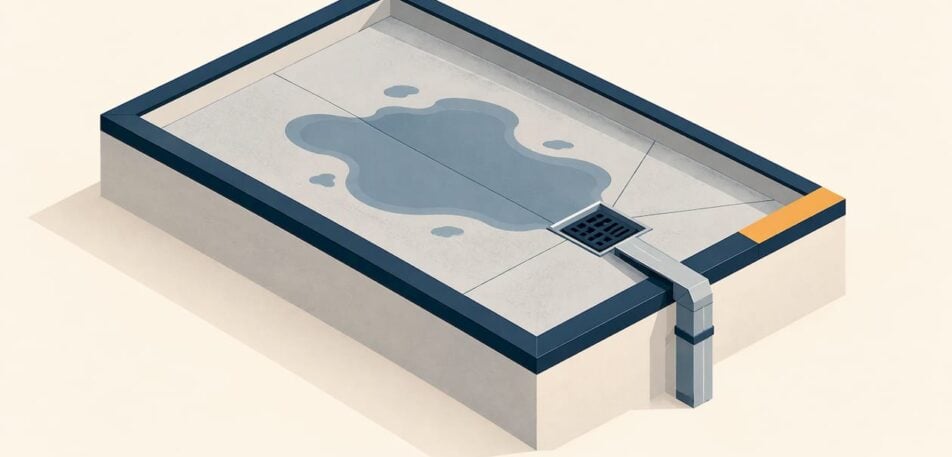
A roof drain is the opening where water leaves a flat or low-slope roof, usually connected to piping inside the building. A scupper is an opening through a parapet or edge wall that lets water spill out. Gutters and downspouts do the same job on pitched roofs.
The Insurance Institute for Business & Home Safety (IBHS) explains that roof drains and gutters carry rainwater away so it does not back up into the roof and cause interior damage. They also move melting snow off the roof, which reduces the load on the structure. In Florida the heavy-rain side matters most. In Missouri, storms, leaves and freeze-thaw cycles all play a part.
Drainage is also a structural issue, not just a leak issue. HUD’s roof standard notes that restricted drainage with ponding can add weight to a roof and may indicate structural failure.
Signs your roof drain needs repair
Some signs show up on the roof, others far from it. Look for these:
- Standing water. Water that remains a day or two after rain is a red flag. HUD’s 2023 inspection standard treats debris that limits flow, or ponding covering roughly 25 square feet above a drain, as restricted drainage.
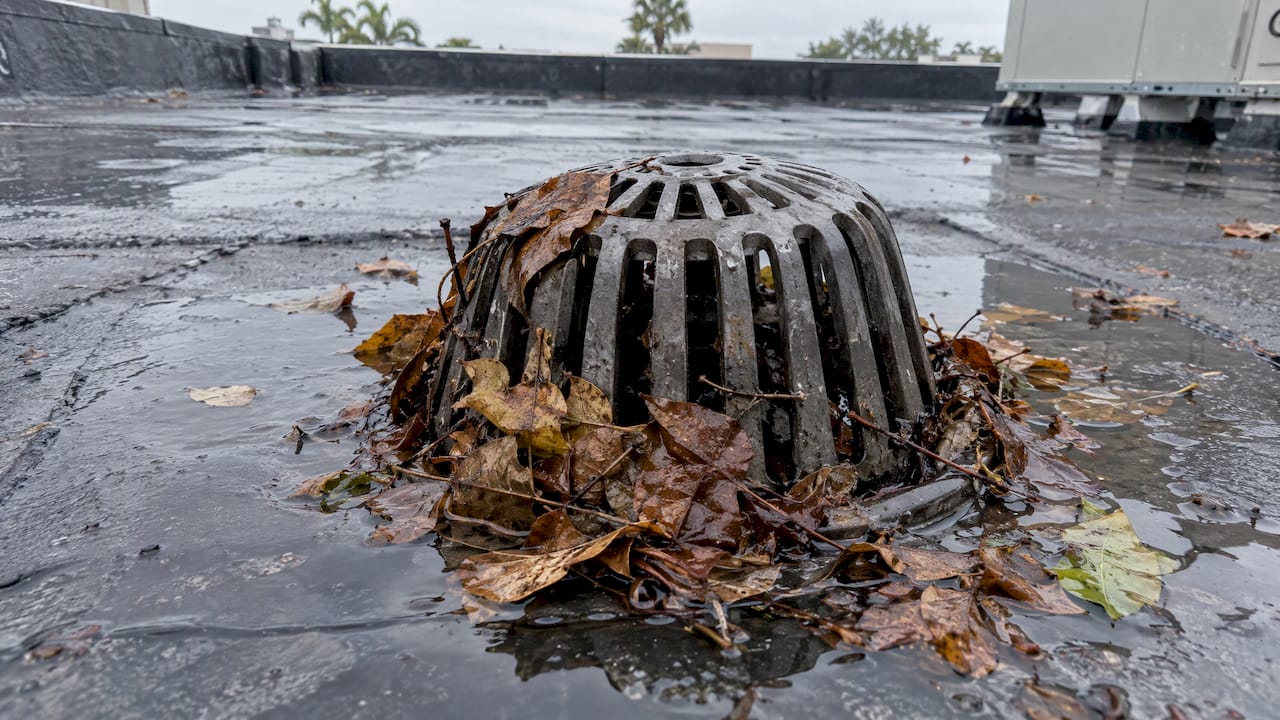
- Debris around the drain. Leaves, soil, shingle granules and nests collect at strainers and scupper openings.
- Water-stained ceilings or walls. Interior damp patches, mold or stained masonry can trace back to failed drainage, sometimes well away from the drain itself, as the building-conservation guidance from Scotland’s Engine Shed points out.
- Overflowing gutters or water running down a wall after a normal rain.
- Rust marks or staining at drain bodies, pipes and fasteners.
- Gurgling or slow drawdown in interior drain lines during rain.
A stain on the ceiling is not always directly below the opening. The Canadian Roofing Contractors Association reference manual tells troubleshooters that water often travels inside the roof assembly before it drips, so the entry point may be elsewhere. That is why they begin by asking the owner how long the leak has been present, what the weather was doing and whether it continues after the rain stops. Those same questions help you describe the problem to a roofer. Our guide to roof leak detection covers how the source is traced.
What causes roof drains to fail
Most failures trace back to one of five causes.
Debris and partial blockage
This is the most common cause, and the effect is bigger than it looks. In a laboratory study published by IIBEC, a 6-inch roof drain with no secondary drainage saw water depth at the drain rise from 4.4 inches to 5.4, 6.3 and 9.8 inches as debris blocked 25%, 50% and 75% of the strainer openings. Even a modest layer of leaves changes how deep the water gets.
Not enough slope
Flat roofs are never truly flat. The Asphalt Roofing Manufacturers Association’s technical bulletin, co-signed by the National Roofing Contractors Association and IIBEC, defines ponding as water remaining 48 hours or longer and recommends a slope of usually at least ¼ inch per foot so the roof drains freely. It also warns that ignoring ponding may shorten the life of the membrane.
Poor flashing or failed seals at the drain
The National Association of Certified Home Inspectors’ roof inspection manual lists the common low-slope drainage problems: inadequate slope, poor flashing between the roof covering and the drain, blockage from leaves and debris, and internal pipe failure from corrosion. Canada’s national research council notes in its flat-roof inspection digest that seal failure around drains and projecting pipes is often obscure and hard to detect, so it takes careful inspection.
Ice, hail and storm debris
The same IIBEC study found that 240 pounds of ice on a 6-inch drain raised the water level from 3.25 inches to 6 inches at 200 gallons per minute of flow. Ice or hail can plug a drain at the worst moment, which matters for Missouri winters and for severe storms in both states.
Older buildings with no overflow
IIBEC’s 2026 drainage design guidance explains that recent building codes require secondary (overflow) drainage as a backup when the primary drains clog, while many older buildings were built with primary drainage only. Those roofs have no margin when a drain fails.
How drain problems are repaired
The repair depends on what failed. The table shows the common problems and what a complete fix involves.
| Problem | What a proper repair addresses |
|---|---|
| Clogged drain, scupper or gutter | Remove debris and check the line flows freely, so the cause of the buildup (overhanging trees, loose granules) is also addressed |
| Cracked or damaged strainer or drain body | Replace the damaged part so water enters the drain and not the roof layers |
| Failed seal or flashing at the drain | Rebuild the flashing and sealant so the membrane and drain are watertight, with base flashing high enough to prevent backflow |
| Ponding from low spots | Correct the cause: drains set too high, missing low-point drains or insufficient slope |
| Damaged gutters, fascia or soffit | Repair or replace the parts so water is carried away from the wall |
| Blocked internal drain line | Clear the line, which may need plumbing equipment beyond the roof surface |
Two points deserve emphasis.
Flashing is where many drain leaks start. Base flashing must extend high enough to stop water running back over it, according to the NRC digest. A bead of sealant over an aging flashing is a short-term patch. Our flashing and sealant repair covers the areas around vents, chimneys and other roof penetrations, and the same attention to detail applies at a drain.
Ponding sometimes needs more than a drain fix. The same digest says that when water ponds because drains are set too high, pumps can remove it or, in extreme cases, new drains must be placed at the low points. The ARMA bulletin lists tapered insulation, properly placed drains and scuppers, and crickets (small sloped sections that steer water around rooftop equipment) as the long-term answers.
If your roof is modified bitumen, see our overview of modified bitumen roof repair, since drain flashing on those membranes is a common repair point.
Parapets, scuppers and the walls around them
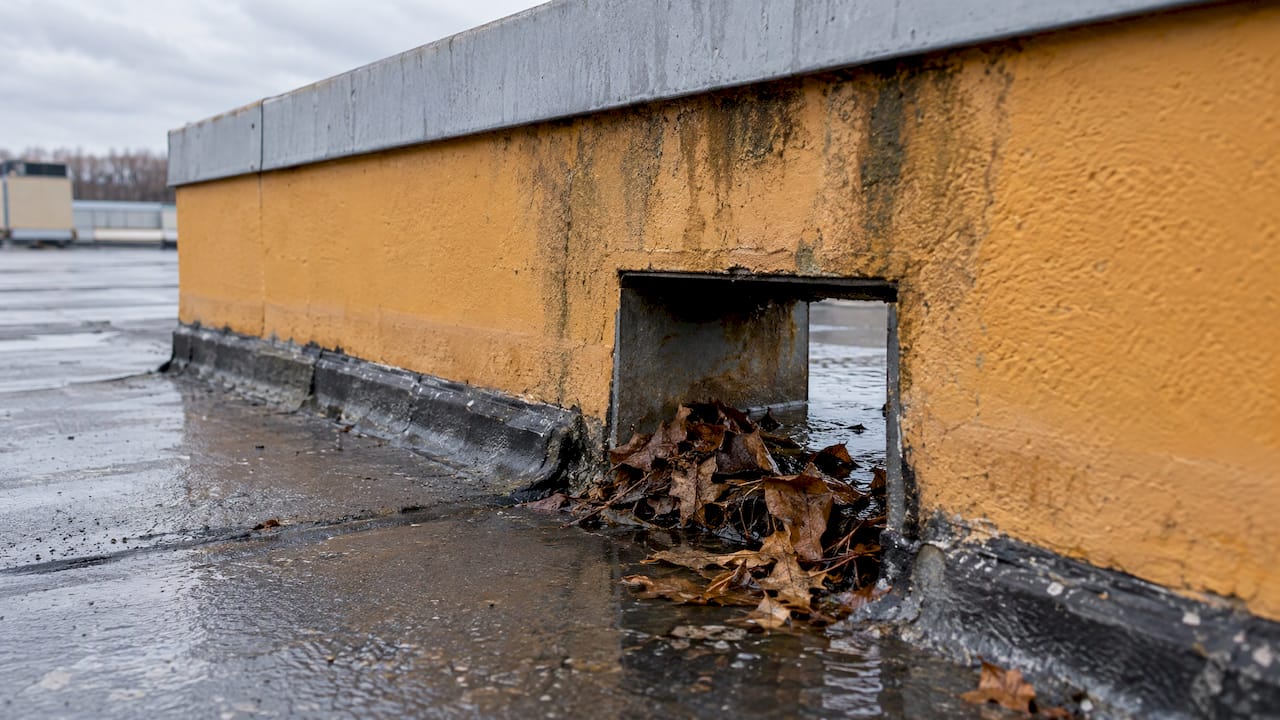
On commercial buildings, drainage often runs through a parapet, the short wall around the roof edge. A blocked scupper makes water rise against that wall, and any weakness in the wall, coping or flashing becomes a leak. If you see staining below the roofline or damp interior walls, the wall detail may be involved as well as the drain. This overview of parapet wall leaks and lasting repairs explains how those checks work on the masonry side, which a roofer will weigh alongside the drain itself.
What you can check yourself, safely
You do not need to climb onto the roof to learn a lot, and you should not. Roofs are fall hazards, wet surfaces are worse, and a drain problem often goes with a weak or deteriorated surface.
- Look from the ground or a safe access point such as a roof hatch. Note standing water, debris at scupper openings and overflow marks on walls.
- Check after rain. Photograph any water still sitting 48 hours later, with the date. This is the ARMA threshold for ponding.
- Walk the interior. Look at ceilings, wall tops and areas below drain lines for new stains, bubbling paint or musty smells.
- Check gutters and downspouts from a stable position at ground level. Water should leave through the downspout and land away from the foundation.
- Write down what you see. When it started, where, and what the weather was.
These notes make a roofer’s inspection faster and more accurate. The repair itself, including getting onto the roof, should be handled by a licensed and insured crew.
When drain trouble means a bigger roof problem
Call a roofing professional promptly when you notice any of these:
- Water that ponds again after the drain has been cleared.
- Interior leaks or stains that return after a patch.
- Sagging, soft spots or visible deflection in the roof surface.
- A drain or scupper that has cracked, shifted or pulled away from the roof.
- A building with only primary drains and a history of overflowing.
- Damage after a major storm, hail or freezing weather.
The urgency is real. FM Global’s roof inspection guidance says clogged drains can lead to roof collapse and should be corrected promptly. Where the water has also soaked the layers beneath the membrane, the repair may extend to the deck. See what roof decking replacement involves. If the membrane is near the end of its life, our guide to commercial roof replacement explains costs, timing and process.
How many drains should a roof have?
There is no single number. It depends on the roof area, the local design storm and the drain size, and the local building code sets the minimums. As one example of how seriously design standards take it, Duke University’s construction standards require drains at least 4 inches in diameter, at least two per major roof section, spacing no more than 40 feet apart and a slope of at least ¼ inch per foot to the outlets. Those are one owner’s specifications, not a universal rule, but they show the scale: a large roof with a single drain is a risk.
If your roof has too few drains, drains in the wrong place or no overflow, the fix is a design question. A roofer who inspects the whole roof can recommend where added or relocated drains would help.
Preventing repeat clogs and leaks
Maintenance costs less than repair, and the guidance is consistent.
- Twice a year, plus after storms. IBHS recommends inspecting and cleaning the roof drainage system at least twice a year, in spring and fall, more often where tree leaves cause clogs, and after any roof-related contractor work. FM Global likewise recommends inspections at least semiannually and before and after storms with high winds, heavy rain or hail.
- Trim trees back from the roof and clear loose objects and granules from gutters.
- Check for long-term standing water, and for leaks in the drainage system after severe weather.
- Direct downspouts away from the building.
- Connect rooftop HVAC condensate lines to proper drains rather than letting them discharge onto the roof, as ARMA advises.
- Use leaf guards at drains where debris is a regular issue, a step the NACHI manual recommends along with ongoing monitoring.
For homes, our roof maintenance best practices give a seasonal routine. For businesses, the commercial roof inspection schedule and checklist and commercial roof repair tips for Florida businesses set out what to review and when.
Our perspective
Drain repairs go wrong when the job stops at the symptom. Clearing a scupper feels like a fix, but if the water returns because of a low spot, a worn flashing or a drain that was never sized for the roof, the next storm reopens the same problem.
That is why we start from the whole roof. We have more than 20 years of roofing experience and build for the weather of Florida and Missouri, from hurricane rain to Midwest storms. A drain is a weak point in that system, so we look at the drain, its flashing, the surrounding membrane and the way water travels toward it.
We also believe in plain communication. You should know what we found, what the repair covers and what a longer-term upgrade would do, with an honest estimate before the work begins. Our crews are licensed and insured, and we handle residential and commercial roofs, so a homeowner with overflowing gutters and a property manager with a flat roof get the same careful approach.
For commercial roofs, we find that recurring drainage trouble is best handled through a preventative maintenance plan, with inspections scheduled around the seasons and storms, so small issues are corrected before they become interior damage.
the author
Get your roof drains inspected and repaired
If you see ponding, overflow or stains, we can inspect the drains, flashing and surrounding roof and tell you what the repair should cover. Our roof repair services include emergency leak detection and repair, storm and wind damage restoration, flashing and sealant repair, gutter cleaning and water drainage solutions, and fascia and soffit repairs. For commercial properties, we offer preventative maintenance plans and roof replacement so drainage is checked on a schedule.

We serve homes and businesses in Florida and Missouri. Visit GenX Roofing to request an inspection.
FAQ
What is the roof water drain called?
On a flat or low-slope roof, the opening is called a roof drain, with a strainer or dome over it. A scupper is an opening through a parapet or edge wall, and a leader or downspout carries the water down. On pitched roofs, gutters and downspouts do the job.
How many drains does a roof need?
It depends on roof area, drain size, the local design storm and the building code. Large flat roofs generally need multiple drains, and recent codes call for overflow drainage as a backup. A roofer can check whether your layout meets local requirements.
How do I stop a roof leaking during heavy rain?
Stay off the roof. From inside, move belongings, catch the water and photograph the damage. Then call a roofer for emergency leak detection and repair. Our emergency repair service is built for this situation.
How often should roof drains be cleaned?
IBHS recommends at least twice a year, in spring and fall, and more often if trees drop leaves on the roof. Add an inspection after severe storms or after any contractor work on the roof.
Does commercial roof drain repair differ from residential?
Yes, mostly in scale and design. Commercial roofs often use internal drains, scuppers and parapets, and many must handle large volumes of water. The checks are similar, but a commercial repair often involves the membrane and the drainage design. See our commercial roof leak repair services.
Sources
- IBHS: Roof Drainage for Commercial Buildings
- HUD NSPIRE Standards v2.1, Roof Assembly
- HUD NSPIRE Standard, Roof Assembly (2023)
- Engine Shed: Rainwater Goods
- Canadian Roofing Reference Manual: Locate the Problem Area
- IIBEC: The Effects of Debris on the Flow Rates of Roof Drains and Scuppers
- ARMA Technical Bulletin: Effects of Ponding Water on Low-Slope Roof Systems
- NACHI: How to Perform Roof Inspections
- NRC Canadian Building Digest CBD-179
- IIBEC: Key Considerations for Roof Drainage Design
- FM Global DS 1-32: Inspection and Maintenance of Roof Assemblies
- Duke University Construction Standards: Roofing
- Parapet Wall Leaks: Causes, Checks and Lasting Repairs
Recommended
- How to Recognize the Signs of Roof Damage Before It’s Too Late
- Roof Leak Repair: What You Need to Know
- Find the Best Roof Repair Contractor for Your Home
- Roof Flashing Repair: Causes, Costs and When to Replace