 Post by
A professional roof maintenance service is a scheduled program in which a qualified inspector visits your roof on a fixed cadence, clears debris, checks every vulnerable detail, fixes small problems on the spot and gives you a written report. For homeowners, property managers and commercial owners, that routine is how a small defect gets fixed before it becomes a leak. GenX Roofing offers roof inspection and maintenance plans and commercial preventative maintenance plans for properties in Florida and Missouri, where hurricanes and storms test roofs every year.
TL;DR
- A maintenance service means scheduled inspections, cleaning, minor repairs and a written report with photographs, not just a quick look from the ground.
- The industry standard is two inspections a year, in spring and fall, plus one after severe weather.
- Flashings, vents and other penetrations are where most leaks start, so that is where a good visit spends its time.
- Timing is what saves money: a cheap fix found early costs far less than water damage found late.
- Climbing, flashing work and sealing penetrations belong to a licensed, insured roofer.
Table of Contents
- What a professional roof maintenance service includes
- How often to schedule maintenance
- Signs your roof needs attention before the next visit
- What you can do yourself and what to leave to a licensed roofer
- Residential and commercial maintenance differ
- What roof maintenance costs
- How to choose a roof maintenance provider
- Routine upkeep elsewhere in your property
- Promo
- Our perspective
- FAQ
- Sources
What a professional roof maintenance service includes
According to the National Roof Certification and Inspection Association, a residential maintenance program is a service agreement with visits on a fixed schedule, annual or semi-annual. A complete visit covers:
- Debris removal from the roof surface, valleys and low-slope sections.
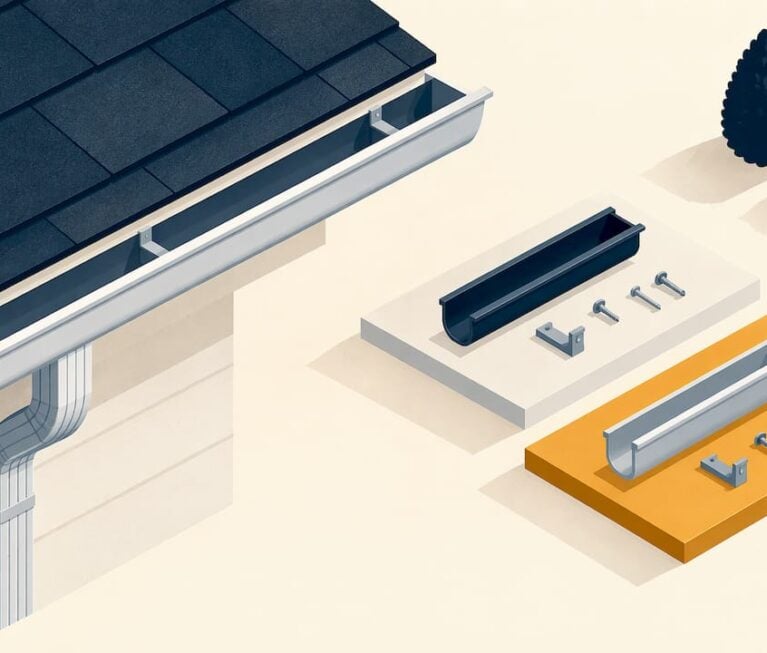
- Gutters and downspouts cleared and checked for pitch and attachment.
- Every penetration examined: vents, chimneys, skylights, pipe boots and rooftop equipment.
- Flashings and transitions checked for lifting, separation and failed sealant.
- The roof covering checked for loose or damaged units, exposed fasteners and granule loss.
- Minor corrections on the spot, such as reseating a popped nail.
- A written report with photographs, findings and recommended follow-up.
Work beyond routine maintenance is quoted separately and approved before it happens. That matters to you as an owner: you see the finding, the recommendation and the cost before anything is done.
GenX’s offer list includes the pieces this kind of visit relies on: leak detection and repair, flashing and sealant repair around vents and chimneys, shingle, tile or metal panel replacement, gutter cleaning and drainage solutions, and fascia and soffit repairs. If an inspection finds something, the same team can address it.
Why flashings and penetrations get the most attention
The Roofing Contractors Association of British Columbia notes in its maintenance guide that flashings, gum pans, gravel stops and other roof penetrations are the source of most leaks. A shingle or membrane field is a continuous surface. Every vent, chimney and skylight interrupts it, and each interruption depends on sealant and metal that age in sun, wind and heavy rain.
How often to schedule maintenance
The National Roofing Contractors Association recommends inspecting residential roofs at least twice a year, preferably spring and fall, with extra inspections after severe weather such as a hurricane, tornado or hailstorm. GAF’s scheduled maintenance checklist agrees: at least once a year, twice is optimal, and again after hail, heavy rain or high winds.
For older roofs, the NRCA’s Professional Roofing guidance says inspect more often and before harsh weather seasons. In Florida that means before hurricane season. In Missouri it means before spring storms and again before winter.
Gutters and debris between visits
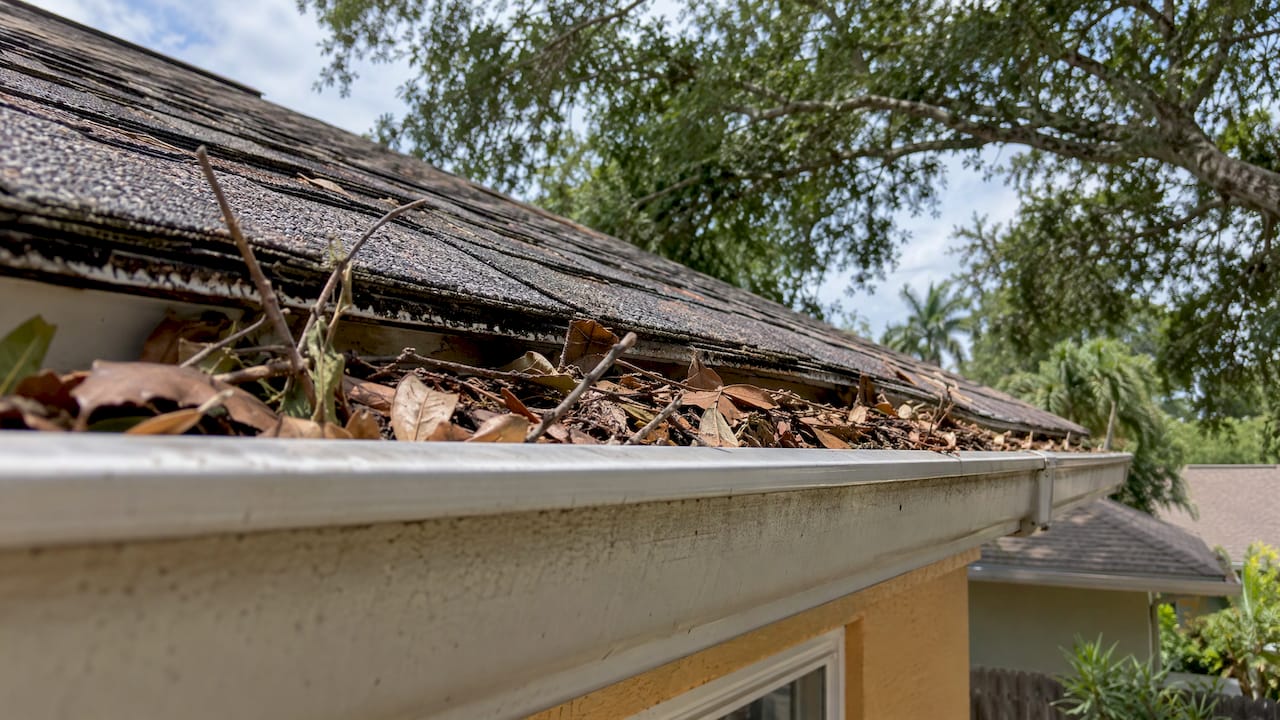
Owens Corning advises cleaning gutters every fall and removing organic debris from the roof at least twice a year, more often under heavy tree cover. Clogged gutters hold water against the roof edge, and standing debris holds moisture against the covering. A maintenance visit that includes gutter work keeps this on the schedule instead of on your to-do list.
After a storm
After hail or high wind, damage can exist without any drip. NRCIA lists new damage after hail or wind as a reason for a professional look even when nothing is leaking. Our guide to a hail damage roof inspection explains what is checked.
Signs your roof needs attention before the next visit
Call for an inspection sooner if you notice any of the following, as listed by NRCIA:
- Stains, bubbling paint or soft spots on ceilings and upper walls
- A musty smell, damp insulation or daylight visible in the attic
- Shingle granules collecting in gutters or at the bottom of downspouts
- Missing, cracked, curled or lifted shingles, tiles or panels
- Loose or rusted flashing around chimneys, skylights, vents or walls
The visible sign rarely shows the cause. Water in a bedroom ceiling can enter at a vent ten feet uphill, which is why tracing the entry point is skilled work. If you are already seeing a stain, our page on roof leak detection shows how the source is found. For a fuller list, see how to recognize when your roof needs maintenance.
What you can do yourself and what to leave to a licensed roofer
IKO lists ground-level tasks that owners can handle: visual checks from the ground, clearing gutters, trimming nearby branches and watching the attic for moisture. Climbing on the roof, replacing shingles, repairing flashing, sealing penetrations and storm damage repair are work for a licensed professional, because of the height, the tools and the technical knowledge involved.
A licensed and insured crew also means the work on your roof is done by people covered for it. For homes, that is the practical line: you watch and report, and the roofer climbs, repairs and documents.
Residential and commercial maintenance differ
The maintenance routine changes with the roof type. The Institute for Catastrophic Loss Reduction recommends checking:
| Roof type | What to look for |
|---|---|
| Steep-slope asphalt shingle | Curling, loose or torn shingles |
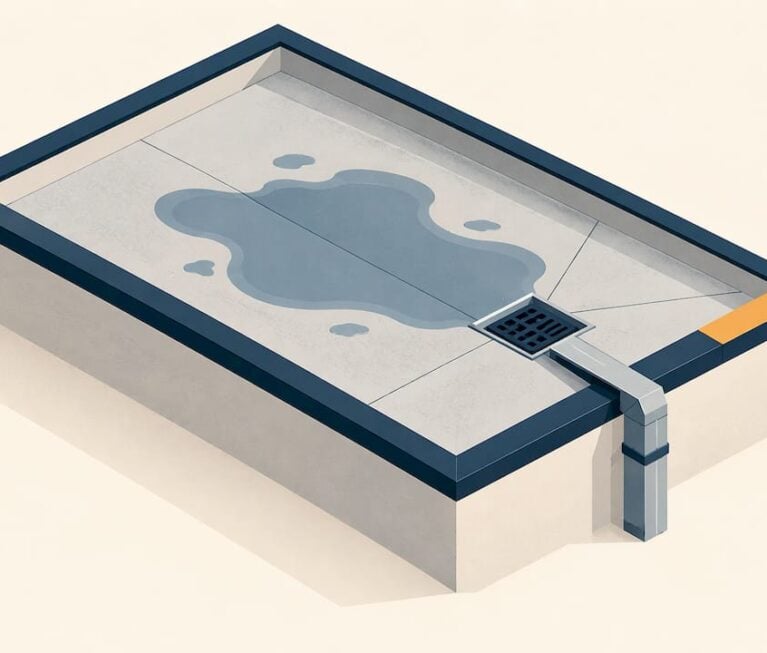
| Low-slope roofs | Long-term standing water, which can make membranes brittle |
| Ballasted systems | Uneven rock and bare spots |
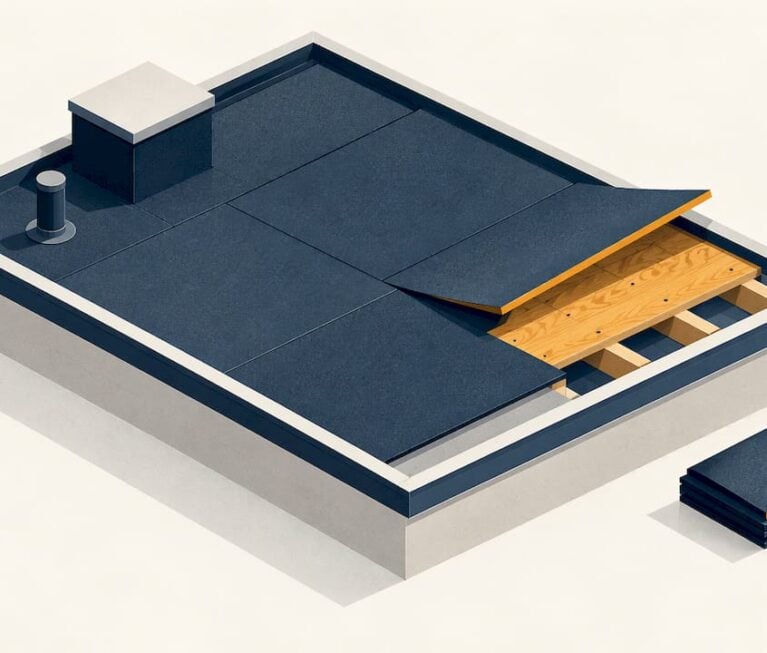
| Built-up and modified bitumen | Blisters, cracks, tears, punctures, lost gravel |
| Single-ply membranes | Tears, worn seams, backing-out fasteners, brittleness |
NRCIA notes that standard residential programs are usually written for asphalt shingle and metal roofs up to about a 6/12 slope, while slate, tile and wood shake need custom agreements. Metal roofs need inspection at least annually and after severe weather, according to a metal roof manufacturer’s maintenance manual, with fall protection as OSHA requires. See our pages on metal roof repair and modified bitumen roof repair.
For property managers and business owners, a leak is rarely only a roof problem. The NRCA points out that a leak’s cost always exceeds the repair itself once unseen building damage, lost business revenue and possible lawsuits are counted. That is why commercial roofs are usually put on a written plan. We cover the schedule and checklist in commercial roof inspection and the regional picture in preventative maintenance for commercial roofs in Florida.
What roof maintenance costs
GenX does not publish prices for maintenance plans, so the figures below are published national ranges, not quotes. The Roofing Brief’s 2026 guide puts a typical single-family tune-up at $250 to $650, with most standard visits between $325 and $475 and inspection-only visits between $150 and $300. Story count, slope, access and written scope move the price most.
For commercial roofs, Flat Roof Report puts inspection-only programs at $0.04 to $0.12 per square foot per year, or $800 to $2,400 annually for a 20,000 square foot roof with two inspections. Adding minor repairs, drain clearing and sealant work brings it to $0.10 to $0.21 per square foot.
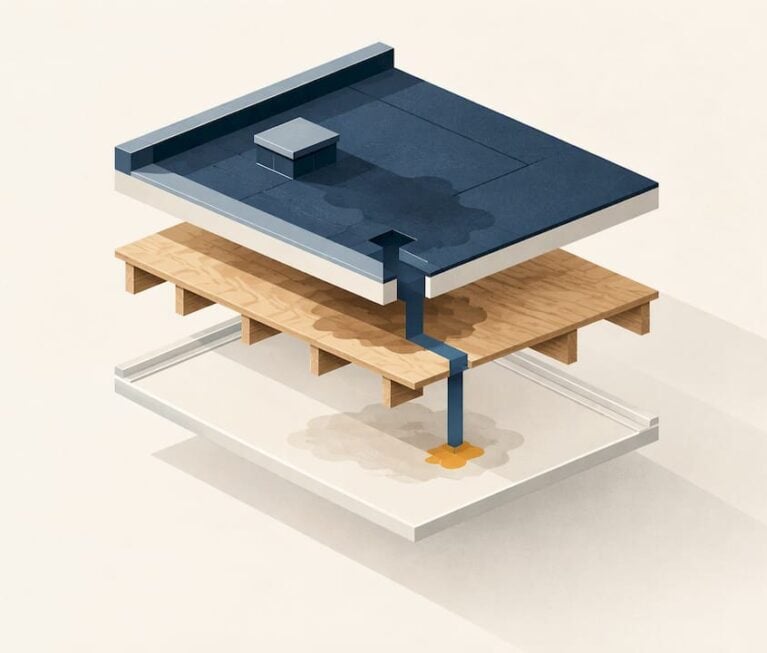
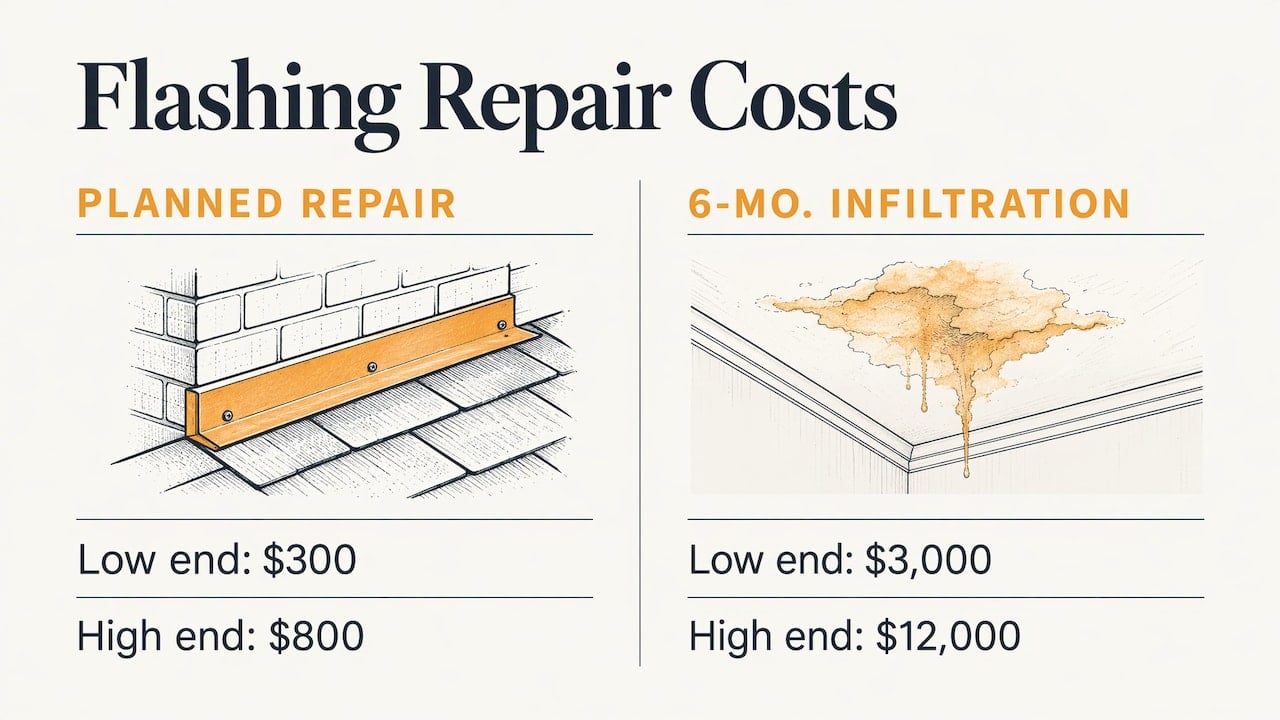
The same source reports that a planned flashing repair costs $300 to $800, while the same failure found after six months of water infiltration typically costs $3,000 to $12,000. Treat these as ranges to compare against your own written scope. As NRCIA frames it, a brittle pipe boot is a cheap fix in March and a ceiling repair in November: the cadence is what saves money.
How to choose a roof maintenance provider
Look for the things that make a visit useful rather than cosmetic:
- A written scope matching the list above: gutters, penetrations, flashings, covering and minor repairs.
- A photo report with findings, locations and recommended corrective actions. The NRCA recommends that owners receive the problems found, their locations and a repair cost estimate.
- Quoted-then-approved repairs for anything beyond routine work.
- License and insurance for the work done on your roof.
- Experience with your climate and roof type. GenX works in Florida and Missouri and handles both residential and commercial properties.
Our guide to finding a roof repair contractor goes deeper on what to expect from estimates.
Routine upkeep elsewhere in your property
Maintenance works the same way across building systems: scheduled attention prevents the emergency. If you want a parallel, an electrical maintenance subscription is built on the same logic of catching small faults before they become urgent ones.
Promo
If you own a home, manage properties or run a commercial building in Florida or Missouri, GenX Roofing can set up inspection and maintenance for your roof. Our team is licensed and insured, and our estimates are meant to be honest and clear. Start with our roofing services, or see commercial preventative maintenance plans.
Our perspective
A roof rarely fails all at once. It fails at a sealant line, a vent boot or a lifted flashing, and those details are cheap to correct when someone is looking at them on a schedule.
We build our approach around that idea. Florida roofs face hurricanes and Missouri roofs face severe storms, so we believe durability comes from good installation and then regular attention. Maintenance is how an owner keeps what a good roof was built to do.
What we want you to have after a visit is clarity: what we found, what it means and what, if anything, needs doing. Transparent communication and honest estimates are how we work with homeowners, property managers and commercial owners alike.
the author
FAQ
How often should a roof be professionally maintained?
At least twice a year, in spring and fall, is the NRCA’s recommendation, with another inspection after severe weather. Older roofs benefit from more frequent checks.
Is preventive roof maintenance the same as a roof repair?
No. Maintenance is scheduled inspection, cleaning and small corrections to prevent problems. Repair addresses damage that already exists. A maintenance visit often includes minor fixes, and larger findings are quoted separately for your approval.
What should a maintenance report include?
A useful report lists the problems found and their locations, recommended corrective actions and a cost estimate, ideally with photographs, as described by the NRCA and NRCIA.
Does a maintenance plan make sense for a commercial roof?
Yes. Commercial roofs carry the added cost of business interruption and building damage when they leak. Flat Roof Report cites a study of 1,200 commercial roofs in which semi-annual programs averaged $0.14 per square foot a year in roof costs versus $0.52 without one.
Sources
- Residential roof maintenance program: What to expect, NRCIA
- Got Leaks? What your roof isn’t telling you, NRCIA
- Maintaining residential roof systems, NRCA
- Professional Roofing, September 2001, NRCA
- Scheduled Maintenance Checklist, GAF
- Roof Maintenance Guide, RCABC
- Roof Maintenance Checklist, Owens Corning
- Seasonal Roof Maintenance Tips for Homeowners, IKO
- How to inspect and maintain your commercial roof, ICLR
- Roof Owner’s Operation and Maintenance Manual, McElroy Metal
- Annual Roof Tune-Up Cost 2026, The Roofing Brief
- Commercial Roof Maintenance Program, Flat Roof Report
- The value of an electrical maintenance subscription
Recommended
- Roof Repair
- How to Recognize When Your Roof Needs Maintenance
- Ensure Longevity with Expert Roof Inspection Services
- Keep Your Roof in Top Condition: Expert Roof Maintenance Tips