 Post by
A hail damage roof inspection has two parts: a safe look from the ground right after the storm, then a professional inspection that documents what hail actually did to the roof. Hail damage is often hard to see from the yard, and the steps you take in the first days affect your repair options and your insurance claim. This guide covers what to look for, what not to do, what an inspector records, and how repair or replacement gets decided.
TL;DR
- Inspect from the ground first. Use binoculars or your phone’s zoom, and leave roof climbing to trained professionals.
- Signs that point to hail include dented gutters, vents and AC fins, fresh debris below the roof edge, and shingle bruises you can feel.
- Report damage to your insurance company promptly, make temporary repairs to stop further damage, and be cautious about unsolicited offers to inspect your roof.
- A proper professional inspection separates hail damage from age, weathering and mechanical damage, and records it with labeled photos.
- Repair can mean a spot fix, recoating or full reroofing. The choice follows the extent of damage and the cost of repair versus replacement.
Table of Contents
- Why a hail inspection is worth doing even when the roof looks fine
- Step 1: Start with a safe check from the ground
- Step 2: Tell hail damage apart from lookalikes
- Step 3: What to do right after you find possible damage
- What a professional hail damage roof inspection covers
- Different roofs, different hail damage
- How hail damage gets repaired
- Our perspective: inspect early, document well, repair to fit the damage
- Get a hail damage inspection from GenX Roofing
- Preparing before the inspector arrives
- FAQ
- Sources
Why a hail inspection is worth doing even when the roof looks fine
Hail does not always leave obvious holes. On asphalt shingles, the damage can be a bruise: the mat underneath is fractured while the surface looks mostly intact. Insurance guidance describes hail divots that are black or soft to the touch, like the bruise on an apple, along with granule loss and a shiny asphalt or mat surface. IBHS, a research organization funded by insurers, also notes that a bruise can usually be felt on real hail impacts on shingles.
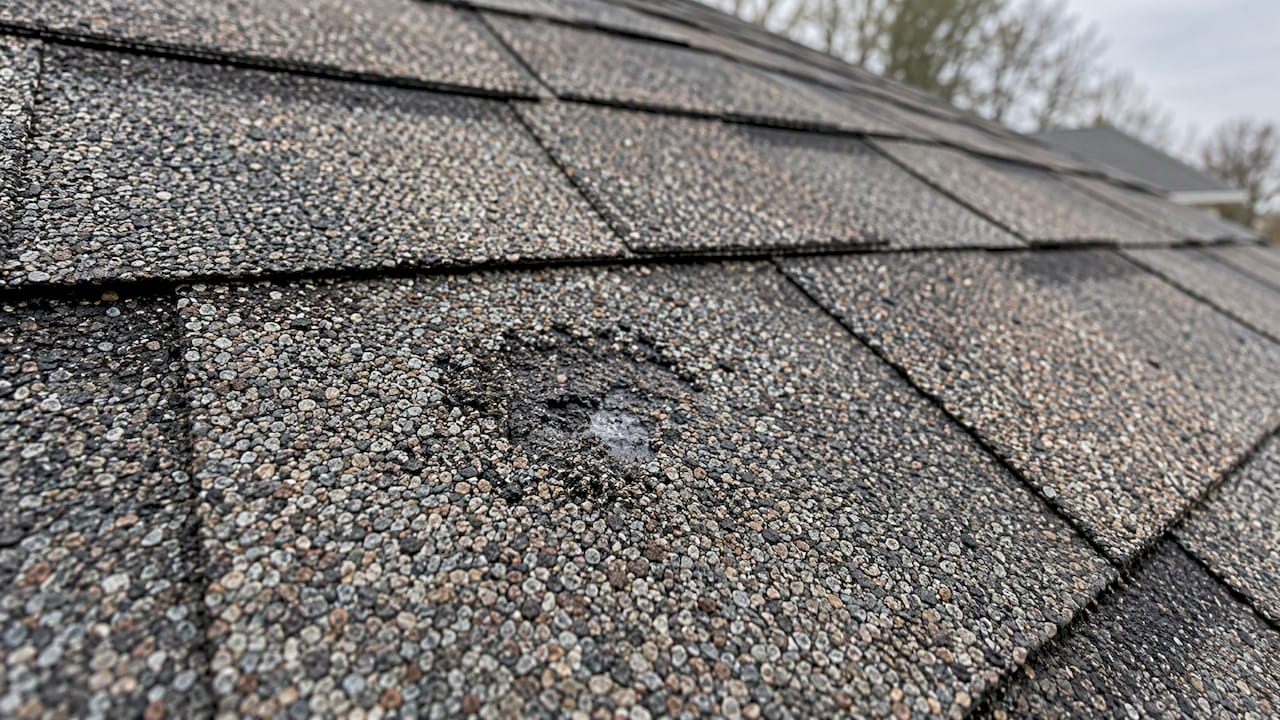
That is why a roof that seems fine from the driveway can still have hidden damage. A roof that has lost protective granules or has fractured shingles ages faster and may leak later, often after the window for a clean insurance claim has narrowed.
Step 1: Start with a safe check from the ground
The National Roofing Contractors Association (NRCA) advises that storm damage inspections be done from the ground and strongly discourages property owners from climbing onto roofs. Wet shingles, loose granules and steep pitches make a fall far more likely than most people expect.
If you do have any reason to use a ladder, for example to reach a low porch roof, OSHA’s guidance recommends a 4:1 ladder angle with the ladder extending 3 feet above the roof edge, and fall protection on steep roofs greater than 4:12. For a full roof assessment, though, call a professional.
What to look for at ground level
Walk the full perimeter of the property with binoculars or a camera set to zoom. Look for:
- Broken or displaced roofing pieces, such as cracked shingles or shifted tiles.
- Dents or damage to gutters, downspouts, vents and metal chimney parts.
- Broken windows or torn screens.
- Fresh debris, including granules or shingle fragments, below the roof edge.
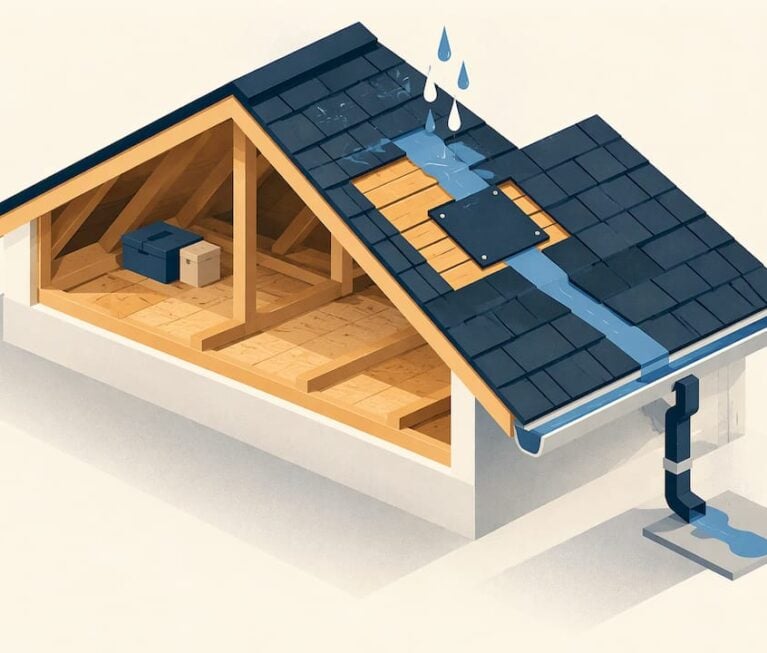
- Water entering the building, such as new ceiling stains or drips in the attic.
A county risk-management checklist for spotting hail damage adds dents in siding and in the fins of roof-mounted AC condensers as indicators. These soft metal surfaces record hail impacts clearly, so they help you judge how large the hail was and how hard it hit.
Check the interior, too
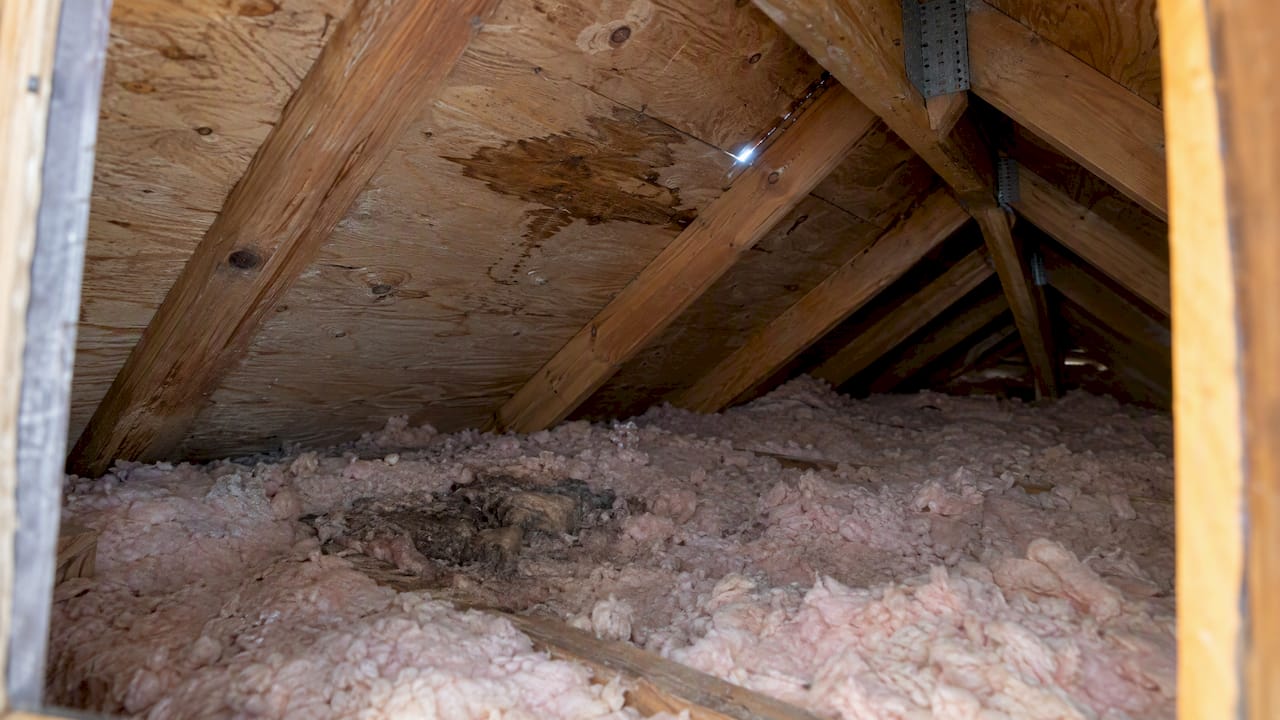
Go into the attic with a flashlight if you can do so safely from the access point. Look for daylight through the decking, damp insulation, dark stains on the underside of the sheathing, or drips after rain. Check the ceilings in the rooms below for fresh, spreading stains. Interior signs often appear days or weeks after the storm, so check again after the next rainfall.
Step 2: Tell hail damage apart from lookalikes
Not every mark on a roof comes from hail. A good inspection exists largely to answer that question, because it decides what is covered and what repair makes sense.
| What you see | Likely cause | What it tells you |
|---|---|---|
| Random dents or bruises scattered across slopes | Hail | Real hail damage typically falls in a random pattern |
| Repetitive, evenly spaced marks | Mechanical damage or a manufacturing defect | Organized patterns usually point away from hail |
| Light spots on metal where dirt or oxidation is missing | Spatter marks | Evidence that hail was present, not structural damage |
| Granules in the gutter with no bruising | Normal aging or weathering | Needs a closer look, but not proof of hail |
| Cracks or curling across the whole roof | Age or poor maintenance | Often a wear issue rather than a storm issue |
Spatter marks are a common source of confusion. IBHS explains that they appear when hail removes accumulated dirt or oxidation from metal surfaces, which signals hail’s presence rather than damage. Dents in metal panels, by contrast, can be permanent, and IBHS notes they may be purely aesthetic, which matters when you decide what repair is worth doing.
If you are unsure whether what you are seeing is storm damage or wear, our guide on recognizing the signs of roof damage walks through the differences.
Step 3: What to do right after you find possible damage
IBHS gives a short, practical order of operations after severe weather:
- Report the damage. Contact your insurance agent or company immediately after the storm. Policies differ on reporting windows and deductibles, so read yours or ask your agent directly.
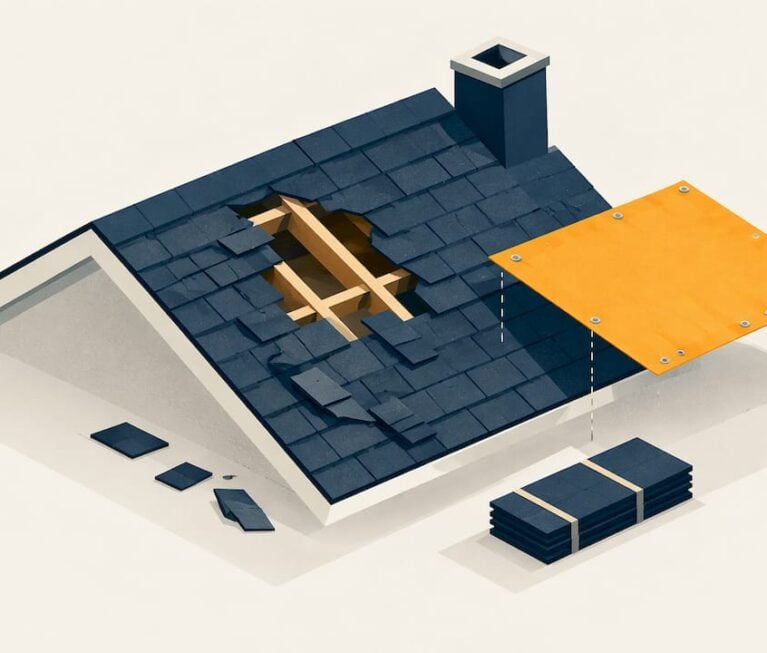
- Prevent further damage. Make temporary repairs, such as tarping an exposed area, and keep receipts.
- Be careful with unsolicited offers. The same IBHS guidance says to beware of unsolicited offers to inspect or repair your roof. Storms bring door-to-door crews, and the person who knocks first is not always the one to trust.
- Photograph everything. Take dated photos of gutters, vents, siding, windows and any interior stains before anything is cleaned up or moved.
- Schedule a professional inspection. Choose a licensed and insured contractor you can verify. Our list of essential questions to ask before hiring a roofing contractor is a good screening tool.
If you own a home in Florida, our article on whether Florida insurance covers roof replacement in 2026 explains how coverage questions usually work in that state.
What a professional hail damage roof inspection covers
A professional inspection is more than a walk across the shingles. According to IBHS’s roof survey practices, a professional survey documents roof conditions and damage patterns, separates hail from aging, weathering, mechanical damage or poor maintenance, and reports the findings. Where needed, it also reviews weather data for the date and location of the storm.
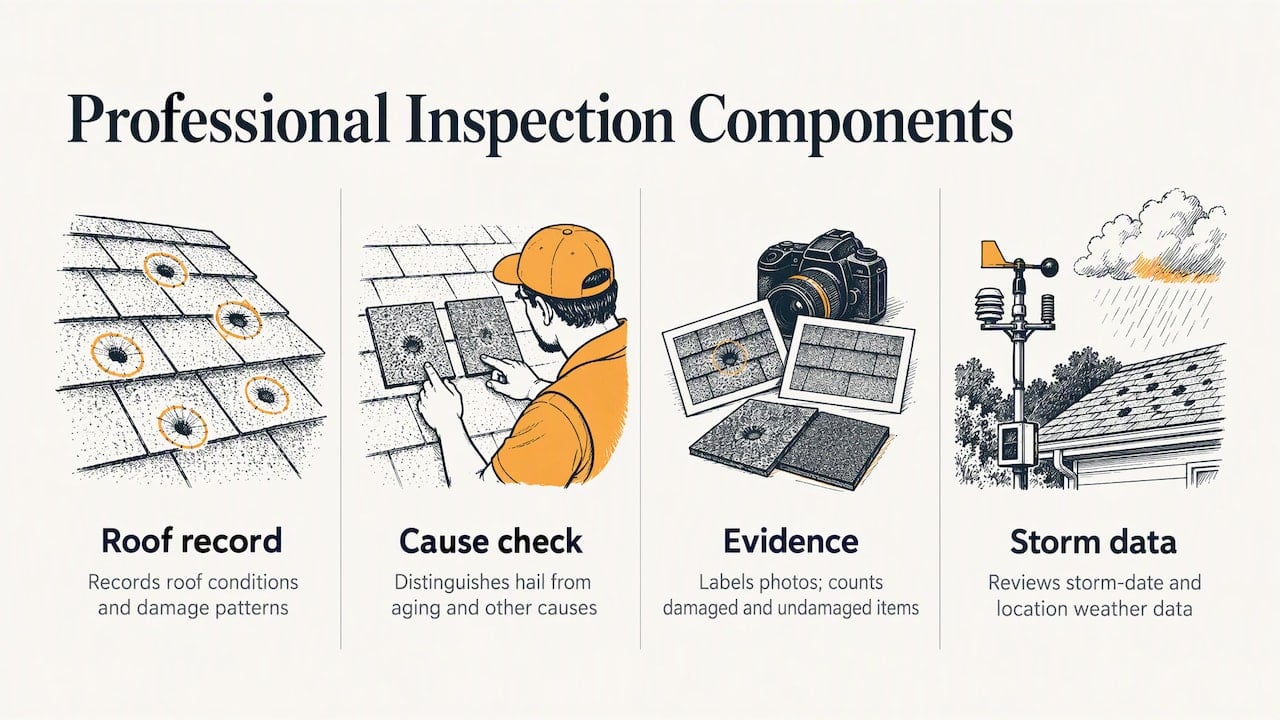
The documentation matters as much as the observations. Good practice includes labeling photographs, and noting the quantities of damaged versus undamaged items and any anomalies that are not related to hail. That record is what you and your insurer can both rely on when discussing scope.
What you should receive
Ask the inspector for a written report that includes:
- Labeled photos of each slope and each damaged component.
- A clear statement of which damage is attributed to hail and which is not, and why.
- Condition notes on flashing, vents, gutters, fascia and soffit, the places where hail and water most often find a way in.
- A recommendation of repair, recoating or replacement, with the reasoning.
If you want a sense of how we approach this work, see our page on expert roof inspection services.
Timing the inspection
There is no single deadline that applies everywhere, because insurance policies set their own reporting terms. The safe approach is to report right away and book the inspection soon after, while the storm evidence is fresh and before rain, debris or later storms blur which event caused what. Interior leaks, missing shingles or exposed decking call for same-day temporary protection and an emergency call.
Different roofs, different hail damage
Asphalt shingles
Look for bruises you can feel, fractured mats, granule loss that exposes the asphalt, and shiny spots. Granules collecting in gutters and at downspout outlets after a storm are a clue worth photographing.
Metal roofing
Metal records hail as dents. Many of those dents are cosmetic, but they still need assessment at seams, fasteners and panel ends, where a small deformation can open a path for water. Coatings that include granules can help minimize the visual impact of dents on some metal products.
Tile and other materials
Tile can crack or break outright, and broken pieces are often visible from the ground. Because tile cracks can be hard to spot and walking on tile can break more of it, this is a roof to leave to an experienced inspector.
Flat and low-slope commercial roofs
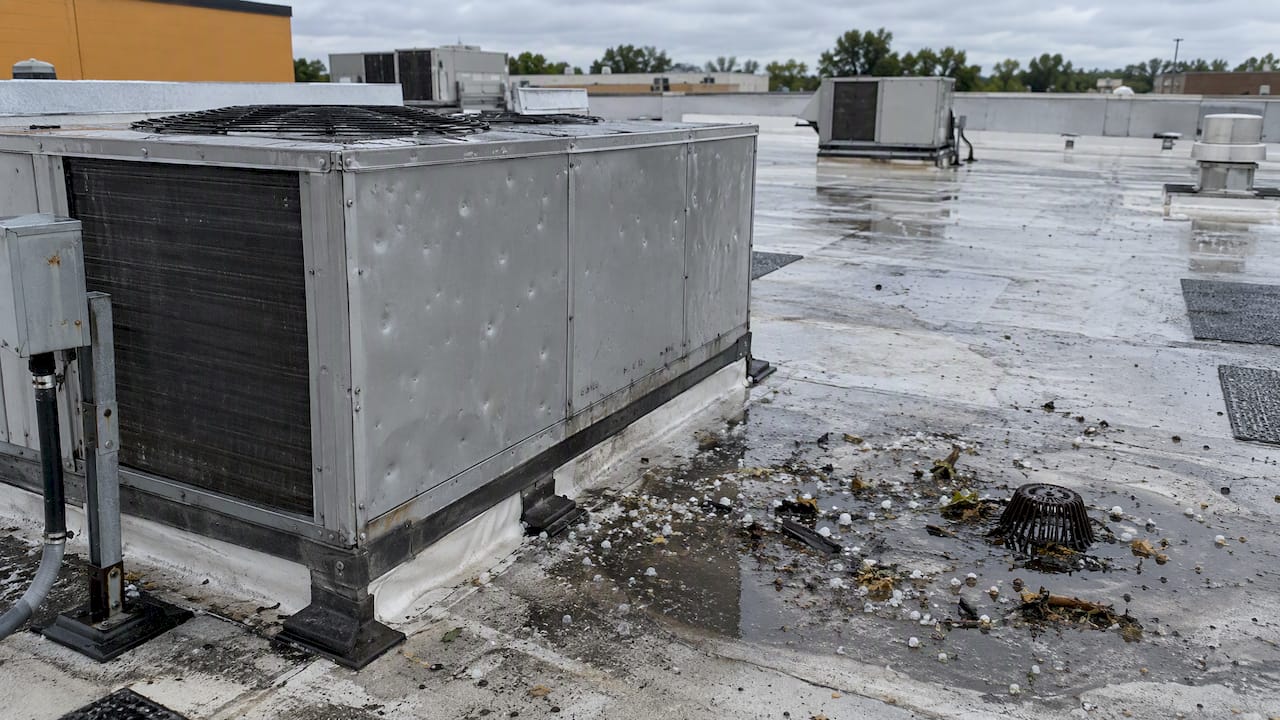
Property managers should check roof drains for debris, look for punctures or bruising in the membrane, and inspect rooftop equipment such as HVAC units, which show hail dents plainly. Document everything for the owner and insurer. Our commercial roofing services page covers replacement and preventative maintenance plans for these buildings.
How hail damage gets repaired
NRCA’s guidance on hail damage says remedies depend on the roof system and may include spot repair, recoating, recovering damaged areas, or reroofing, with the decision following an analysis of the damage and the economics of repair versus replacement.
In practical terms:
| Situation | Typical direction |
|---|---|
| A few damaged shingles, tiles or panels, with the rest of the roof sound | Targeted repair and replacement of affected pieces |
| Damage to flashing, vents or sealant around penetrations | Flashing and sealant repair |
| Widespread bruising or granule loss across slopes | Replacement of the affected slopes or the whole roof |
| Cosmetic dents on metal with no water intrusion | Often monitor or recoat, based on the inspection |
| Hail damage on top of an already aging roof | Replacement is often the more economical path |
Our roof repair services include storm and wind damage restoration, shingle, tile or metal panel replacement, and flashing and sealant repair. When damage is broad, our roof replacement team can help you compare options.
Rebuilding for the next storm
If you are replacing the roof anyway, hail resistance is worth a conversation. UL 2218 Class 4 indicates a product remained functional after two impacts in the same spot by 2-inch steel balls, and IBHS recommends Class 4-rated products for hail resistance. Our roof upgrades include impact-resistant shingles and metal roofing, and our article on durable roofing materials for extreme weather explains how to compare options. Ask your insurer whether an impact-rated product affects your premium, since policies and programs vary.
Our perspective: inspect early, document well, repair to fit the damage
We work on roofs in Florida and Missouri, two places where severe weather is part of owning a building. After more than 20 years in the industry, we have found that the homeowners who end up in the best position are rarely the ones who spotted the most. They are the ones who acted in the right order: ground-level check, insurer report, temporary protection, then a documented professional inspection.
We also believe the estimate should match the roof. Our approach is built on transparent communication and honest, accurate estimates, so that you know which damage is storm-related, which is wear, and what a sensible scope looks like. A spot repair is a good outcome when the rest of the roof is sound. A replacement is the right answer when damage is widespread or the roof was already near the end of its life. Our crews are licensed and insured, and we explain the reasoning behind each recommendation so you can weigh it for yourself.
For commercial clients and property managers, we add one more point: hail damage is easier to manage when a maintenance plan already exists. A record of roof condition from before the storm makes it easier to show what changed.
— the author
Get a hail damage inspection from GenX Roofing
If a storm has passed through and you are unsure what it did to your roof, we can inspect the roof, document its condition, and talk through repair, upgrade or replacement options for your home or commercial building. Our roofing services cover repair, replacement, upgrades and maintenance in Florida and Missouri.

Visit our roof repair page to request an inspection, or see our guide to choosing a roof repair contractor first.
Preparing before the inspector arrives
A little preparation makes the visit more useful:
- Note the date of the storm and, if you can, the approximate size of the hail you saw.
- Gather your policy details, including your deductible and any roof-specific terms.
- Collect earlier photos or records, such as a previous inspection report or the date the roof was installed.
- Make a list of every symptom, from dents to interior stains, so nothing is forgotten.
- Ask about the inspector’s license and insurance, and who will be on the roof.
If your roof was already showing wear, see signs your roof needs repair or replacement. An honest inspection will separate that wear from storm damage rather than blur the two.
FAQ
Can I inspect my roof for hail damage myself?
You can do a ground-level check with binoculars or a camera zoom, looking at gutters, vents, siding, windows and debris near the roof edge. NRCA advises against property owners climbing on roofs after storms. Leave the roof surface to a professional who has the training and fall protection.
How soon should I have my roof inspected after a hailstorm?
Report the damage to your insurer right away and book an inspection soon after, while the evidence is fresh. Reporting terms differ by policy, so check yours or ask your agent. If water is entering the building, arrange temporary protection and an emergency repair immediately.
Does every hail dent mean I need a new roof?
No. Dents in metal can be cosmetic, and spatter marks only show that hail was present. Repair options range from spot repair and recoating to full reroofing, and the right one depends on the extent of damage and the economics of repair versus replacement.
How can I tell hail damage from normal wear?
Hail damage tends to be random across the roof, while mechanical damage and defects often form repeating patterns. On shingles, a bruise you can feel is a strong hail indicator. A professional inspection is the reliable way to separate hail from aging and weathering.
Should I trust a contractor who knocks on my door after a storm?
Be cautious. IBHS advises beware of unsolicited offers to inspect or repair your roof. Verify the contractor’s license and insurance, ask for references, and get the inspection findings in writing before you agree to any work.
Sources
- Is It Hail Damage? (IBHS)
- Commercial Roofs Best Practices (IBHS)
- Survey Practices (IBHS)
- NRCA press release on storm damage safety
- Roof Tarping (Blue Roof) Safety (OSHA)
- Checklist to Spot Roof Hail Damage (county risk management)
- NRCA roofing guidelines on hail damage repair
Recommended
- How to Recognize the Signs of Roof Damage Before It’s Too Late
- 10 Essential Signs Your Roof Needs Repair or Replacement
- Ensure Longevity with Expert Roof Inspection Services
- How to Recognize When Your Roof Needs Maintenance