 Post by
Roof flashing repair usually means one of three things: resealing a joint, refastening a loose piece of metal, or replacing a section that has rusted, split or pulled away. Which one you need depends on the condition of the metal around the leak. Minor fixes on a low, single-story roof can sometimes be handled by an experienced homeowner. Anything involving step flashing, valleys, chimneys or a steep or multi-story roof is work for a licensed roofer. This guide explains how to tell the difference, what repairs cost and what a proper fix involves.
TL;DR
- Flashing is the thin metal that directs water away from joints and openings such as chimneys, vents, skylights and walls. When it fails, leaks often start there.
- Isolated damage on otherwise sound flashing can be repaired. Metal that is rusted through, split, bent or pulled away should be replaced.
- Professional repairs typically run $250 to $1,200, and chimney reflashing typically runs $300 to $1,800, depending on roof pitch and complexity.
- Replacing step flashing or valley metal means lifting the shingles around it. Only a retrofit collar over a vent boot avoids that.
- Steep slopes, second stories and masonry work belong with a licensed, insured roofer.
Table of Contents
- What roof flashing does and where it sits
- Signs your flashing is damaged
- What causes flashing to fail
- Repair or replace: how to decide
- Can you replace flashing without replacing shingles?
- What a proper flashing repair involves
- How much does roof flashing repair cost?
- When DIY is reasonable, and when to call a roofer
- Our perspective on flashing repair
- Have your flashing checked by GenX Roofing
- Preventing flashing problems
- Questions to ask a roofer about flashing
- FAQ
- Sources
What roof flashing does and where it sits
Flashing is the metal (or sometimes rubberized) material installed wherever the roof surface meets something else: a chimney, a sidewall, a skylight, a plumbing vent or the low line of a valley. Shingles shed water over open roof areas. At these joints, flashing takes over and sends water down and out onto the shingles below.
Because the joints are the weak points of any roof, they are where leaks tend to show up. Flashing leaks can occur around chimneys, skylights, vents and other roof penetrations. Common types you will hear a roofer mention:
- Step flashing: small L-shaped pieces woven between shingle courses where a roof meets a vertical wall.
- Counter-flashing: metal set into masonry or siding that overlaps the base flashing.
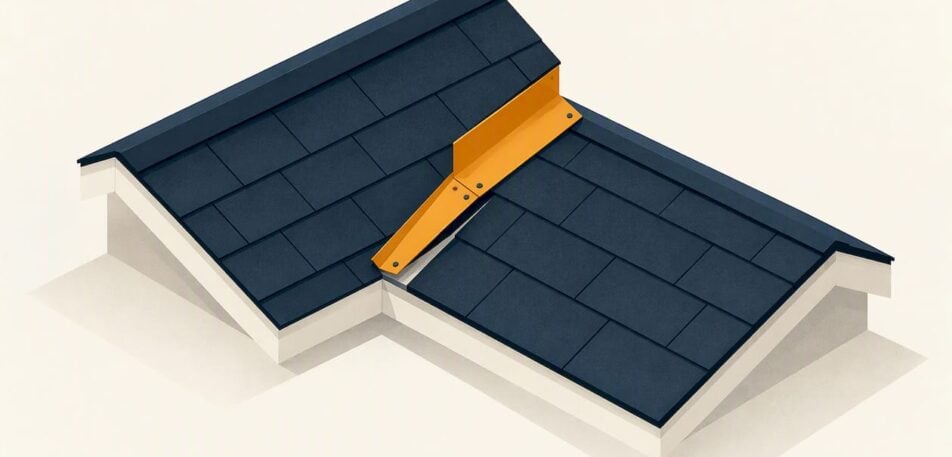
- Valley flashing: metal lining the channel where two roof slopes meet.
- Pipe boots: a collar, usually with a rubber seal, around plumbing vents.
- Drip edge: metal along the eaves and rakes that guides water into the gutters.
Signs your flashing is damaged
Most homeowners notice the symptom inside before they see the cause outside. Watch for:
- Brown or yellow stains on a ceiling or wall near a chimney, an exterior wall or a vent line
- Water marks in the attic around the same spots, or damp insulation
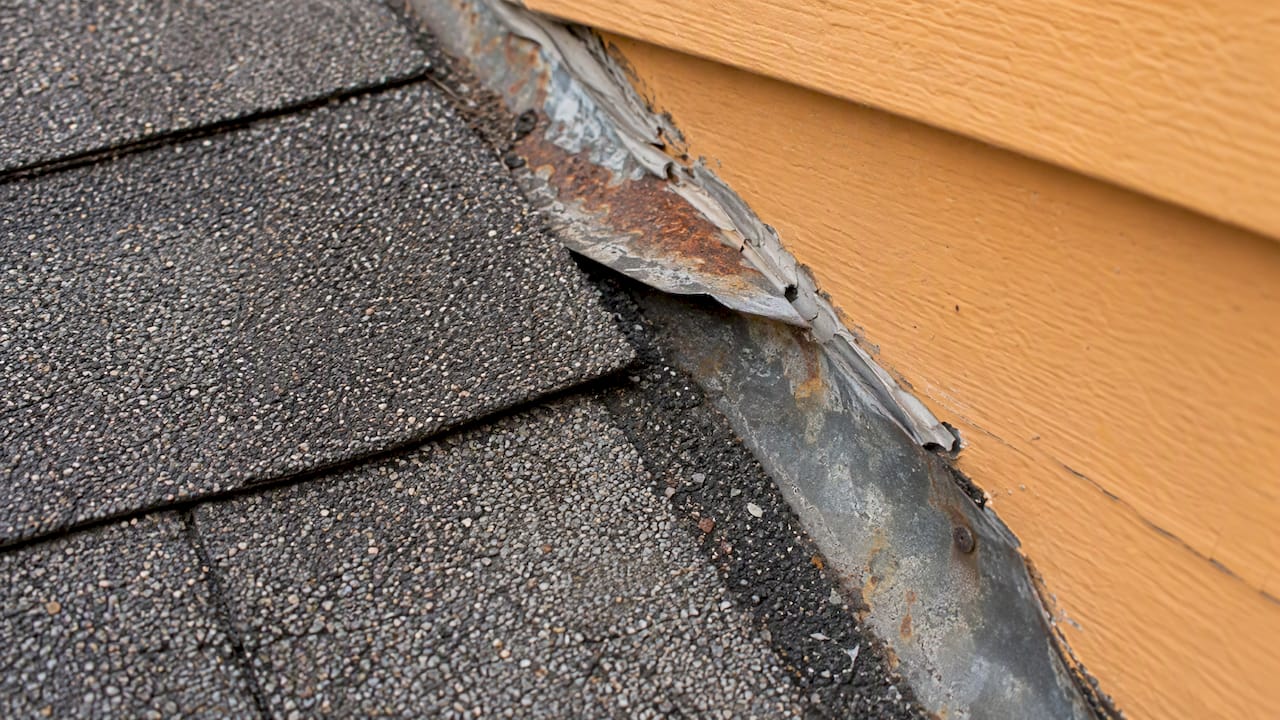
- Visible rust, gaps, lifted edges or bent metal at joints
- Cracked or dried-out sealant, or sealant that has pulled away from the metal
- Cracked rubber on pipe boots
- Shingles near a joint that are curling, stained or missing
One caution: flashing leaks can stay hidden. The Building America Solution Center, as reported by Fine Homebuilding, notes that modern insulation and spray foam can stop small leaks from reaching the ceiling, which can cause hidden rot in sheathing and framing. If your roof is older or has taken a hard storm, a visual check of the flashing is worth doing even without a ceiling stain.
What causes flashing to fail
Primary causes of flashing failure include oxidation of the metal, separation from adjacent surfaces, failed or missing sealant and improper original installation. In practice, that translates to a few familiar patterns:
- Age. Metal corrodes and sealant dries out over time. Flashing often needs attention long before the shingles do.
- Storm and wind. High wind can lift edges and loosen fasteners. In Florida, hurricane season makes a post-storm look at your flashing a sensible habit. In Missouri, hail and severe storms do the same.
- Movement. Roofs expand and contract with temperature. Joints at chimneys and walls take the most stress.
- Shortcuts at installation. Flashing buried under sealant instead of being layered correctly will fail early, however much caulk is applied.
Repair or replace: how to decide
The general rule is simple. Repair isolated damage when the flashing is otherwise sound, and replace it when the metal is rusted through, corroded, split, bent or pulled away.
| Condition | Usual answer |
|---|---|
| Small gap in sealant, metal solid | Reseal with polyurethane roofing sealant |
| Loose piece, metal intact | Refasten and reseal |
| Cracked or worn pipe boot | Swap the boot or fit a retrofit collar |
| Rust holes, splits or heavy corrosion | Replace the section |
| Bent or lifted step flashing | Replace, lifting shingles around it |
| Repeated leaks at the same joint after resealing | Replace and check the original installation |
Service life of common flashing materials
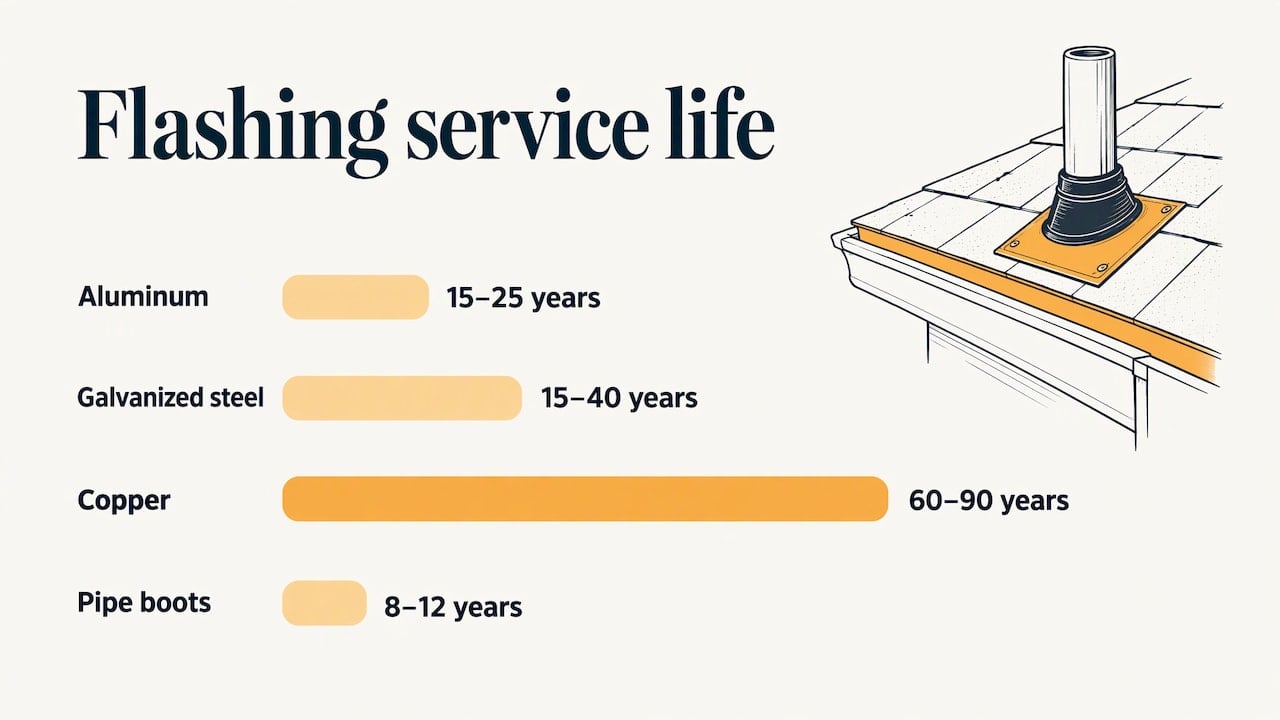
Age helps you judge. According to The Home Depot’s repair guide, aluminum flashing typically lasts 15 to 25 years, galvanized steel 15 to 40 years and copper 60 to 90 years. Pipe boots have a shorter service life of 8 to 12 years. If your roof is 15 or more years old and still has its original boots and aluminum flashing, those parts are near the end of their expected range, even if no leak has appeared yet.
Why sealant alone is not a long-term answer for failing metal
Sealant has a place: it can close a small joint where the metal underneath is sound. It cannot make corroded or detached metal watertight again. If you find yourself recaulking the same spot every year, that is usually a sign the flashing needs to be replaced and properly layered with the shingles.
Can you replace flashing without replacing shingles?
Sometimes, but not often. It depends on the type.
- Vent boots: A retrofit collar can slide over a failed boot without disturbing the shingles.
- Step flashing and valley metal: replacing these requires lifting the surrounding shingles.
- Chimney and wall flashing: usually involves removing some shingles and sometimes siding or masonry sealing so the new metal can be layered correctly.
The key is that replacement must follow proper layering, often called shingling, so water sheds downhill over each piece. Metal laid on top of shingles and sealed with caulk may look finished and still leak. This is why the shingles around a repaired joint are often lifted and reinstalled, and sometimes replaced if they crack or tear during removal.
What a proper flashing repair involves
The process varies by joint, but a professional repair generally follows this order:
- Find the real source. Water can travel along rafters and decking before it drips. A roofer traces the stain back up the roof and checks the flashing, the shingles and any penetrations nearby.
- Assess the metal. Is it sound, or rusted, split or pulled away? This decides repair versus replacement.
- Expose the joint. Shingles, sealant and old fasteners are carefully removed around the damaged section.
- Check the decking. Soft or stained sheathing is a sign that the leak has gone on for some time and may need replacing before new flashing goes on.
- Install new flashing in the correct order. Each piece overlaps the one below so water cannot get behind it.
- Reinstall shingles and seal where appropriate. Sealant is a backup at exposed edges, not the primary defense.
- Test and document. A good contractor confirms the area is watertight and tells you what they found.
How much does roof flashing repair cost?
Typical professional repairs cost $250 to $1,200, while specific jobs like full chimney reflashing can range from $300 to $1,800 depending on complexity. Steep-slope, multi-story and specialty roofs cost more. These are national ranges from a 2026 cost guide, not our prices, and your quote will depend on your roof.
What moves the number:
- How much metal is involved. A single pipe boot is a small job. A long run of sidewall step flashing is not.
- Roof pitch and height. Steeper and taller roofs need more safety equipment and time.
- Material. Aluminum, galvanized steel and copper differ in price and lifespan.
- Hidden damage. Rotted decking or insulation adds to the scope.
- Access. Chimneys with masonry work, skylights and tight valleys take longer.
- Local conditions. Roofs in hurricane or severe storm regions may call for more careful fastening and detailing.
A useful quote itemizes the flashing work separately from shingle work and decking, so you can compare like with like. If you want a framework for reading estimates, our guide to roofing estimates in Tampa Bay walks through what a clear one contains.
When DIY is reasonable, and when to call a roofer
Some small tasks are within reach for an experienced homeowner. The research is consistent that this is limited to low-slope, single-story roofs: resealing sound flashing or replacing a vent boot with a retrofit collar. It advises against work above a 6/12 pitch, above one story, or on complex repairs.
The National Roofing Contractors Association points the same way. Its guidance for roof repair expertise excludes complex repairs that need additional evaluation or design work, and says maintenance personnel without repair experience should hire a professional roofing contractor.
Call a roofer when:
- The roof is steep, wet, icy or more than one story
- The leak is at a chimney, a sidewall, a valley or a skylight
- The metal is rusted through or detached
- You have already resealed and the leak returned
- Storm damage affects more than one spot
- You cannot get to the area without leaning off a ladder
Falls from roofs are the real hazard here. A leak is rarely worth a trip to the roof in poor conditions, and a temporary tarp from a professional is safer than a hurried patch.
Our perspective on flashing repair
Most flashing problems we see are not dramatic. They are small failures at joints that went unnoticed until water found a way in. That is why we encourage property owners to treat flashing as part of regular roof care, not only as an emergency.
We work on roofs in Florida and Missouri, where hurricanes and severe storms test every joint. Our approach is to find where the water is actually entering, assess the metal honestly, and tell you whether a repair will hold or whether replacement makes more sense. We would rather give you an accurate estimate than a cheap one that fails the next season.
Flashing is also a good place to look at the bigger picture. If the flashing is failing, we look at the shingles, ventilation and drainage around it, so one visit can turn a general concern into a more useful conversation about your roof’s condition. Our repair, upgrade and maintenance services are designed to work together for that reason.
the author
Have your flashing checked by GenX Roofing
GenX Roofing repairs and replaces flashing around vents, chimneys and other roof penetrations as part of our roof repair services, alongside emergency leak detection, storm and wind damage restoration and shingle, tile or metal panel replacement. Our crews are licensed and insured, and we aim to keep communication clear from estimate to completion. We serve residential and commercial properties in Florida and Missouri.

If you already have a stain, a lifted piece of metal or a leak that keeps returning, contact us through our roofing services page to arrange an inspection. If water is coming in now, our emergency roof repair page for Tampa Bay explains how we respond. For more on tracing leaks, see our guide to roof leak repair.
Preventing flashing problems
Flashing rarely fails overnight, so a little routine attention goes a long way.
- Look after storms. From the ground with binoculars, check for lifted edges, missing pieces and displaced shingles near joints.
- Inspect once or twice a year. Spring and fall are common choices. Check the attic too, using a flashlight to look for stains or damp insulation under chimneys and vents.
- Keep the roof clean. Debris and moss trap moisture against joints. Keep gutters clear so water drains away from the roofline.
- Replace pipe boots on schedule. With an expected service life of 8 to 12 years, they often wear out before the shingles do.
- Plan flashing into any reroof. If you are replacing the roof, new flashing should go in with the new shingles. Reusing old metal under a new roof is false economy.
- Consider a maintenance plan. Regular professional inspections catch small issues at the stage when they are still inexpensive to fix.
For property managers and commercial owners, the same logic applies at larger scale. Our commercial roofing services include preventative maintenance plans so that flashing at parapets, curbs and penetrations is checked on a schedule.
Questions to ask a roofer about flashing
When you collect quotes, a few specific questions separate careful work from a quick patch:
- Will you replace the flashing or just seal over it, and why?
- Will the shingles around it be lifted and reinstalled?
- How will you check the decking underneath?
- What material will you use, and what is it expected to last?
- Is the work itemized, and what does the warranty cover?
- Are you licensed and insured in my state?
Our guide to questions to ask before hiring a roofing contractor covers more of these.
FAQ
How much does it cost to fix flashing on a roof?
National guides put professional repairs at $250 to $1,200, with full chimney reflashing at $300 to $1,800. Steep, multi-story and specialty roofs cost more. A written, itemized estimate after an inspection is the only way to know your own figure.
Do roofers fix flashing?
Yes. Repairing and replacing flashing is routine roofing work. A roofer will trace the leak, decide whether the metal can be repaired or must be replaced, and reinstall shingles around it so water sheds correctly. At GenX Roofing, flashing and sealant repair around vents and chimneys is part of our roof repair service.
Can you replace flashing without replacing shingles?
Only in limited cases. A retrofit collar can fit over a failed vent boot without touching shingles, but replacing step flashing or valley metal requires lifting the surrounding shingles. The shingles can usually be reinstalled if they are in good condition.
Can I fix a roof flashing leak myself?
Experienced homeowners can reseal sound flashing or fit a retrofit collar on a low-slope, single-story roof. For steep roofs, second stories, chimneys, valleys or rusted metal, professional guidance is to hire a roofing contractor.
How long does roof flashing last?
It depends on the material. Aluminum typically lasts 15 to 25 years, galvanized steel 15 to 40 years and copper 60 to 90 years. Pipe boots last 8 to 12 years. Storms, poor installation and failed sealant can shorten all of these.
Sources
- Roof Flashing Repair: 2026 Cost + Failure Guide, The Roofing Brief
- Roof Flashing Repair and Replacement, The Home Depot
- How to Identify and Repair Roof Leaks, GAF
- Critical Roof Flashings Keep Water Out, Fine Homebuilding
- Roof repair expertise, NRCA
Recommended
- Find the Best Roof Repair Contractor for Your Home
- Find the Best Roof Repair Companies for Your Home Today
- 10 Signs Your Roof Needs Repair or Replacement Now
- Key Signs You Need Roof Repair Before Damage Escalates