 Post by
After a storm, the right order of steps protects both your home and your insurance claim: stay off the roof, make the property safe, document everything, report the loss, stop further water entry with temporary measures, and have a licensed roofer inspect before permanent repairs begin. This guide walks through each step, explains when a repair is enough and when a replacement is the better call, and shows how to choose a contractor you can trust.
TL;DR
- Inspect only from the ground. The National Roofing Contractors Association (NRCA) advises homeowners to leave roof access to a roofing professional.
- Photograph and film all damage before moving or discarding anything, then report the loss to your insurer.
- Make temporary repairs to prevent more damage, keep receipts, and hold off on permanent repairs until the adjuster has seen the roof.
- Repair is usually enough for localized damage. Widespread damage, repeated failures or an aging roof point toward replacement.
- Hire a licensed, insured local roofer and judge the estimate on scope and workmanship, not only on the lowest number.
Table of Contents
- First steps after a storm hits your roof
- Signs of storm damage to look for
- How to document the damage safely
- Temporary repairs versus permanent repairs
- Insurance: what to expect when you file
- Repair or replace: how to decide
- What affects the cost of storm damage repair
- How to hire a roofer after a storm
- Our perspective on storm damage repair
- Make the repair last: durability and upgrades
- Storm damage repair with GenX Roofing
- FAQ
- Sources
First steps after a storm hits your roof
The first hour is about safety, not repairs. Before you look at the roof, confirm that nobody is at risk inside or outside the house.
- Check for hazards. FEMA instructs homeowners to confirm that electricity and gas are shut off before re-entering a damaged home. Stay away from downed power lines and standing water.
- Walk the exterior first. Illinois’ natural resources agency advises checking for sagging roofs, cracked foundations or leaning walls before going inside. If you suspect structural damage, stay out until a building inspector or structural engineer clears the structure.
- Stay off the ladder. The NRCA says homeowners and business owners should inspect only from ground level and contact a local roofing professional for inspection and repairs.
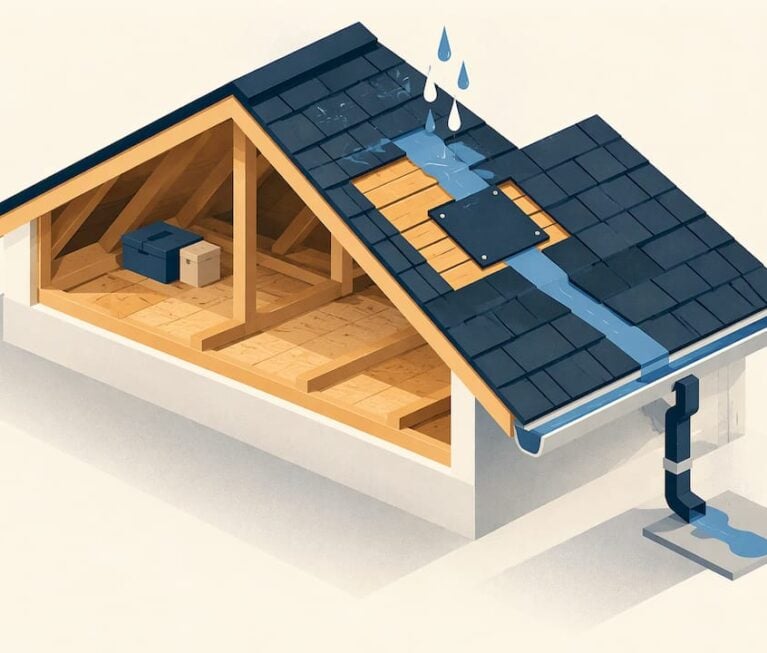
- Protect what you can reach. Move belongings away from active drips, and place buckets where water is entering. If a ceiling is bulging with water, a small hole can relieve it, but only when you can do so safely from below and away from light fixtures or wiring.
If water is already coming through a ceiling, our friends in the plumbing trade have a clear explanation of what to do about a ceiling leak in the first minutes, which applies whatever the source of the water.
Signs of storm damage to look for
Storm damage is not always dramatic. Missing shingles on the lawn are obvious, but a lifted seal or a bent piece of flashing can let water in for months before a stain appears.
From the ground, look for:
- Missing, cracked or curled shingles, or tiles that have shifted or broken
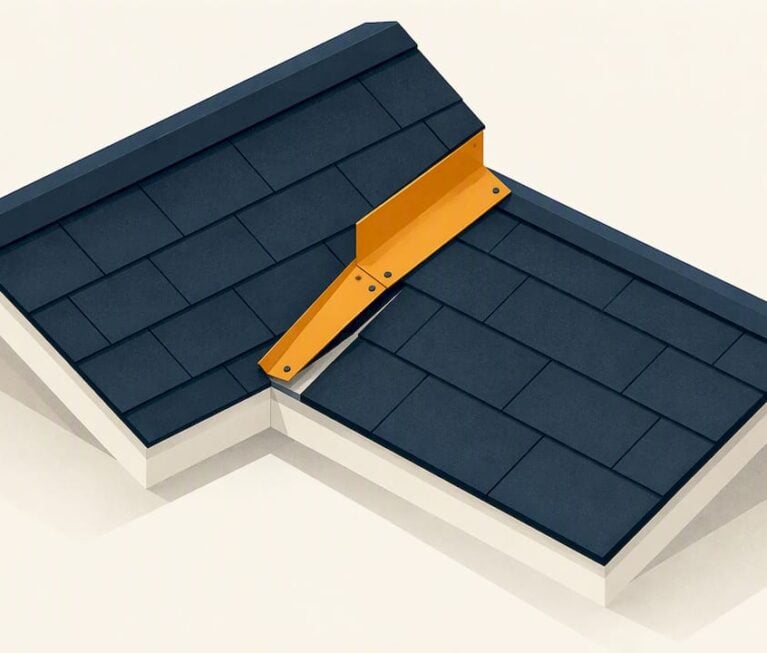
- Bent, lifted or detached flashing around chimneys, vents and skylights
- Dented or loose metal panels and ridge caps
- Gutters that are pulled away, dented or packed with granules and debris
- Sagging soffits, loose fascia boards and flapping siding panels
From inside, look for:
- Staining or dripping along roof trusses, in closets and storage rooms, and around recessed lighting
- Wet or compressed insulation in the attic
- Daylight visible through the roof deck
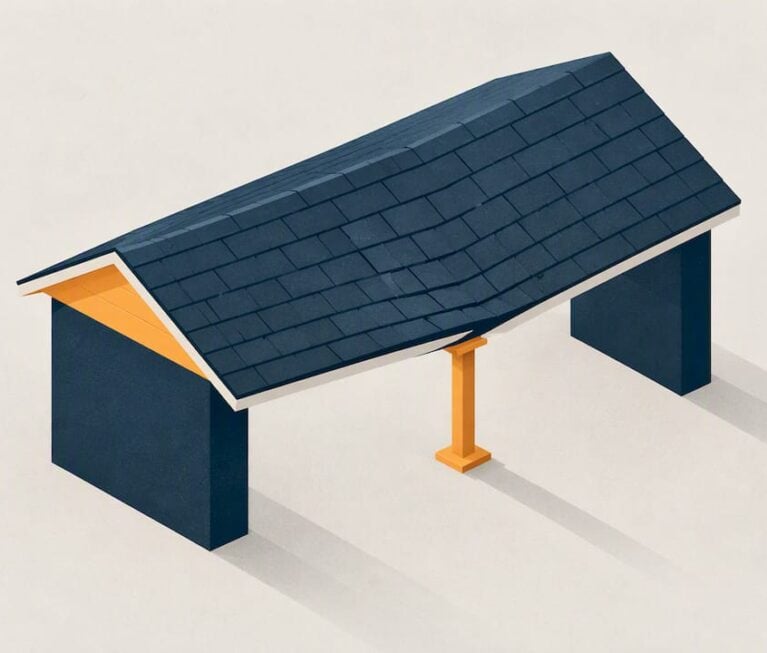
- Sagging in the ceiling or roof line
Consumer Reports notes that water rarely shows up where it enters a structure, a point made by the president of the National Roof Certification and Inspection Association. A stain in the hallway may trace back to a damaged vent boot several feet away. That is why a trained eye on the roof surface and in the attic matters. A professional attic assessment can also reveal wet insulation and ventilation issues that are easy to miss from the living space.
For a deeper look at warning signs, see our guides on recognizing the signs of roof damage and hail damage roof inspection.
How to document the damage safely
Good documentation supports your claim and gives your roofer a clear starting point. Do it before cleanup, and do it without climbing.
- Turn on location services and timestamps so every photo carries the date and place.
- Shoot wide, mid-range and close-up. Capture all sides of the house, then each damaged area, then the detail. FEMA recommends photos and videos of structural and personal property damage inside and outside before you discard anything.
- Record serial numbers of large appliances, keep receipts for replacement purchases, and save material samples such as carpet or upholstery, because the type and quality of materials can affect a claim.
- Use a drone or a neighbor’s upper window if you need a view of the roof surface. Consumer Reports says it is rarely safe to climb onto a roof and suggests these alternatives.
- Mark water lines inside with painter’s tape before they fade or dry.
- Keep original image files rather than screenshots, so the metadata stays intact.
We also keep a record of our own findings during an inspection, so your photos and ours can sit side by side in the claim file.
Temporary repairs versus permanent repairs
There are two phases, and mixing them up is a common and costly mistake.
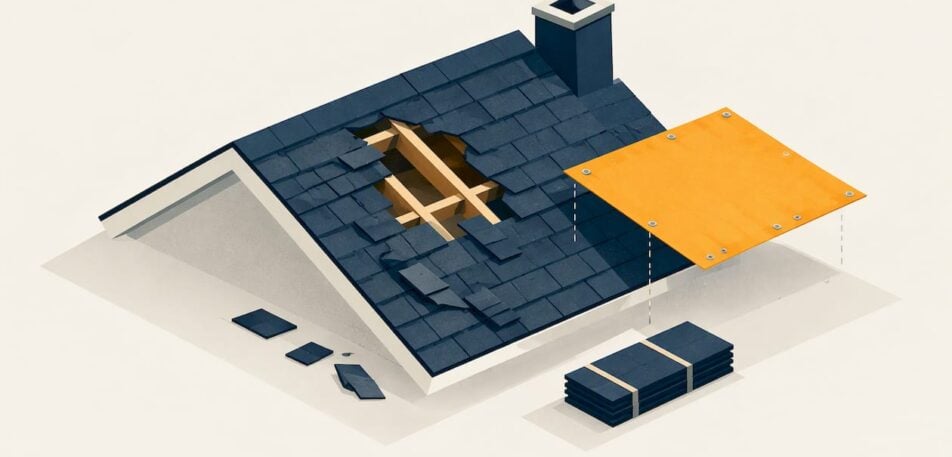
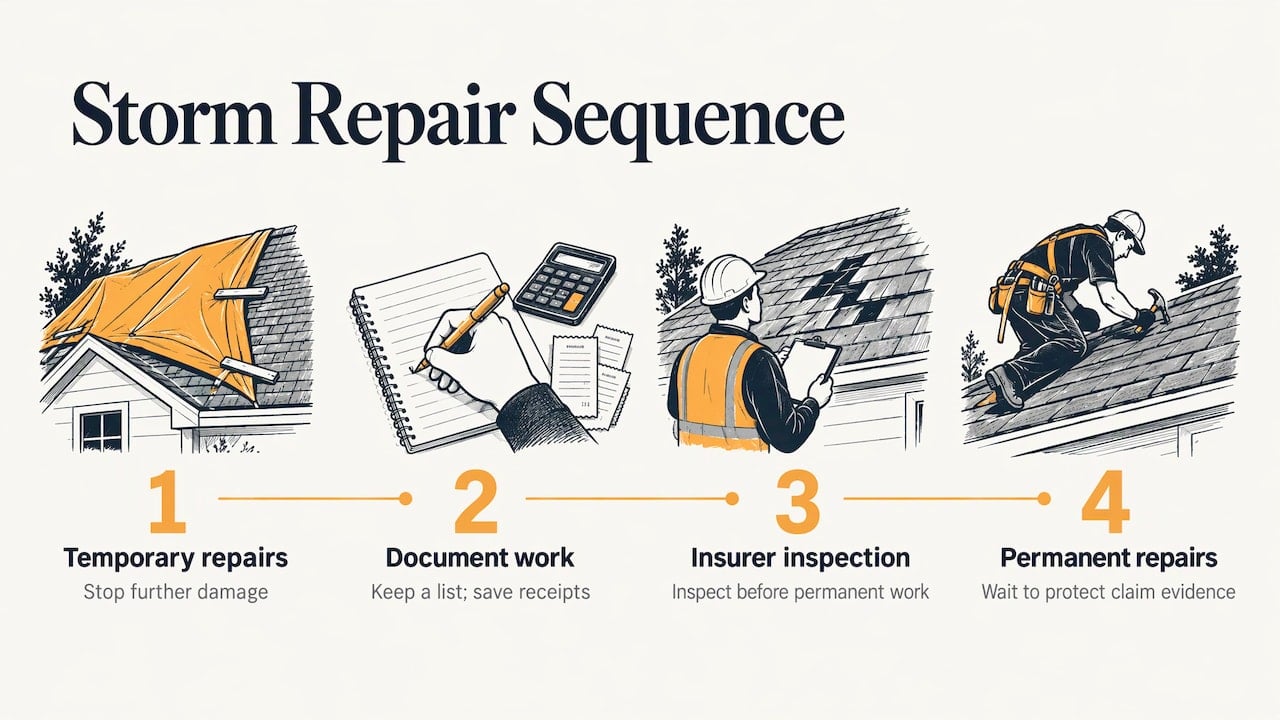
Temporary repairs stop further damage. Tarping a section of roof, covering a broken window or boarding an opening all count. The Texas Department of Insurance tells homeowners to make temporary repairs to prevent more damage, keep a list of what was done and save receipts.
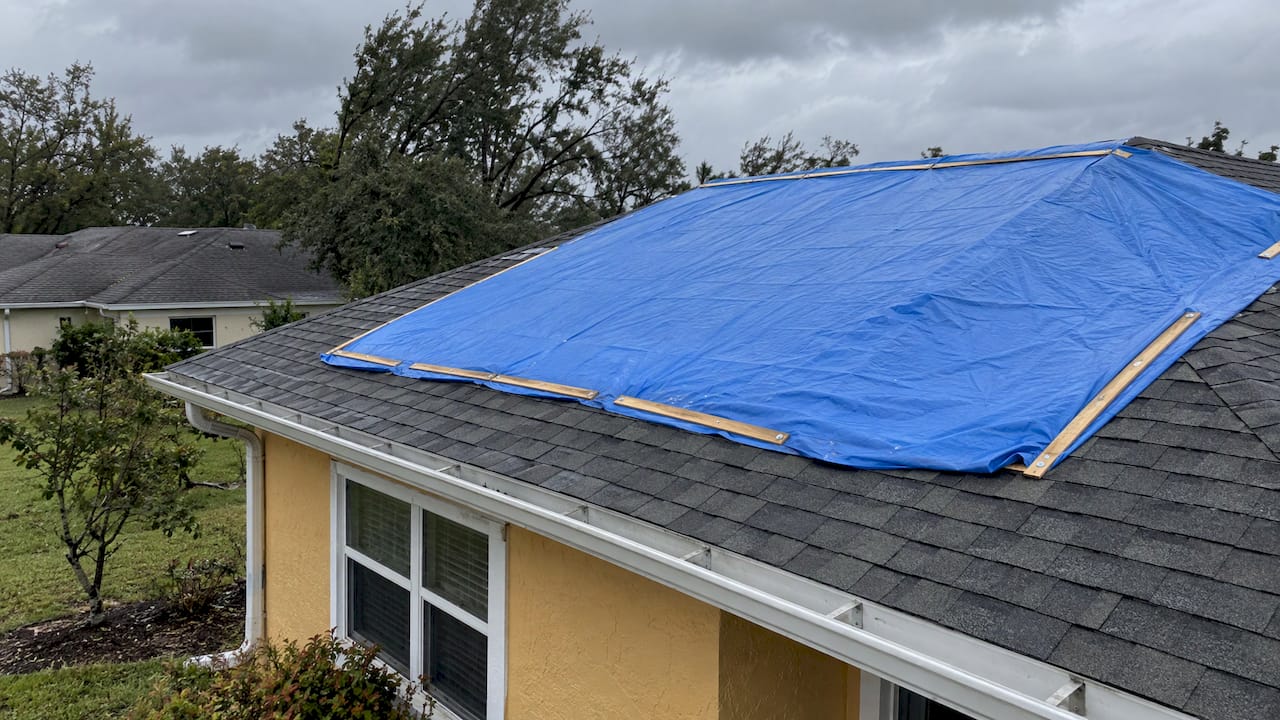
Permanent repairs come after the insurer has had a chance to see the damage. The same Texas guidance advises not making permanent repairs before the adjuster has inspected. If you wait, you protect your claim. If you rush, you may lose evidence.
Temporary work on a steep or wet roof is a job for a professional. A tarp that is nailed down poorly can tear in the next gust and let in more water than before. If you are in Florida, our page on emergency roof repair in Tampa Bay explains how a rapid response works, and our emergency leak detection and repair covers properties in Missouri as well.
Insurance: what to expect when you file
Coverage depends on your policy, so read it before you call. Look for the type of loss covered, your deductible, and whether the policy pays actual cash value or replacement cost. Then follow a simple sequence:
- Call your insurer promptly to report the damage.
- Provide your photos, videos and receipts for temporary repairs.
- Ask the adjuster to inspect, and share your roofer’s findings.
- Keep every document, estimate and email.
A few points are worth knowing in advance:
- Timing on replacement cost. The Arkansas Insurance Department notes that replacement cost policies require work to be completed within six months of the date of loss to receive withheld replacement cost payments. Your policy terms may differ, so confirm yours.
- Deductibles. Texas law makes it illegal for contractors to offer to waive a deductible or promise a rebate, and insurers may ask for proof the deductible was paid. Arkansas officials warn homeowners to avoid contractors who make that offer. Treat the promise as a red flag in any state.
- Flooding is different. The Wisconsin Office of the Commissioner of Insurance explains that most homeowners policies do not cover flooding or seepage through the foundation, and that a separate National Flood Insurance Program policy is needed for that coverage.
- Engineers. If structural damage is likely, the same office says an adjuster may recommend a licensed engineer or architect, and most insurers pay for those inspections.
Florida homeowners often ask how insurance treats a roof replacement. We cover that in Does Florida insurance cover roof replacement in 2026?
Repair or replace: how to decide
Most storm damage falls into one of two groups: localized damage that a repair resolves, or widespread damage that shortens the roof’s remaining life.
| Situation | Usually points to |
|---|---|
| A few missing or lifted shingles, tiles or panels on an otherwise sound roof | Repair |
| Damaged flashing, vent boots or sealant around penetrations | Repair |
| Fascia, soffit or gutter damage with an intact roof surface | Repair |
| Damage across multiple slopes or a large share of the roof | Replacement |
| Damaged decking or sheathing in several areas | Replacement or major section replacement |
| An older roof with prior repairs that keep failing | Replacement |
The U.S. Department of Energy’s technical brief on roof repair cites a rule of thumb from construction guidance: if more than 10% of the old roof needs repair, a new roof is recommended. It also advises a quick structural evaluation before spending time and money on repairs, and consulting a professional engineer if the structure is compromised.
For commercial buildings, the analysis is more technical. A forensic engineering journal article lists conditions that limit repairability, including two or more layers of roof assemblies, moisture throughout the assembly, poor drainage, age-related deterioration and previously failed repairs. When those limits cannot be resolved, the scope should recommend replacing the roof or the affected section. If you manage a commercial property, our commercial roof replacement guide explains cost drivers, timing and process.
If you are unsure which side of the line your roof falls on, our article on signs your roof needs repair or replacement helps you frame the conversation with a contractor.
What affects the cost of storm damage repair
We do not publish set prices, because every storm leaves a different pattern of damage and every roof is built differently. These factors shape an estimate:
- Type of storm. Wind tends to lift shingles and flashing, hail bruises and fractures surfaces, and falling branches can puncture the deck.
- Roofing material. Asphalt shingle, tile and metal each need different parts, methods and skill.
- Extent of damage. A repair near one vent costs very differently than work across several slopes.
- Hidden damage. Wet insulation, rotted decking and interior ceiling damage are often found only after the surface is opened.
- Access and complexity. Steep pitches, multiple stories and tight valleys add labor and safety measures.
- Local labor and permits. Requirements vary by county and municipality in Florida and Missouri.
An accurate estimate lists the scope of work, the materials, the areas covered and what happens if hidden damage turns up. If a quote is a single line with a total, ask for more detail.
How to hire a roofer after a storm
Storms bring out out-of-area crews who knock on doors. Some are legitimate, and some are not. Use a checklist rather than a gut feeling.
- Verify the license and insurance. Ask for proof of both, and for general liability and workers’ compensation coverage.
- Choose local. The NRCA recommends contacting a local roofing professional, which also means someone who will be around for warranty questions.
- Do not pick on price alone. The NRCA advises being skeptical of the lowest bid and evaluating professionalism and workmanship before paying a deposit.
- Be wary of deductible offers. As covered above, promises to cover or rebate your deductible are a warning sign.
- Get the scope in writing. Materials, underlayment, flashing, ventilation, cleanup and who handles permits should all appear in the contract.
- Ask who inspects and who repairs. One licensed team that diagnoses, documents and repairs keeps the process clear.
Our guide to finding the best roof repair contractor goes further into questions worth asking.
Our perspective on storm damage repair
Storm repair goes best when homeowners can trust what they are told. After a storm, people are stressed, the weather may still be unsettled, and decisions need to be made quickly. That is when clear communication and an honest estimate matter most.
We build and repair roofs for the conditions in Florida and Missouri, where hurricanes and severe storms are part of the climate. That experience shapes how we approach every storm call: inspect carefully, explain what we find in plain language, separate what is urgent from what can wait, and recommend repair when repair is the right answer.
We also believe a storm repair is a chance to improve the roof, not just restore it. Where it makes sense, upgrades such as impact-resistant shingles or metal roofing, better ventilation and waterproofing for valleys and transitions can leave a roof better prepared for the next storm. Our crews are licensed and insured, and we work with both homes and operating commercial properties, so we understand how to keep a project orderly for the people who live or work beneath it.
the author
Make the repair last: durability and upgrades
A repair that fails in the next storm is money spent twice. Several practices improve durability.
Repair to current standards. The Institute for Business and Home Safety (IBHS) reports in its FORTIFIED roofing handbook that analysis shows up to 92% of post-catastrophe insurance claims include roof damage. Its standard also requires, for asphalt shingles, a rating of Excellent or Good on the IBHS hail impact ratings.
Know what FORTIFIED requires if you want it. Under the IBHS repair checklist, a home is eligible for any level of designation only if the roof installation and repairs are completed by a certified FORTIFIED Wise Roofing Contractor. Documentation includes elevation photos, photos showing the location and scope of damage, and a photo illustrating repair size. If a FORTIFIED designation is a goal, confirm contractor certification before work starts.
Address the weak points. Valleys, transitions, flashing and vents are where water finds a way in. Our roof upgrades include waterproofing for valleys and transitions, ridge and soffit vents, and attic insulation improvements.
Maintain the roof. The GAF commercial maintenance checklist recommends routine inspections at least once a year, with twice a year optimal, typically in spring and fall, plus an inspection after severe weather. It notes that the sooner damage is repaired, the smaller the repair cost, and that keeping the roof free of debris helps prevent punctures. The same logic applies to homes.
For more ideas, see 7 ways to fortify your Florida roof and how to ensure reliable storm-resistant roofing in Tampa Bay.
Storm damage repair with GenX Roofing
When the storm has passed and you need a team to assess, document and repair the damage, we handle the work from inspection to completion. Our storm and wind damage roof restoration covers shingle, tile and metal panel replacement, flashing and sealant repair around vents and chimneys, emergency leak detection, and fascia, soffit and gutter work. If the damage calls for a full replacement, we handle that too, for homes and commercial buildings.

We are licensed and insured, and we aim to give estimates that are honest and accurate, with clear communication from the first visit to the final walkthrough. For commercial properties, we also offer preventative maintenance plans and roof replacement. To start, contact GenX Roofing and tell us what the storm did to your roof.
FAQ
What should I do first if a storm damages my roof?
Make sure everyone is safe, avoid downed power lines and standing water, and inspect only from the ground. Photograph the damage, report it to your insurer, and call a local roofing professional to inspect and make temporary repairs. Do not climb onto the roof yourself.
Will insurance cover storm damage to my roof?
Many homeowners policies cover wind and hail damage, but terms, deductibles and exclusions vary, and flooding generally needs separate coverage. Read your policy and contact your insurer promptly. Your documentation and your roofer’s findings will support the claim.
How do I know whether I need a repair or a full replacement?
Localized damage, such as a few shingles or a flashing failure, is typically a repair. Widespread damage, damaged decking or an older roof with failing repairs usually points to replacement. A Department of Energy brief cites a guideline that more than 10% of the old roof needing repair calls for a new roof.
Should I make permanent repairs before the adjuster comes?
No. Make temporary repairs to stop further damage, keep receipts, and wait for the adjuster to see the damage before permanent work begins. Texas insurance guidance gives this same advice.
How quickly should a storm-damaged roof be inspected?
As soon as it is safe. The NRCA recommends having a professional inspect roofs as quickly as possible after storm damage, including roofs that look fine from the ground, because damage is not always visible.
Sources
- NRCA: guidance for homeowners and business owners after storms
- FEMA: How to document damages after severe weather events
- Illinois DNR: post-flood quick guide
- Consumer Reports: keeping your home safe in an emergency
- Texas Department of Insurance: help after a storm
- Arkansas Insurance Department: post-storm tips
- Wisconsin OCI: After a Storm Hits
- U.S. Department of Energy: Repairing Roofs and Ceilings
- NAFE journal: commercial roof repairability
- IBHS FORTIFIED Roofing Contractor Handbook
- FORTIFIED Roof Repair Checklist
- Commercial scheduled maintenance checklist
Recommended
- Hail Damage Roof Inspection: What to Check and Who to Call
- Roof Repair
- How to Recognize the Signs of Roof Damage Before It’s Too Late
- Find the Best Roof Repair Contractor for Your Home