 Post by
Roof shingle replacement comes down to one question: is the damage limited to a few shingles, or is the whole roof wearing out? A few missing, cracked or lifted shingles can usually be replaced on their own. Widespread curling, splitting, soft decking or exposed asphalt from granule loss points to a full roof replacement. This guide explains how to tell the difference, how to read the granules in your gutters, what the work involves and which local rules apply.
TL;DR
- Isolated damage, such as a missing or cracked shingle, is normally fixed by replacing individual shingles. Widespread failure calls for a full replacement.
- Some granule loss on a new roof is normal and fades over months. Bare asphalt showing through is a reason to have the roof inspected promptly.
- Shingle manufacturers recommend that trained roofing professionals handle shingling and repairs, and a roof deck should be inspected whenever shingles come off.
- Most jurisdictions require a permit for re-roofing, and wind, underlayment and ventilation rules vary by location.
- We inspect and replace shingle roofs in Florida and Missouri, and we explain the scope of work before it starts.
Table of Contents
- Replace a few shingles or the whole roof?
- Granules on your roof: normal shedding or a warning sign?
- How shingles are replaced, step by step
- What affects the cost of shingle replacement
- Codes, permits and ratings to check before work starts
- Upgrades worth considering while the roof is open
- Work with GenX Roofing
- Choosing who does the work
- FAQ
- Sources
Replace a few shingles or the whole roof?
Start with how much of the roof is affected and why. Storm damage to one slope, a handful of shingles lifted by wind, or a flashing failure around a vent are localized problems. They can often be solved by replacing the damaged shingles and the materials around them.
A roof that is simply reaching the end of its life behaves differently. The Arizona School Facilities Board, in its asphalt shingle specification, describes a failed shingle roof as one with these traits:
- significant loss of surface granules
- visible fibers or felts showing through the shingles
- curling edges across a significant area
- splitting shingles
- valleys, hips or ridges leaking beyond repair
- soft or springy areas in the deck
- failed underlayment
The same specification sets a minimum expected life of 30 years for an asphalt shingle roof. Your own roof’s life depends on the product, the installation, ventilation and the weather it has faced, so treat that number as a reference point and not a deadline.
A practical way to decide:
| What you see | Usually points to |
|---|---|
| One to several missing, cracked or lifted shingles on an otherwise sound roof | Targeted shingle replacement |
| Leak at a vent, chimney or wall junction | Flashing and sealant repair, plus any damaged shingles nearby |
| Storm or wind damage across one slope | Slope repair or partial replacement, after inspection |
| Curling, splitting or bare asphalt across many shingles | Full roof replacement |
| Soft or springy deck, repeated leaks, failed underlayment | Full replacement with deck repair |
If you want a longer checklist, our guides on signs your roof needs repair or replacement and how to recognize roof damage early walk through what to look for from the ground and from the attic.
Granules on your roof: normal shedding or a warning sign?
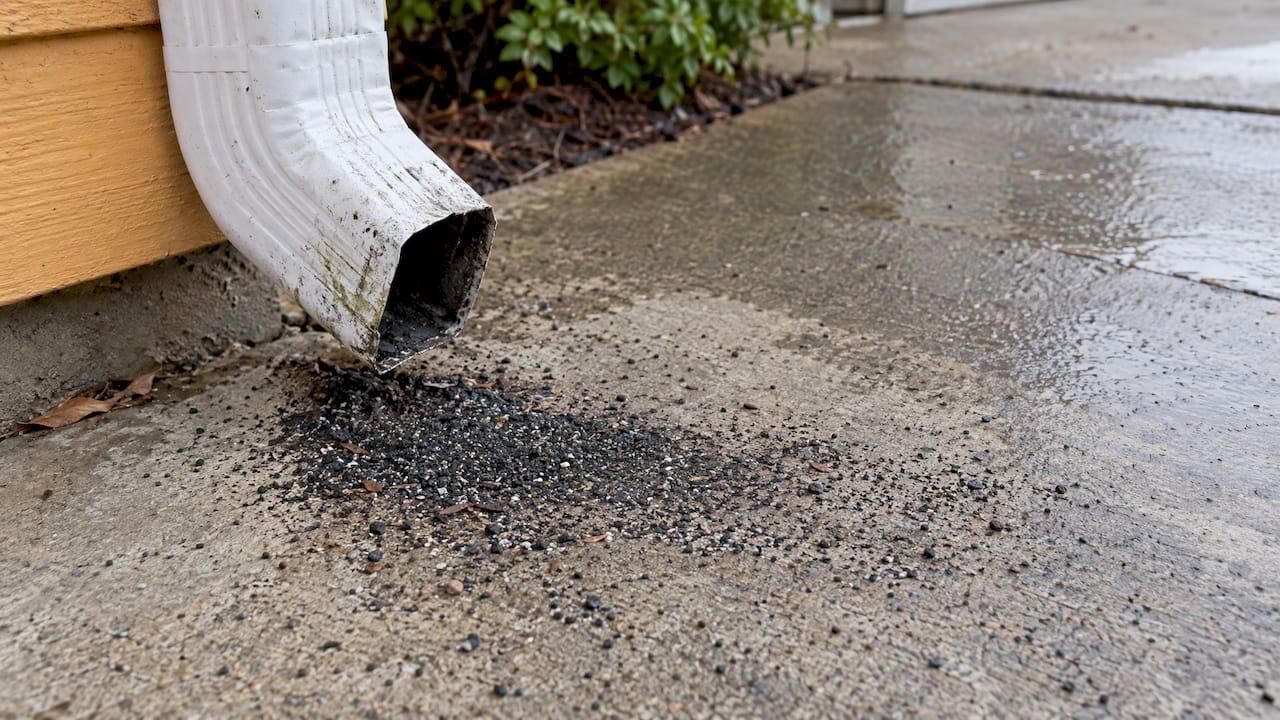
Homeowners often search for granule loss after finding grit in a gutter, at a downspout or on the driveway. The granules are the mineral surface that protects the asphalt layer from sunlight. Seeing some of them is not automatically a problem. What matters is when it happens, where on the roof and how much.
New roof: expected shedding
During manufacturing, more granules than necessary are applied to make sure the asphalt is fully covered. Most of the excess is reclaimed, but some stays on the shingles as they are bundled. Malarkey’s technical bulletin explains that these extra “hitchhiker” granules fall off over time, typically over six months to two years depending on climate, and that this does not affect performance or lifecycle.
GAF’s technical bulletin R-112 says the same thing from another manufacturer’s side: the loss is usually heaviest right after installation and tapers off, and it recommends allowing several months to see whether the condition corrects itself. If the loss is still significant or the roof starts to change color, GAF says further investigation is warranted.
Older roof: aging and exposure
On a roof that has been in place for years, the picture changes. TAMKO’s roof-reading brochure lists granule loss among the normal signs of aging, along with minor curling, surface cracking, blisters and algae stains. It also states that exposed asphalt from granule loss is a reason for concern that needs prompt attention.
InterNACHI’s guide to inspecting asphalt shingles helps interpret patterns:
- Uniform loss over many years is generally part of natural aging, unless the shingles appear to be failing prematurely.
- Loss on one slope may come from heavier sun or storm exposure. South- and west-facing slopes are more likely to be affected.
- Loss along a path is usually scuffing from foot traffic.
Malarkey adds that high winds, hail, ice dams and inadequate ventilation can cause significant granule loss, and it recommends a professional inspection after extreme weather. That last point matters in the places we work. Hurricane-season winds in Florida and hailstorms in Missouri can strip granules without any visible missing shingles.
A quick way to sort what you see
- Roof under two years old, grit in gutters, no bare patches: likely hitchhiker granules. Keep an eye on it.
- Roof of any age, dark bare patches or visible mat: the asphalt is exposed. Schedule an inspection.
- Heavy loss after a storm: request an inspection and document the date and conditions for any insurance conversation.
- Loss on one slope only: ask the inspector to check ventilation and sun exposure on that side.
A walk-through from a licensed roofer settles most of these cases in a single visit, and it gives you a written scope instead of a guess.
How shingles are replaced, step by step
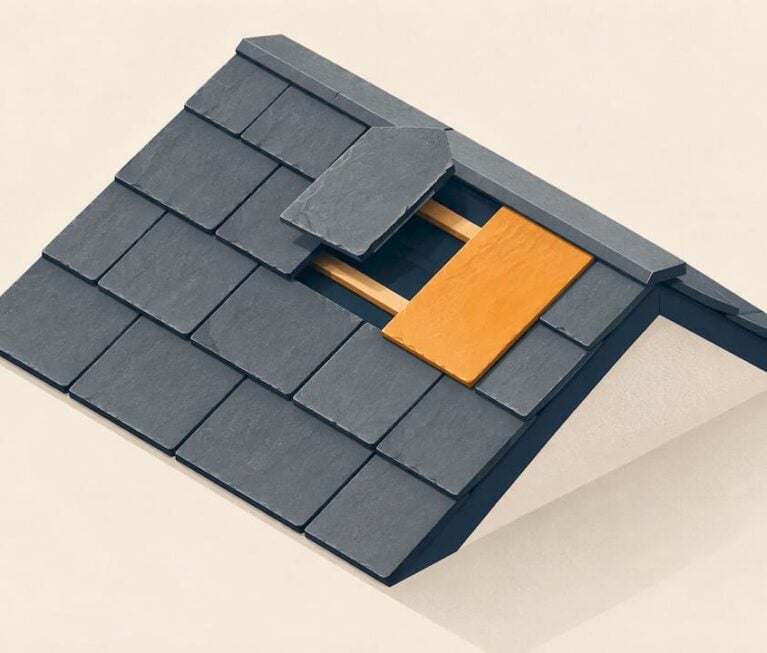
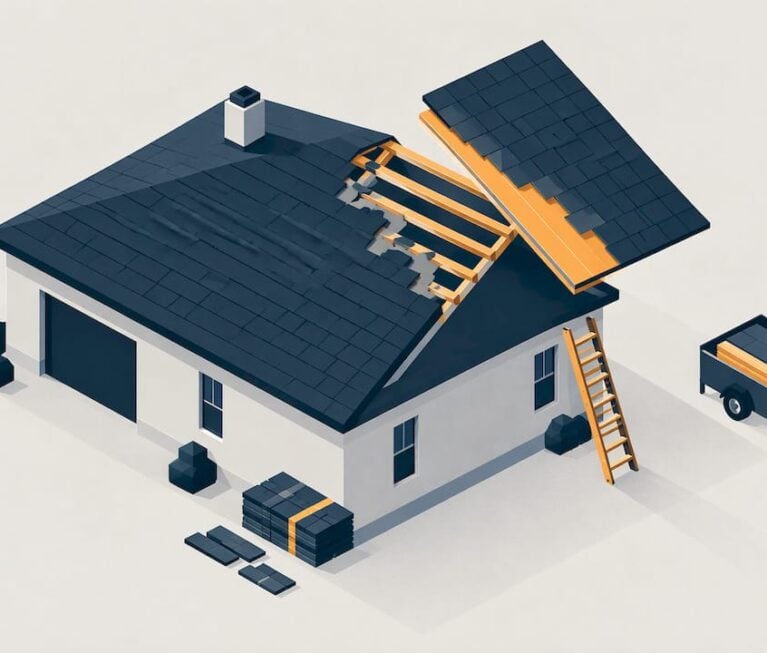
Understanding the process helps you judge a quote. IKO’s guide to replacing a missing shingle describes seven steps for an asphalt shingle:
- Remove the nails holding the damaged shingle.
- Slide a flat pry bar under the edge to break the sealant bond. IKO notes this is best done in cool weather, when the sealant is less tacky.
- Remove the damaged shingle.
- Inspect the roof deck underneath.
- Slide the new shingle into position and nail it.
- Hand-seal the new shingle with three small spots of asphalt plastic roof cement under its tabs.
That sequence shows why even a small repair is more than swapping one piece. The sealant bond has to be broken without damaging neighboring shingles, the deck has to be checked for moisture damage, and the new shingle has to be fastened and sealed correctly because it will not self-seal the way a shingle on a fully warmed roof does.
IKO also recommends that only properly trained professional roofing contractors perform shingling and roof repairs. Working on a pitched roof carries fall risk, and a repair done wrong can leak for months before anyone notices. If you own the property, the safest and most durable route is to have a licensed, insured crew handle it.
Our roof repair service covers shingle, tile and metal panel replacement, flashing and sealant repair around vents and chimneys, storm and wind damage restoration, and emergency leak detection.
What affects the cost of shingle replacement
We do not publish fixed prices, because the scope drives the number. These are the factors that move a quote:
- Roof size and pitch. Larger or steeper roofs take more material and more labor.
- Tear-off. Removing existing layers adds work, and many codes require it (see the next section).
- Deck condition. Rotted or soft decking has to be replaced before new shingles go on.
- Materials. Impact-resistant shingles, underlayment type and ventilation components change the total.
- Flashing, valleys and penetrations. Each detail adds labor and materials.
- Local requirements. Wind ratings, permits and inspections differ by city and county.
For a sense of how public budgeting treats it, the Arizona specification mentioned above budgets installation at $4.50 per square foot and demolition at $1.50 per square foot for its school facilities. Those are one state’s planning figures for institutional buildings, not a quote for your home, and costs in Florida or Missouri will differ.
What you can expect from us is a written estimate that explains the scope, so you can compare like with like. If you are weighing how to pay for a larger project, see our overview of roof replacement financing options.
Codes, permits and ratings to check before work starts
Shingle work is regulated, and requirements are local. A 2026 residential re-roofing guide compiled from several U.S. jurisdictions shows how much they vary:
- Oak Grove, Missouri requires a permit, work to the 2018 IRC with amendments, removal of existing layers down to the sheathing, and underlayment (two layers for slopes from 2:12 to 4:12, one layer at 4:12 and steeper). Asphalt shingles are not permitted on slopes below 2:12.
- Coon Rapids, Minnesota requires a building permit, removal of existing layers to the deck, an ice barrier extending at least 24 inches inside the exterior wall line, and one square foot of net free ventilation per 150 square feet of attic space.
- Baldwin County, Alabama requires a re-roofing permit with a final inspection. Shingles in areas with design winds of 130 mph or more must meet ASTM D7158 Class H or ASTM D3161 Class F.
- The IRC requires shingles rated for the design wind speed. The guide notes that high-wind areas may require six nails per shingle instead of four.
The takeaway for your project: confirm the permit, the wind rating and the underlayment requirement with your local building department, and ask your roofer who pulls the permit. We work in Florida and Missouri, where wind exposure and storm risk make fastening, underlayment and ratings especially relevant.
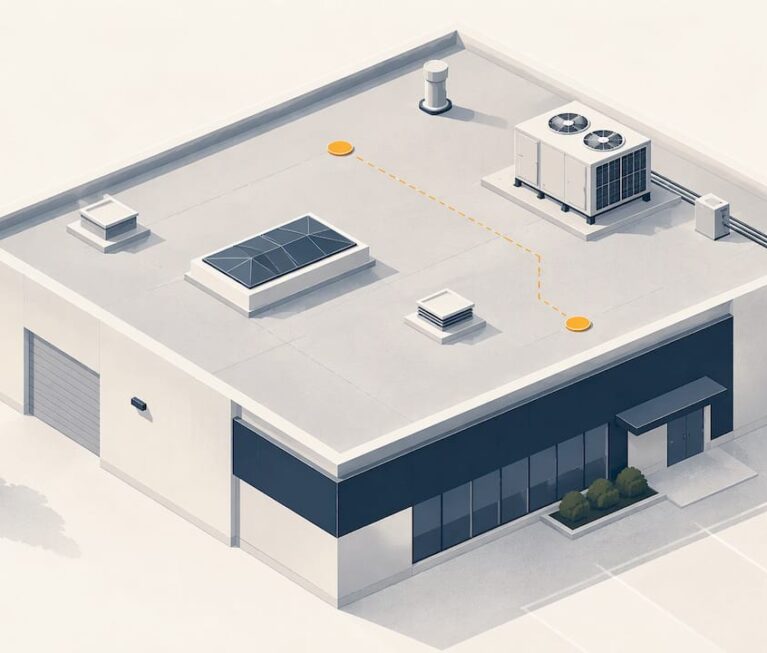
Commercial and multi-family roofs add detailing around rooftop equipment. If your building carries HVAC units, the curbs they sit on are part of the roof’s waterproofing, and projects in Greater Montreal, for example, often involve rooftop equipment curb fabrication coordinated with the roofing work. Whatever the building, make sure the roofer and the equipment contractor agree on who handles the flashing at each curb before the tear-off begins.
Upgrades worth considering while the roof is open
When shingles come off, the deck is exposed and the cost of improving what lies beneath is at its lowest. Common upgrades we install include:
- impact-resistant shingles or metal roofing
- ridge vents, soffit vents or powered fans to improve attic ventilation
- waterproofing at valleys and transitions
- improved attic insulation for energy efficiency
- replacement of worn or low-quality materials
Ventilation deserves particular attention. Malarkey’s bulletin lists inadequate ventilation among the causes of significant granule loss, and the Minnesota rule above shows how seriously some codes treat it. Details on each option are on our roof upgrades page.
Our perspective on shingle replacement
After more than 20 years of roofing in Florida and Missouri, we see the same pattern: the homeowners who are happiest with the outcome are the ones who understood the scope before work began. A shingle problem is rarely just a shingle problem. It is a question about the deck, the underlayment, the ventilation and the weather your roof has to face.
That is why we start with an inspection and a plain explanation. If a targeted repair will do the job, we say so and write up exactly what it covers. If the roof has reached the point where patching would only delay the inevitable, we say that too, and we show you what we found.
Our crews are licensed and insured, and we build for the conditions of the region, whether that is hurricane-driven wind in Florida or storm and hail exposure in Missouri. We believe a roof should be installed once, correctly, with clear communication from estimate to final walk-through.
the author
Work with GenX Roofing
If you have found missing shingles, heavy granule loss or storm damage, we can inspect the roof, explain what is wrong and quote the right scope, from single-shingle repairs to full replacements for homes and commercial buildings.

See our roofing services or learn about full roof replacements. For a more detailed look at what happens and when, read our roof replacement timeline.
Choosing who does the work
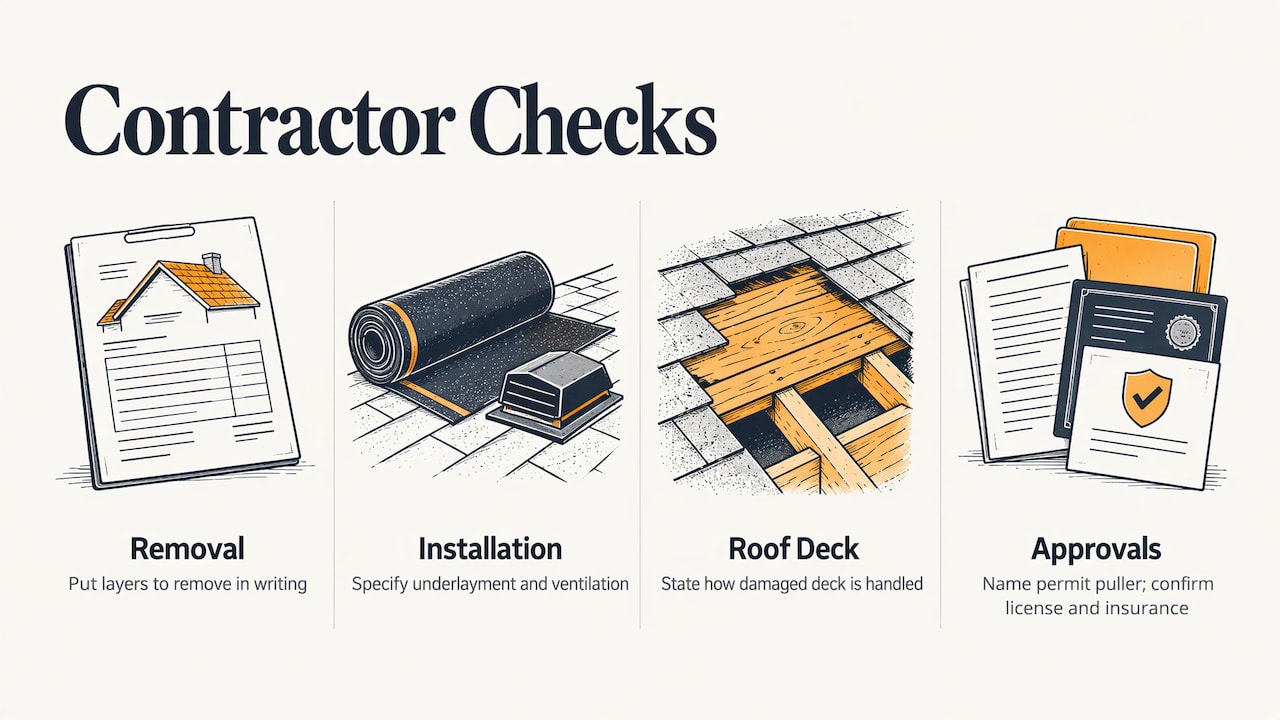
Ask any roofer you are considering to put the scope in writing: which layers will be removed, what underlayment and ventilation will be installed, how the deck will be handled if it is damaged, and who pulls the permit. Confirm license and insurance. Our guide on questions to ask before hiring a roofing contractor gives you a full list to bring to each estimate.
FAQ
How long does a shingle roof last before it needs replacing?
It depends on the product, installation, ventilation and local weather. The Arizona School Facilities Board specification uses a 30-year minimum expected life for asphalt shingle roofing in its public projects. A roofer’s inspection of your own roof tells you more than any single number.
Is granule loss on a new roof a problem?
Usually not. Manufacturers such as Malarkey and GAF explain that extra granules added during production shed in the first months, and GAF suggests waiting several months before investigating. If bare asphalt shows or the roof changes color, have it looked at.
Can I replace just a few shingles?
Often yes, when the damage is isolated and the deck underneath is sound. The work includes breaking the sealant bond, checking the deck, nailing and hand-sealing the new shingle. IKO recommends trained professional roofers do this work, so we suggest having a licensed crew handle it.
Do I need a permit to replace shingles?
In many places, yes, especially for full re-roofing. The jurisdictions in the 2026 guide cited above all require permits, and some add inspections. Check with your local building department, or ask your roofer to confirm what applies to your address.
What should I do after a storm?
Look from the ground for missing shingles, grit at downspouts and stains inside, and avoid climbing on the roof. Malarkey recommends a professional inspection after extreme weather, and we can provide one in Florida and Missouri.
Sources
- IKO: How to replace missing shingles
- Malarkey technical bulletin on granule sloughing
- GAF technical bulletin R-112: Granule loss on new shingles
- TAMKO: How to read your roof
- InterNACHI: Asphalt composition shingles inspection
- Arizona School Facilities Board: Asphalt shingles specification 07 31 13
- Residential roof replacement guide 2026
- Rooftop equipment curb fabrication
Recommended
- Roof Flashing Repair: Causes, Costs and When to Replace
- Key Signs You Need Roof Repair Before Damage Escalates
- Roof Replacement Financing: Your Options and How to Choose
- Find the Best Roof Repair Contractor for Your Home