 Post by
A damaged ridge cap is one of the cheapest roof problems to fix when it is caught early, and one of the most expensive when it is ignored. The ridge is the highest line of your roof and takes the most wind, sun and rain. The right fix depends on what is failing: a few cracked or lifted caps, worn sealant, crumbling mortar or a ridge that has lost most of its caps. A licensed and insured roofing crew can sort out which it is in a single visit, and it should do the work, because the job happens at the highest and most exposed point of your roof. We built this guide to help you spot the damage, understand what repair and replacement involve, and know what the work should cost.
TL;DR
- Cracked, curled, lifted or missing ridge caps, daylight at the peak, or stains on attic rafters and ceilings are signs the ridge needs attention.
- Isolated damage can usually be repaired. Widespread wear, repeated storm damage or an aging roof usually points to replacing the whole ridge.
- Typical 2026 pricing runs about $6 to $10 per linear foot for ridge cap replacement, so a single 60-foot ridge averages around $475 before access, materials and extra repairs.
- The ridge is a high, exposed, fall-risk location. Repair it with a licensed and insured roofing crew, not a general handyman.
Table of Contents
- What a roof ridge is and what the ridge cap does
- How to tell when a ridge cap is damaged
- Repair or replace: how to decide
- What a proper ridge repair involves
- What ridge cap repair and replacement cost
- Why a roofing crew, not a handyman
- What we do about ridge damage
- Get your ridge looked at before the next storm
- FAQ
- Sources
What a roof ridge is and what the ridge cap does
The ridge is the highest horizontal line where two sloping roof planes meet. On a gable roof it typically runs between the two gable ends, while a pyramid-shaped hip roof has no horizontal ridge, only hips that slope down from the peak. Most homes and many small commercial buildings have at least one ridge.
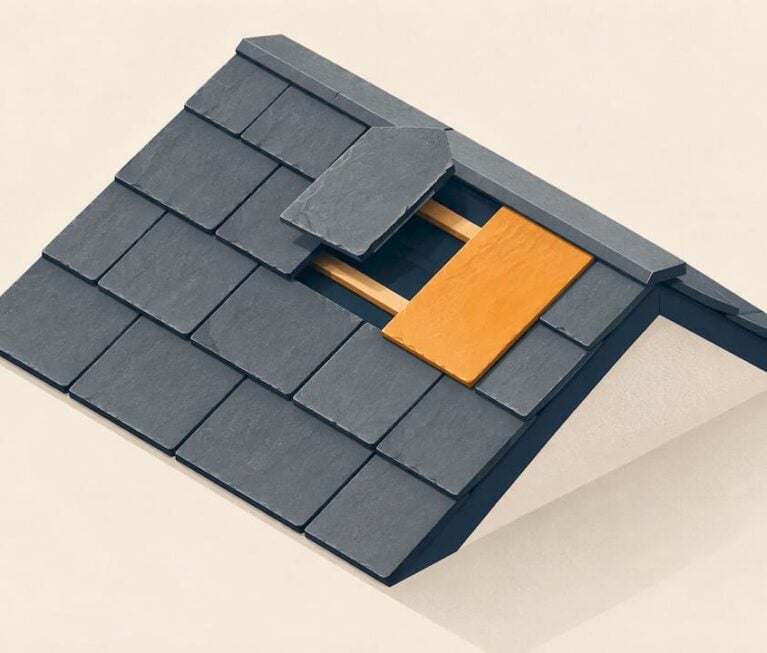
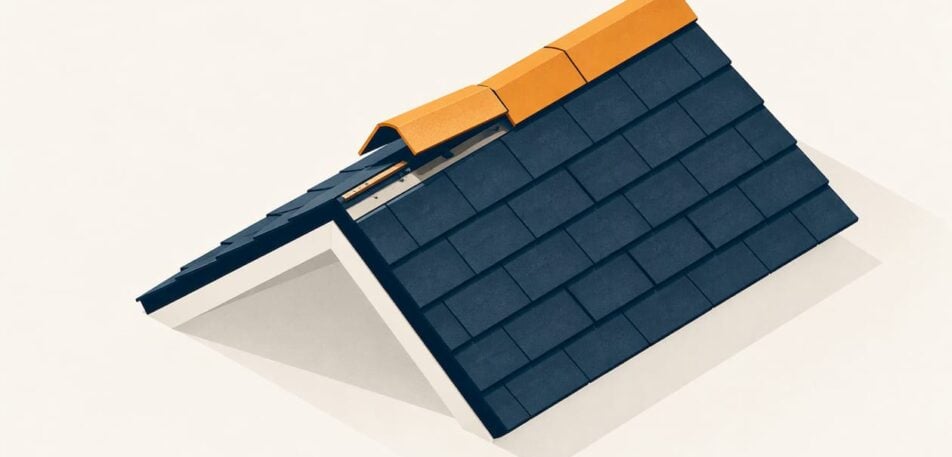
The ridge cap is the layer you actually see on top of it. On an asphalt shingle roof, a ridge-cap shingle is made from the same materials as a regular shingle but is designed to finish the roof at the ridge or hips. It has to bend over the angle of the peak and carry sealant made for the wind and weather exposure at that spot. On tile roofs, the cap is a row of curved tiles, usually bedded in mortar or secured with fasteners and sealant. Some roofs also have a ridge vent beneath the cap, which lets hot attic air escape.
The cap covers the seam where the two roof planes meet. If that seam is exposed, water reaches the decking and the attic below.
How to tell when a ridge cap is damaged
You can check a lot from the ground, with binoculars if needed, and from inside the attic. Never climb onto the roof to look.
From the yard, look along the peak for:
- Cracked, curled or lifted cap pieces
- Gaps where caps are missing, often with a visible dark line of exposed roof underneath
- Crumbling or missing mortar between tile caps, or tiles that look shifted
- Loose or exposed fasteners
From the attic, look for daylight near the ridge or water stains on rafters and ceilings. The same source notes that water entering at the ridge can lead to rot in roof framing, attic mold and water damage to ceilings and walls.
Why do ridge caps fail? Three causes are common:
- Aging sealant. For asphalt shingles, the heat-activated sealant has to resist wind suction, and after 7 to 10 years it typically weakens, according to the Insurance Institute for Business & Home Safety (IBHS), making the roof more vulnerable in high winds.
- Wind. Caps that have lost their seal can lift and peel back, or blow off entirely during a storm.
- Hail. IBHS notes that ridge caps are among the most hail-vulnerable parts of a shingle roof. If a hailstorm has passed through, our hail damage roof inspection guide explains what to check.
A ridge problem often looks minor from the ground. A single missing cap can let water run straight into the seam. If you already see stains or dampness, a leak and damp diagnosis shows how a surveyor traces where the water got in and what it has damaged, which is the same logic a roofer follows. Our guide to roof leak detection covers how the source is found on a roof.
Repair or replace: how to decide
There is no single rule, but these patterns hold up in practice.
| What you see | Usually means | Typical approach |
|---|---|---|
| One to a few cracked or missing caps, rest of ridge firmly sealed | Localized damage, often from one storm | Repair: replace the damaged caps, reseal and refasten |
| Caps lifting along much of the ridge, sealant no longer bonding | Age-related sealant failure | Replace the full ridge cap run |
| Tile caps with crumbling mortar, tiles still firmly seated | Failing mortar joints | Repoint or reseat the affected section |
| Tile caps loose or shifted along the ridge | Bedding has failed | Remove, clean and rebed the caps |
| Damaged caps plus widespread curling or granule loss on the shingles | The roof is near end of life | Weigh ridge replacement against a larger roof replacement |
The last row matters most. New caps on a roof that is otherwise worn out buy you little time. If the field shingles are also failing, compare the cost of patching against replacement before you spend money. Our article on roof shingle replacement walks through that decision.
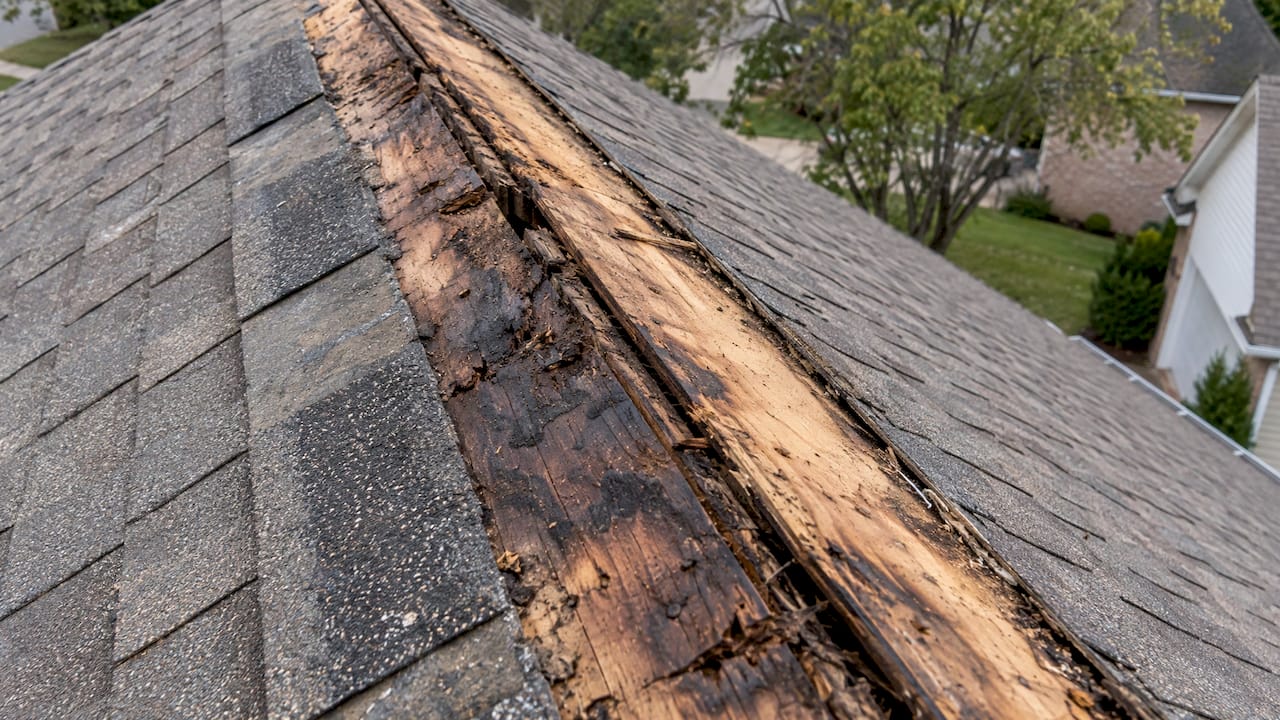
Another consideration is what is underneath. If water has been entering for a while, the decking beneath the ridge may be soft or stained, and that wood needs to be replaced before new caps go on. Caps nailed over damaged decking will not hold.
What a proper ridge repair involves
Understanding the steps helps you judge an estimate, even though you will not be doing them yourself.
Shingle ridge caps
- Safe setup. Ladders secured, roof anchors and harnesses in place, and a plan for working along a steep, narrow peak.
- Assessment. The crew checks the full ridge, not only the visible damage, including nail pattern, sealant bond, decking condition and any ridge vent.
- Removal. Damaged or unsealed caps are lifted and the old nails and debris are cleared.
- Decking repair. Any soft or stained wood is replaced.
- New caps. Purpose-made ridge-cap shingles go on, working away from the prevailing wind so the exposed edges do not face it. Manufacturers publish specific nailing and sealant instructions, including starter pieces and fastener placement, and the last cap at the end of a run needs to be sealed and fastened carefully because no following piece covers its nails.
- Seal and inspect. Exposed fasteners are covered, flashing at vents and transitions is checked, and the finished ridge is looked over end to end.
Cutting corners here is where repairs go wrong. Using ordinary three-tab pieces cut into strips instead of purpose-made caps, driving too few or too many nails, or sealing over wet or dirty surfaces leads to caps that lift in the next storm. Mismatched caps also leave a visible patch on the peak.
Tile ridge caps
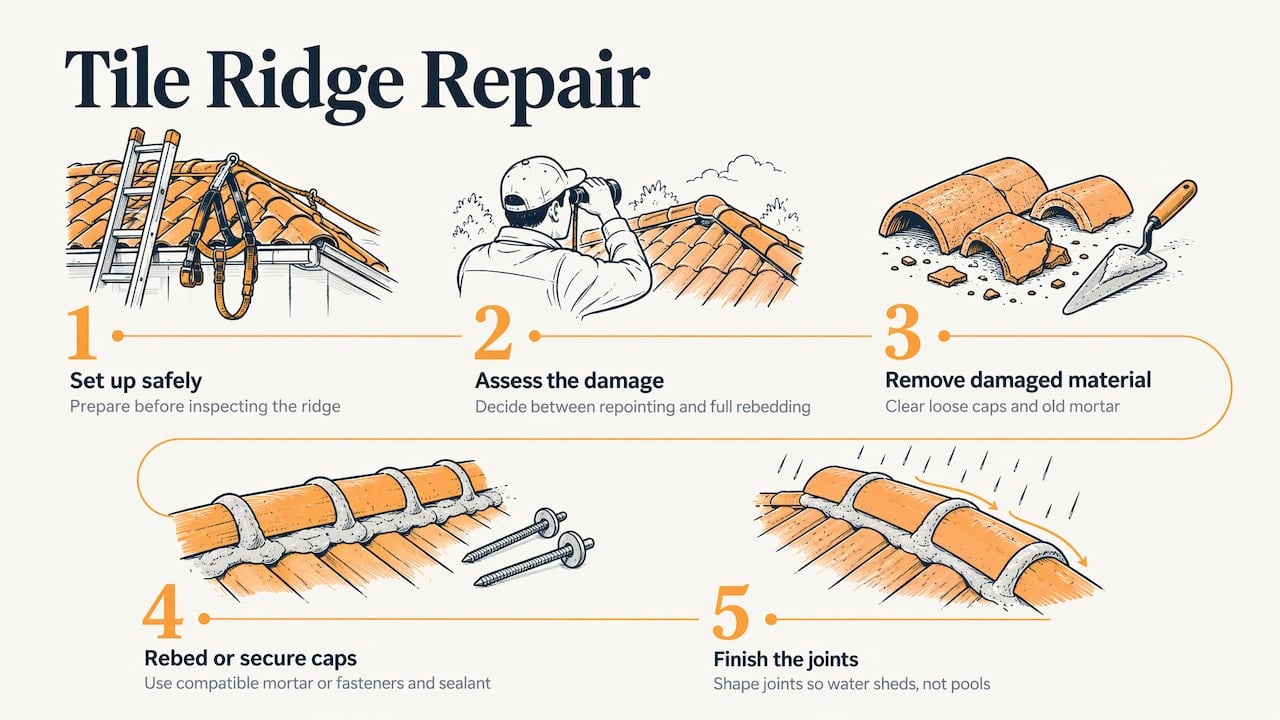
Tile ridges follow a similar order: safe setup, assessment, removal of loose or broken tiles, and cleaning of old mortar. Then the caps are rebedded in compatible mortar or secured with fasteners and sealant, and the joints are finished neatly so water sheds off rather than pooling. A thin bead of fresh mortar over failing bedding is a cosmetic fix that tends to crack again, which is why the assessment step decides whether the job is a repoint or a full rebed.
Metal and other roofs
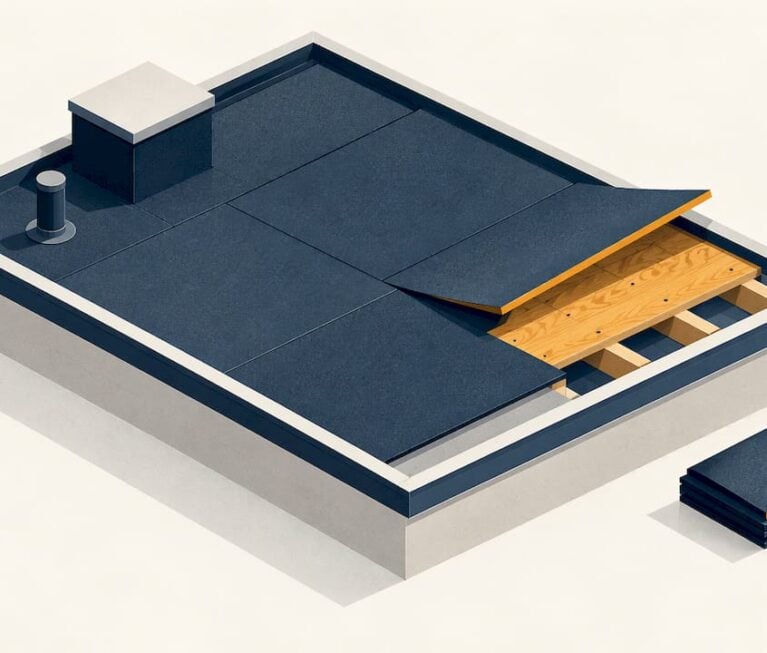
Metal roofs use ridge caps made for the panel profile, with closures and fasteners that match the panels. Flat and low-slope commercial roofs have a different set of details at their high points. If your building is one of those, see our guide to modified bitumen roof repair.
What ridge cap repair and replacement cost
Prices vary by region, roof pitch and material, and the figures below are national averages, not a quote for your roof. Per Angi’s 2026 cost data, ridge cap work runs about $6 to $10 per linear foot, with an average near $8. A standard gable roof with one ridge of roughly 60 feet averages around $475 for a full replacement. The same data puts minor work at about $2 per linear foot and vented ridge caps at $10 to $14 per linear foot, for an average total near $720.
What moves the price on your roof:
- Ridge length. Count every ridge and hip, not only the main peak.
- Cap type. Standard shingle caps cost less than vented, metal or tile systems.
- Roof pitch and height. Steeper and taller roofs need more safety equipment and time.
- Decking condition. Rotted wood under the ridge adds material and labor.
- Matching. Older or discontinued shingles may be harder to match in color.
- Storm damage. If a storm damaged other parts of the roof, ridge work is often handled as part of a larger repair scope, which may involve your insurance.
GenX Roofing does not publish prices, because a ridge is priced by the roof in front of us. Ask for a written estimate that lists the ridge length, the cap type, any decking replacement and how debris is handled. An honest estimate spells out each of those lines so you can see what you are paying for.
Why a roofing crew, not a handyman
The People Also Ask results for this topic include whether a handyman can repair a roof. For a ridge, the answer for most owners is to hire a roofing contractor, for three reasons.
The fall risk is real. The ridge is the highest, narrowest, most exposed place on the roof. In Great Britain, the Health and Safety Executive reports that falls through fragile surfaces account for 22% of fall-from-height fatal injuries in construction. That figure covers fibre-cement roofs and rooflights, but it shows how serious roof falls are for trained workers who have the proper equipment. Homeowners on ladders without anchors face a worse set of odds.
The repair is a system, not a patch. Caps, sealant, fasteners, decking, vents and flashing all work together. A repair that covers the visible crack and misses the cause leaves the leak in place.
Accountability matters. Roof work that goes wrong tends to show up months later as a ceiling stain. A licensed and insured contractor stands behind the work and carries coverage if something goes wrong on your property. For commercial owners and property managers, that insurance and documentation are usually requirements. Our guide on how to find the best roof repair contractor lists what to look for.
What we do about ridge damage
GenX Roofing repairs roofs for homes and commercial buildings in Florida and Missouri. Ridge problems usually come from the same forces we build for: hurricane winds in Florida, storms in Missouri, and sun and heat that wear down sealant. Our roof repair service covers storm and wind damage restoration, emergency leak detection and repair, shingle, tile or metal panel replacement, and flashing and sealant repair around vents and chimneys. If the ridge is only the visible part of a larger problem, our roof upgrades include impact-resistant shingles or metal roofing, ridge vents, soffit vents or powered fans, and waterproofing for valleys and transitions.
For property managers and building owners, inspection and maintenance plans put ridge and flashing checks on a regular schedule, so small defects are found before they turn into interior damage.
Our perspective on ridge repair
We treat the ridge as the part of the roof that tells us the most. When a ridge cap fails, the cause is rarely only the cap. It may be sealant that has aged out, wind that has been working at the edges for years, or a leak that started somewhere else and is now showing up at the peak.
That is why we look at the whole roof before we write an estimate. We want you to know exactly what is wrong, what the repair covers and what it will cost, in plain terms and in writing. Our crews are licensed and insured, and we have more than 20 years of experience on homes and commercial buildings in Florida and Missouri, where roofs have to stand up to hurricanes and severe storms.
We would rather fix a few caps now and tell you the roof is sound than leave you guessing. When the ridge is a sign that the roof is reaching the end of its life, we say that too, and we show you the options.
the author
Get your ridge looked at before the next storm
If you have noticed cracked, lifted or missing caps, or a stain near the peak, a prompt look is worth far more than the repair costs. GenX Roofing handles ridge cap repair and replacement as part of our roof repair work for homeowners, business owners and property managers in Florida and Missouri.
See our roofing services or contact us through genxroofing.com to schedule an inspection and get a written estimate.
FAQ
How do I know if my ridge cap needs repair or full replacement?
Repair fits when only a few caps are cracked or missing and the rest of the ridge is firmly sealed. Replacement fits when caps are lifting along much of the ridge, the sealant no longer bonds, or the roof is near the end of its life. A roofer’s inspection of the whole ridge settles it.
How much does it cost to replace a roof ridge cap?
National 2026 averages are about $6 to $10 per linear foot, or roughly $475 for a typical 60-foot ridge, with vented caps costing more. Your price depends on ridge length, roof height, materials and any decking repair. A written estimate for your own roof is the reliable number.
Can a damaged ridge cap cause a roof leak?
Yes. The ridge cap covers the seam where two roof planes meet, so cracked or missing pieces can let water reach the decking and attic. Over time that can cause rotted framing, attic mold and stained ceilings, which is why stains near the peak are worth checking quickly.
How long do ridge caps last?
It depends on the material and the climate. For asphalt shingles, IBHS says the sealant that holds them down typically weakens after 7 to 10 years, which raises wind vulnerability. An inspection after a major storm or every few years tells you where yours stand.
Can a handyman repair a roof ridge?
The ridge is a high, narrow, fall-prone location, and the repair involves decking, sealant, fasteners and flashing working together. A licensed and insured roofing contractor has the safety equipment and roofing experience for it, and carries coverage for the work on your property.
Sources
- Parts of a Roof: Complete Diagram + Glossary, The Roofing Brief
- Ridge Cap Shingles: Understanding the Benefits for Your Roof, GAF
- What Is a Wind-Damaged Ridge Cap and Why Does It Matter?
- Natural Weathering and Hazard Exposure, IBHS
- Is It Hail Damage? IBHS
- Seal-A-Ridge ridge cap shingle installation instructions, GAF
- Roof Ridge Cap Replacement and Repair Costs, Angi
- Fragile surfaces, Health and Safety Executive
- Roof repairs and leak diagnosis
Recommended
- Key Signs You Need Roof Repair Before Damage Escalates
- Roof Flashing Repair: Causes, Costs and When to Replace
- 10 Signs Your Roof Needs Repair or Replacement Now
- Roof Shingle Replacement: When to Repair, When to Replace