 Post by
An insurance roof inspection is an evaluation of your roof’s condition, age and visible damage, carried out either so an insurer can decide whether to cover your property or so an adjuster can decide what a storm claim is worth. Both versions come down to evidence: what the roof looks like, how old it is, and whether the damage is documented well enough to support a decision. This guide explains when each type happens, what inspectors look for, how to prepare, what it costs and what to do if the answer is no.
TL;DR
- Insurers inspect roofs at two moments: when you apply for or renew a policy, and after you file a damage claim. The rules differ by carrier, policy and state.
- Older roofs draw the most scrutiny. Many insurers ask for a passing inspection once a roof passes roughly 15 to 20 years of age.
- Photos taken before repairs, a dated record of the storm and the leaks, and a written report from a roofer make your claim easier to evaluate.
- Make temporary repairs to stop further damage and keep the receipts, but hold off on permanent repairs until the adjuster has seen the roof.
- If a claim is denied, you should receive the reasons in writing, and your state insurance department can explain your options.
Table of Contents
- The two kinds of insurance roof inspection
- Do insurance companies inspect roofs?
- When an insurer asks for an inspection
- What an inspector looks for
- How to prepare for the inspection
- How the roof insurance claim process works
- How long it takes and what it costs
- If your roof damage claim is denied
- Our perspective on insurance roof inspections
- Get a roof assessment you can use
- FAQ
- Sources
The two kinds of insurance roof inspection
People use the same phrase for two quite different events, and knowing which one you face changes how you prepare.
Underwriting inspections happen when you buy a home, apply for a policy or renew one. The insurer wants to know how likely the roof is to fail. The NRCIA, a roof certification organization, explains that carriers underwrite risk and that a roof is the largest weather-exposed component of a building. The result affects whether you can get coverage, at what price and on what terms.
Claim inspections happen after a storm, a fallen limb or a sudden leak. An adjuster assesses what was damaged, what caused it and what it will cost to fix. The National Roofing Contractors Association notes that a claims adjuster inspects the roof system at no cost to the homeowner.
The first is about the future of the roof. The second is about a specific event in the past. Your documentation should match.
Do insurance companies inspect roofs?
Yes. According to the Connecticut Insurance Department, insurers may inspect a property in person, with aerial imagery such as satellite or drone photos, or with both. Aerial imagery often works as a screening tool, and a physical inspection can follow if something looks like a concern.
That is why some homeowners receive a letter about their roof without anyone ever visiting. Regulators are paying attention to how those images are used. The same Connecticut agency has advised insurers that aerial images showing only discoloration, streaking or other cosmetic issues should not be used alone to support underwriting action. Insurers are expected to rely on clear indicators of roof condition.
If you receive a notice based on an aerial photo, a licensed roofer’s inspection and report can show what the roof’s condition really is.
When an insurer asks for an inspection
The most common trigger is age. The Insurance Information Institute’s roof toolkit says that if a roof is over 20 years old when you apply for insurance, most insurers will require it to pass an inspection. Some insurers may decline to write new policies for homes with older roofs, or may offer coverage at actual cash value (ACV) rather than replacement cost value (RCV).
That difference matters. Under RCV, the policy aims to pay what it costs to replace the roof with new materials. Under ACV, the payout accounts for depreciation, so an older roof pays less. If your policy has been changed to ACV for roofs, ask your agent whether a documented repair or replacement can change that.
NRCIA also reports that many policies now trigger an inspection requirement when a roof reaches roughly 15 to 20 years of age, and many require one after a named storm before a claim moves forward. Requirements vary by carrier, policy and state, so read your own policy and ask your agent.
Older roof coatings are part of this picture too. If your roof is a coated system, knowing when elastomeric roofs need recoating helps you plan maintenance before an inspection date forces the question.
Florida’s four-point inspection
In Florida, older homes often need a four-point inspection. The Florida Office of the Insurance Consumer Advocate’s Four Point Inspection Guide says it covers the roof, electrical, plumbing and HVAC systems. For shingle roofs older than 15 years, or tile and metal roofs older than 20 years, an insurer may require documentation confirming at least five years of remaining useful life.
One insurer’s guide says that most home insurers will deny coverage if a roof has less than three years of usable life left, and that a home that fails may need repair or replacement before coverage is issued. Treat that as one carrier’s standard, not a universal rule.
What an inspector looks for
Whether the inspector works for the insurer or for you, the checklist is similar. The Connecticut Insurance Department lists items insurers may consider, including:
- Missing or damaged shingles
- Multiple roofing layers
- Unrepaired damage
- Excessive debris or moss
- Overhanging tree limbs
A thorough roof inspection also looks at the details where leaks usually start: flashing around chimneys and vents, sealant, valleys, roof penetrations, gutters, fascia and soffits, and the attic side of the deck for stains, daylight or damp insulation. On a Florida four-point inspection, the inspector records the roof type, age, condition and any visible signs of damage or deterioration.
For claims, the question is narrower. A claim inspection has to establish what was damaged, what caused it and when. Wear, age and neglected maintenance are usually treated differently from sudden storm damage, which is why the cause and date matter so much in your records. If hail is the issue, our guide to a hail damage roof inspection goes through what to check.
How to prepare for the inspection
Good preparation is mostly record keeping. Aim to give the adjuster a clear, organized picture before they arrive.
Document the damage safely
Forbes Advisor suggests that, if it is safe, you take photos and video of the damage: close-ups of each problem plus wide shots of the whole roof. Write down what you see, what you think caused it and the date. If you are unsure about climbing onto the roof, don’t. Ground-level photos, interior leak photos and a roofer’s report can do the job without the risk.
The Hawaii Insurance Division’s storm claim guidance gives the same core advice for any state: document damage with clear photos or video once it is safe, secure the property and keep receipts, file a claim with your insurer, and submit proof of loss forms if they are requested.
Build a simple evidence folder
Before the adjuster arrives, gather the following in one place:
- Your policy declarations page, so you know your coverage type and deductible.
- Photos of the roof from before the storm, if you have them.
- Dated photos of exterior damage, such as dented gutters, downspouts and shingles, and of every interior leak.
- The storm date and any weather information you can find for it.
- Receipts and records of past roof repairs or maintenance.
- A written report from a licensed roofer, with measurements, photos and the likely cause.
NRCIA makes a point worth remembering: reports that read as opinion invite dispute, while reports that read as evidence usually settle the question. Dated photos, measurements and plain descriptions help.
Stop further damage, but don’t over-repair
The California Department of Insurance’s claims guide says that after a loss you should make temporary repairs to prevent further damage, save your receipts for materials, and avoid extensive permanent repairs until the adjuster has assessed the damage. Hawaii’s guidance agrees that permanent repairs should wait until the adjuster has inspected or the insurer has approved them.
In practice, that means a tarp over an exposed section, cleared drains and a temporary seal, not a full new roof the day after the storm. Keeping water out also protects the evidence inside. Clean gutters and a working drainage path matter here, and a guide to gutters for tile roofs shows how drainage and roof care connect on a Florida-style roof.
If water is already coming in, our emergency leak detection and repair work is built for exactly this step, and our page on storm damage roof repair explains what to do and who to call.
How the roof insurance claim process works
The steps are broadly the same across the country, even though the deadlines differ by state. Forbes Advisor lays out the sequence:
- Check your coverage. Know your deductible, whether roofs are covered at RCV or ACV, and any wind or hail deductible.
- Notify your insurer quickly. Policies often require prompt notice.
- Document the damage with photos and notes.
- Keep a log of correspondence: names, dates, claim numbers.
- Get written estimates from licensed roofers.
- Prepare for the adjuster’s inspection, where they look for damage, missing shingles, water damage and signs of wear.
- Negotiate if the offer looks low, and appeal if the claim is denied.
- Finalize the claim once repairs are agreed and completed.
Timelines are set by each state. California’s regulations, for example, set deadlines for insurers to acknowledge, evaluate, decide and pay claims. Your state insurance department’s website is the place to find the deadlines that apply to you.
Having your roofer meet the adjuster
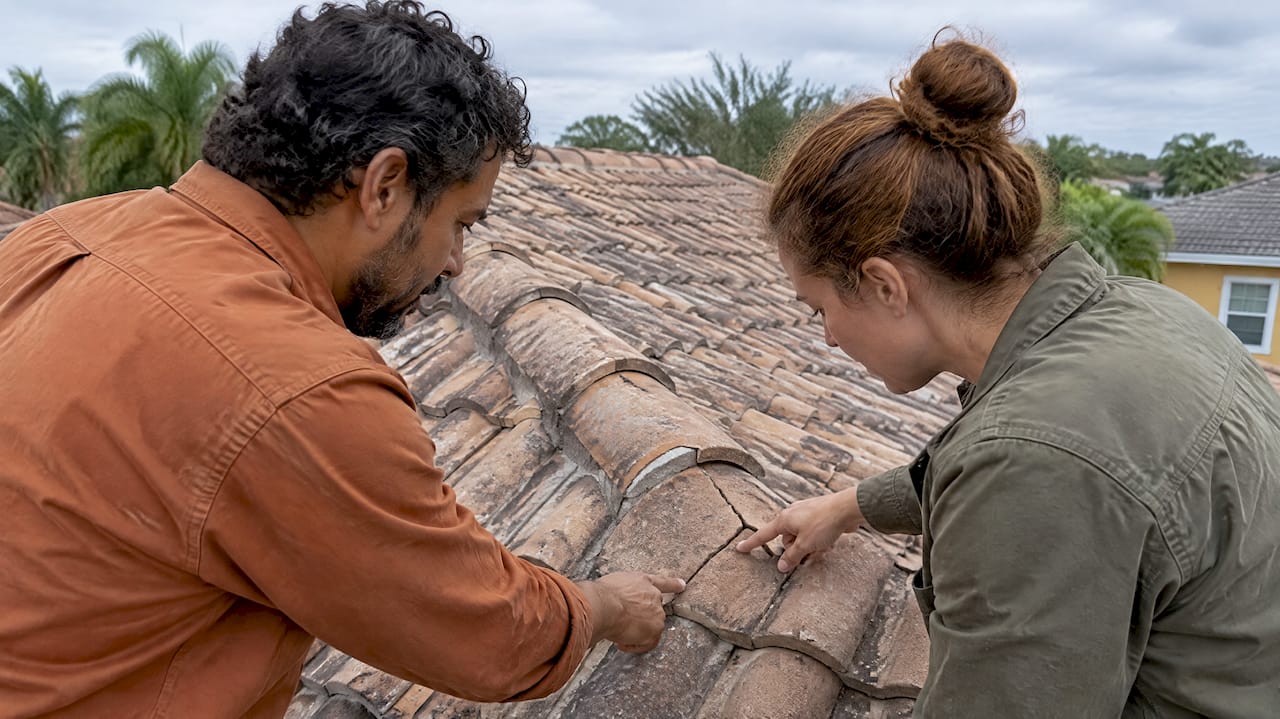
You are allowed to have your own contractor present. A roofer who knows the property can point out damage the adjuster might miss, such as a cracked tile on a back slope or lifted flashing near a vent, and can explain the repair scope line by line. Ask your contractor to bring their report and photos so both sides are looking at the same evidence.
How long it takes and what it costs
There is no national standard for how long an adjuster’s visit lasts. It is usually a single visit, and larger homes, steep roofs with many slopes and dormers, and detached structures take longer. Plan for the adjuster to be on site for roughly an hour or two on an average home, and confirm the appointment window with your insurer.
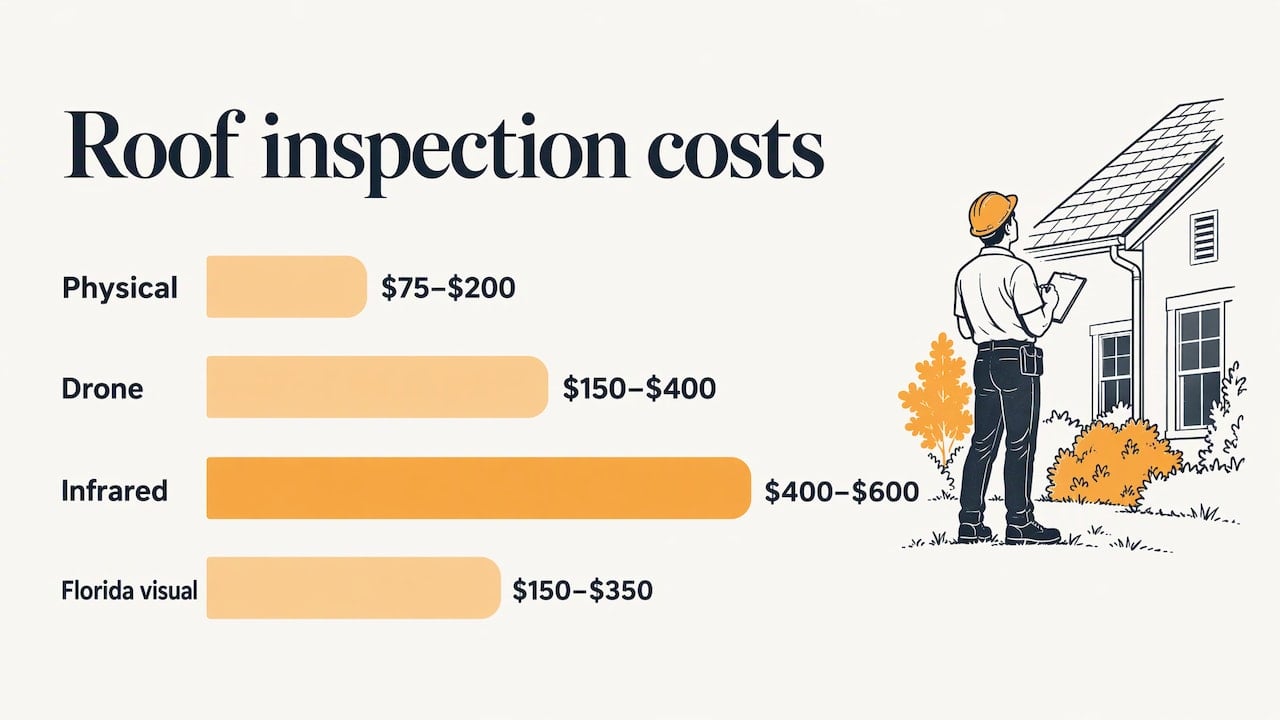
If you hire your own inspector for a report, Forbes Home gives typical ranges: a physical roof inspection costs $75 to $200, a drone inspection $150 to $400 and an infrared inspection $400 to $600. Those figures are from a 2022 article, and local prices vary. A guide to Florida’s Citizens roof condition form reports that a basic visual inspection with the documentation needed generally runs $150 to $350 there.
We do not publish a fixed inspection price, because the scope depends on roof type, size and what the report is for. Ask for a written quote that states what the inspection will cover.
If your roof damage claim is denied
A denial is not always the end. First, get the reason in writing. California’s guide says a denial must be in writing with specified reasons and must tell you that the matter may be reviewed by the Department of Insurance. Other states have their own rules, so check with your state insurance department.
Then work through the reason:
- “Pre-existing wear or age.” A dated roofer’s report that ties the damage to a specific storm, with photos of fresh impact marks, creases or displaced materials, speaks directly to cause.
- “Damage below the deductible.” Check the estimate line by line against your own contractor’s scope. Differences in repair scope are common.
- “No covered damage found.” Ask for a re-inspection and have your roofer attend.
- “Late reporting.” Gather your timeline: when the storm happened, when you found the damage, when you called.
Keep every letter and email. If you still disagree, you can appeal with the insurer, and your state insurance department can explain your complaint options. For a coverage dispute involving a lot of money, a licensed public adjuster or an attorney in your state can advise you on your specific policy.
Our perspective on insurance roof inspections
Most roof insurance problems we see are documentation problems. A roof is rarely denied because the damage is not real. It is questioned because nobody recorded when it happened, what caused it or what it will take to fix.
That is why we approach an insurance inspection the way we approach any roofing project: with plain communication and accurate estimates. We are licensed and insured, we have over 20 years of experience, and we build and repair roofs for the conditions Florida and Missouri homeowners face, from hurricane-season winds to severe storms. Our crews know what wind, water and age look like on a roof, and we can write that up in terms an adjuster can follow.
Our advice is to treat the inspection as a chance to put the roof’s real condition on paper. If the roof needs repair, repair it properly. If it is near the end of its life, plan for replacement and look at upgrades, such as impact-resistant shingles or metal roofing, ventilation and waterproofing at valleys, that make the next roof perform better in your climate.
the author
Get a roof assessment you can use
If an insurer has asked for an inspection, or a storm has left you with questions, we can look at the roof and talk through what we find. GenX Roofing handles roof repair, storm and wind damage restoration, flashing and sealant work, and inspection and maintenance plans for homes in Florida and Missouri. We also handle full replacements and roof upgrades if the roof is near the end of its service life.
Business owners and property managers can also look at our commercial roofing services, including commercial replacement and preventative maintenance plans. To start, visit our roofing services page and request an estimate.
FAQ
Do insurance companies do roof inspections?
Yes. Insurers may inspect in person, with satellite or drone imagery, or both, and aerial imagery is often a screening step before a physical visit. They also send adjusters after you file a claim.
How much does a roof inspection usually cost?
Forbes Home reports a physical inspection typically costs $75 to $200, a drone inspection $150 to $400 and an infrared inspection $400 to $600, based on a 2022 article. Prices differ by region and scope, so ask for a written quote.
How long does an insurance roof inspection take?
No official standard exists. It is usually one visit, and it runs longer on large homes, steep roofs with many slopes and properties with outbuildings. Drone-based inspections can be shorter than a full walk of the roof.
Should I repair my roof before the adjuster comes?
Make temporary repairs that stop further damage, such as a tarp, and keep the receipts. Hold off on permanent repairs until the adjuster has assessed the damage, as California and Hawaii insurance regulators advise.
What if the insurer says my roof is too old?
Ask exactly what documentation is needed. For Florida four-point inspections, insurers may ask for proof of at least five years of remaining useful life on older shingle, tile or metal roofs. A licensed roofer’s report can provide that, or lay out the repair or replacement needed.
Sources
- Understanding How Insurers Evaluate Roof Risk, Connecticut Insurance Department
- Four Point Inspection Guide, Florida Office of the Insurance Consumer Advocate
- How Your Roof Influences Your Home and Business Insurance, Insurance Information Institute
- Insurance approved roof inspection, NRCIA
- Residential Property Claims Guide, California Department of Insurance
- Storm / Flood Claim Information, Hawaii Insurance Division
- How To Make A Home Insurance Claim For Roof Damage, Forbes Advisor
- How Much Does Roof Inspection Cost, Forbes Home
- National Roofing Contractors Association guidance on claims
Recommended
- Hail Damage Roof Inspection: What to Check and Who to Call
- Essential Questions to Ask Before Hiring Your Roofing Contractor
- Keep Your Roof in Top Condition: Expert Roof Maintenance Tips
- Discover 7 Key Indicators of a Reliable Roofing Service