 Post by
A water stain on your ceiling means moisture has reached the drywall or plaster from somewhere above it. The stain is only the symptom. Until the source is found and fixed, the stain can grow, the material behind it can stay wet, and repainting will only hide the problem for a short time. When the source is the roof, the fastest route to a lasting fix is a licensed roofing contractor who can trace the leak and repair it. We do that for homes and commercial buildings in Florida and Missouri.
This guide explains what different stains tell you, which signs need action today, how to protect your property in the first hours, and how to repair the ceiling once the water is stopped.
TL;DR
- A brown or yellow ceiling stain usually points to water that has already soaked through. Treat it as a leak until the source is confirmed.
- A sagging, bulging or cracking ceiling, water near light fixtures or electrical fittings, or a growing wet patch needs immediate professional attention.
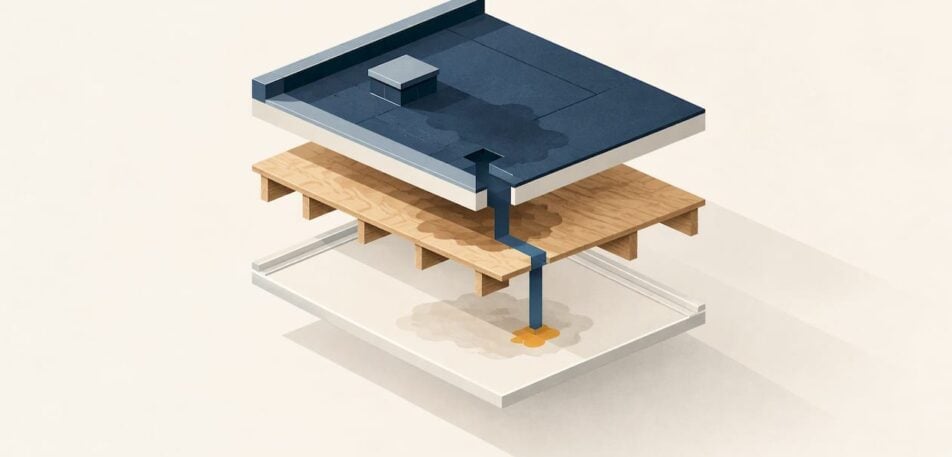
- The roof opening is rarely directly above the stain, so water can enter some distance away and travel before it shows.
- Repair the source first, let everything dry completely, then block the stain and repaint.
- Roof inspections after severe weather and regular gutter and flashing checks are the best defense against a repeat.
Table of Contents
- What a ceiling water stain is telling you
- Warning signs that need action now
- Where the water comes from
- Why the stain is rarely under the hole
- What to do first when water is coming in
- Fix the roof first, then the ceiling
- Keeping stains from coming back
- Talk to us about a roof that is leaking
- Our perspective
- FAQ
- Sources
What a ceiling water stain is telling you
Water that reaches a ceiling has usually passed through several layers first: roofing, underlayment, decking, insulation, and finally the drywall. By the time a mark appears on the finished surface, the water has been in the building for a while. A faint ring often means a slow or intermittent leak. A dark, spreading or dripping patch means water is arriving in volume.
Stains tend to look brown or yellow because water carries dust, rust and other residue out of the building materials and leaves it behind as the moisture dries. Rings that grow outward in layers often show repeated wetting: it rains, the area dries, and the next storm pushes the edge farther out.
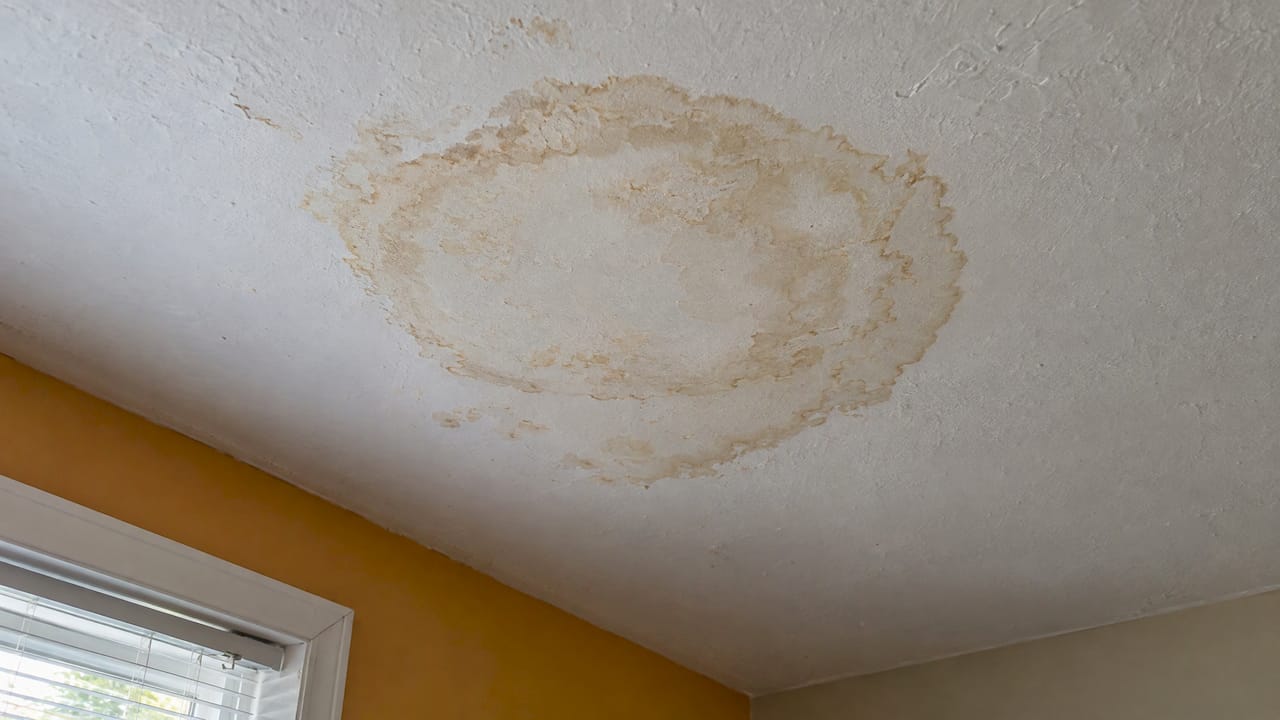
Not every mark is a leak. Soot, dust deposits near air registers and a pattern sometimes called thermal tracking, where cold spots in the framing attract dust, can also darken a ceiling. The simple test is whether the mark is damp, soft or changes after rain. A dry, unchanging mark with no soft spots is less urgent, but it is still worth having looked at if you cannot explain it.
Warning signs that need action now
Some stains can wait for a scheduled visit. Others should not. Call for professional help promptly if you see any of the following:
- A sagging, bulging or cracking ceiling. Saturated drywall is heavy and can fail. Keep people out from under it.
- Water near light fixtures, outlets or other electrical fittings. Turn off power to that area at the breaker if you can do so safely, and have a qualified electrician check it. Do not touch wet fixtures.
- Dripping water or a stain that grows by the hour. Active water entry needs to be stopped, not monitored.
- Peeling or bubbling paint, a musty smell or visible mold. These suggest the area has been damp for some time.
- Wet insulation or dark trails in the attic. This confirms water is passing through the roof assembly.
The U.S. Department of Energy’s building guidance for repairing roofs and ceilings recommends a structural evaluation before repairs, and says to consult a professional engineer if the damage compromises structural integrity. If water has come from an upper floor, the effect on the structure can be larger than the stain suggests; this article on inter-floor leakage and structural integrity explains how persistent water can affect concrete and reinforcement.
Our own guides on the signs of roofing leaks and damage and on recognizing roof damage early cover the exterior and attic clues that usually come before a stain.
Where the water comes from
The stain’s location gives a clue, not an answer. A stain on an upper-floor ceiling or one directly under the attic often involves the roof. A stain on a lower-floor ceiling, or one near a bathroom, kitchen or laundry, may point to plumbing. Water can also condense on cold pipes or HVAC ducts and drip onto a ceiling, with no hole anywhere.
Roof causes
The University of Wisconsin Extension lists defective or displaced flashing, clogged downspouts or eaves, deteriorated roofing, and holes or missing shingles among the common causes of roof leaks. The same publication notes that storm and wind damage, defective materials, faulty construction and gradual aging can all contribute.
In practice, the most common entry points are:
- Flashing around chimneys, vents, skylights and wall junctions, where metal and sealant take most of the stress.
- Worn, cracked, lifted or missing shingles, tiles or metal panels, often after wind or hail.
- Valleys and transitions, where two roof planes meet and water concentrates.
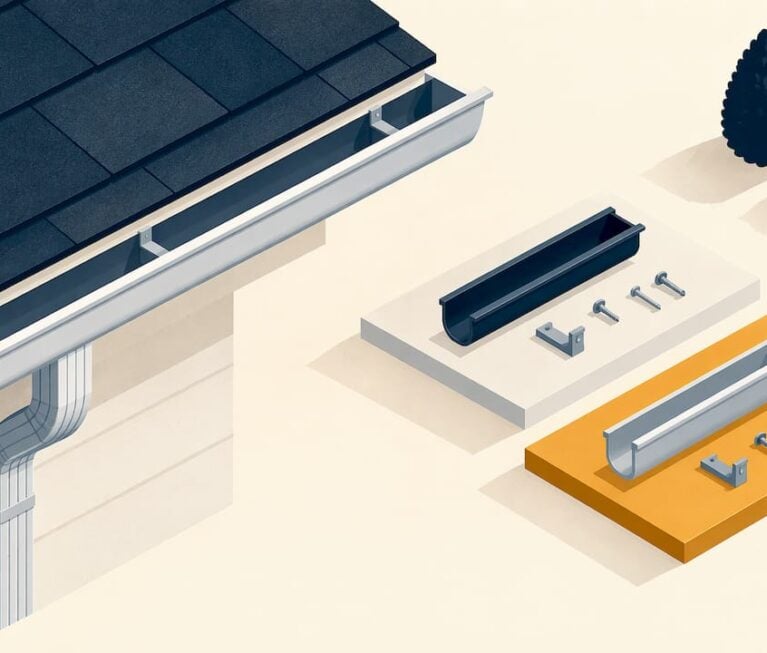
- Clogged gutters, which can back water up under the roof edge.
- Ice dams in colder regions, which can force meltwater under roofing during freeze and thaw cycles. This matters most for Missouri properties.
Non-roof causes
Plumbing supply and drain lines, a leaking shower pan, an air conditioning condensate line, and water entering from an upper wall or balcony can all stain a ceiling. If the stain appears only when someone runs a shower or the AC cycles, and not after rain, plumbing or condensation is the better suspect. If it appears after rain or wind-driven storms, start with the roof.
Why the stain is rarely under the hole
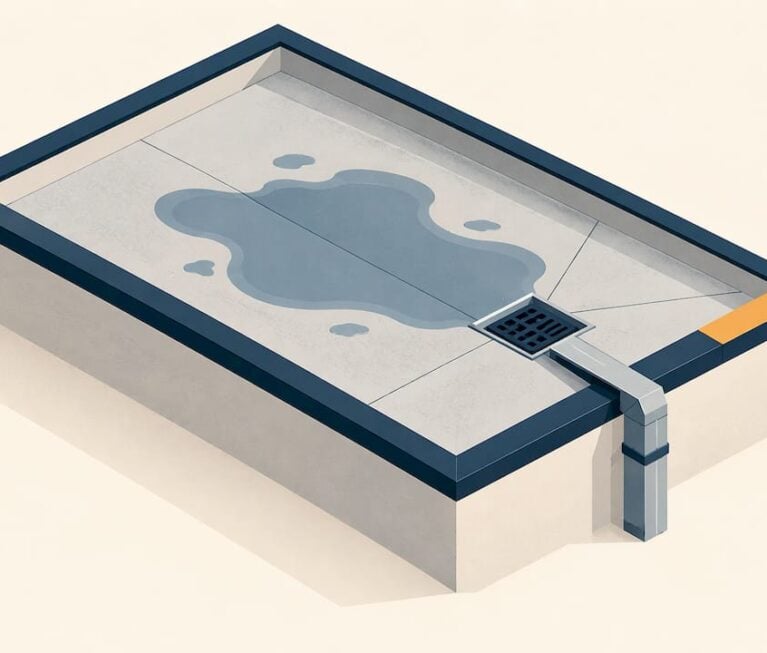
Most people look straight up from the stain and expect to find the damaged shingle directly above it. The University of Wisconsin Extension warns that leaks are rarely located directly above the water spot. Water follows the slope of the decking, runs along rafters or trusses, and drops where it finds a gap or a low point. The entry point can be several feet uphill from the stain.
That is why patching the roof directly over a stain so often fails. The patch is placed where the water came out, not where it came in.
A safe first look goes like this:
- Check the attic, if you can reach it safely, during or just after rain. Look for dark streaks on the underside of the decking, wet insulation, and drip trails along framing. Follow them uphill.
- Look at the roof from the ground with binoculars. The same university guidance recommends this over climbing up, because a wet roof is dangerous. Look for missing or lifted shingles, damaged flashing, and debris in valleys.
- Note the timing. Write down whether the stain grew after rain, wind, a hot day with the AC running, or a bath or shower.
- Photograph it. Take photos of the stain, the attic and the roof with dates. They help your contractor and any insurance claim.
If the source is still unclear, professional leak detection is the sensible next step. Our page on roof leak detection explains how a source is found and what comes next, and we offer emergency leak detection and repair.
What to do first when water is coming in
The goal in the first hours is to limit the damage, not to fix everything. The Massachusetts Department of Public Health’s quick reference on water damage response advises to identify and reduce or eliminate the water source, collect incoming water, move porous items and electronics out of the way, and examine wet materials promptly.
For a ceiling leak, that translates into a short list:
- Protect people and power. Keep out from under a bulging ceiling. If water is near electrical fixtures, shut off that circuit.
- Catch the water. Put a bucket under the drip. If the ceiling is bulging with trapped water, a small hole made at the lowest point, with a bucket below, can release it in a controlled way. Do this only if no electrical hazard is present, and stand clear.
- Move belongings. Furniture, rugs, electronics and stored items should come out of the wet zone.
- Contain the roof opening. The Department of Energy guide recommends water barriers such as tarps to prevent additional damage. Temporary protection on the roof is work for a roofer, not a ladder and a bedsheet-sized tarp.
- Remove wet attic insulation. Fine Homebuilding recommends removing and drying wet attic insulation so the ceiling can dry faster and further damage is reduced.
- Call a licensed, insured roofer. The earlier the source is stopped, the less drywall, insulation and framing is affected.
The same Massachusetts reference classifies rain that comes through a roof, wall, window or door as Category 1 clean water when it first enters. That is the best case, and it is also time-limited: materials that stay wet can grow mold, so speed still matters. Sewage or floodwater is a different, more contaminated category and is handled differently.
If the water came from a storm, a hail or wind event may have damaged more than one spot. Our guide to hail damage roof inspections explains what to check after a storm.
Fix the roof first, then the ceiling
The order matters. Fine Homebuilding’s repair guidance says to repair the roof or plumbing source before repairing water-damaged drywall and to let loosened drywall dry completely before refastening it. Painting over a stain while the leak is active only produces a new stain.
Step 1: Repair the source
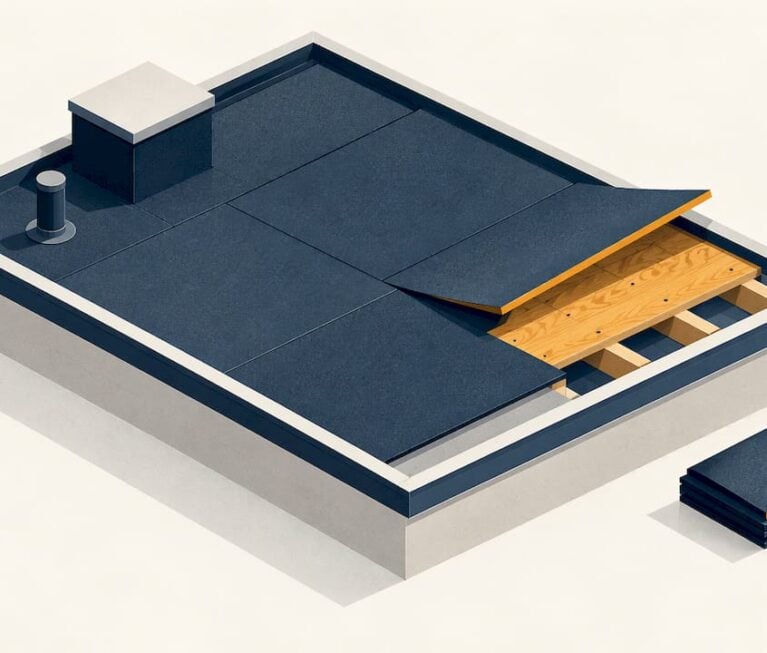
Roof repairs depend on the roof type and how far the leak extends. The University of Wisconsin Extension recommends professional roof repair unless the homeowner is experienced, and advises against walking on patched areas. Typical repairs include replacing damaged shingles, tile or metal panels, resealing and replacing flashing around vents and chimneys, clearing and repairing drainage, and, where the roofing is worn through, replacement. Our roof repair service covers each of these.
Sometimes the water has also reached the decking and attic. Our guide to attic water damage repair walks through the steps that follow a roof fix.
Step 2: Dry everything
Drywall, insulation and framing must be dry before they are covered. The Department of Energy guide warns against reusing unsound materials or materials that cannot dry before being covered. Drywall that is soft, crumbling or sagging should be cut out and replaced. If you see mold, or the area is large, a qualified professional should assess it before work begins.
Step 3: Remove the stain
Here is the answer to what removes a brown stain from a ceiling: scrubbing rarely does, because the color has soaked into the surface. Fine Homebuilding’s guidance is that small stains can be sealed with stain blocker and repainted, while larger damaged areas should be removed, cleaned, thoroughly dried and repaired.
For a small, fully dry stain:
- Remove any loose or flaking paint.
- Make sure the surface is clean and dry.
- Apply a stain-blocking primer. Rust-Oleum’s instructions for its Zinsser Covers Up ceiling product say one coat blocks most water stains and give a minimum of two hours before recoating or applying a topcoat.
- Repaint the whole ceiling plane, not just the patch, so the sheen matches.
If the stain comes back through the primer, water is still reaching that spot or the material is still damp. Go back to the source rather than adding more coats.
Keeping stains from coming back
Most repeat stains come from a leak that was only partly fixed or from a roof that has aged without attention. The Massachusetts reference recommends periodic checks of the roofing, gutters and downspouts, and walk-throughs after severe weather so that water entry is found and fixed promptly.
A practical routine:
- Inspect twice a year and after major storms. In Florida that includes the period after hurricane and tropical storm activity. In Missouri it includes the aftermath of hail and high winds.
- Keep gutters and downspouts clear. Clogged gutters can push water beneath shingles, and gutter cleaning and drainage work is part of what we do.
- Watch flashing and sealant. Vents, chimneys and transitions are the first places sealant wears.
- Upgrade where the roof is failing. Worn materials can be replaced, and impact-resistant shingles or metal roofing and improved ventilation are part of our roof upgrade work.
Property managers and building owners with several roofs benefit most from a schedule. Our commercial inspection guide sets out a checklist and timing, and commercial preventative maintenance plans are available.
Talk to us about a roof that is leaking
If a stain has shown up and you suspect the roof, we can trace the source and repair it. GenX Roofing serves residential and commercial clients in Florida and Missouri, with licensed and insured crews and more than 20 years of industry experience. Our services include emergency leak detection and repair, storm and wind damage restoration, flashing and sealant repair, gutter and drainage work, fascia and soffit repairs, and roof inspection and maintenance plans. See our roof repair services, or for commercial properties, our commercial roofing page.

We aim to give honest, accurate estimates and to keep you informed throughout the project.
Our perspective
A ceiling stain is a conversation starter between you and your roof. The useful question is not how to hide the mark, but where the water entered and what it has touched on the way down.
We approach every leak with that in mind. Florida’s hurricanes and Missouri’s storms test roofs differently, and a repair that ignores local weather tends not to last. That is why we look at the whole roof system: the shingles, tile or metal, the flashing, the valleys, the drainage and the attic ventilation, not just the spot above the stain.
Clear communication matters as much as the repair. You should know what we found, what we recommend, and why, before work begins. Our estimates are meant to be honest and accurate, and our crews are licensed and insured.
For property managers and commercial owners, we believe the cheapest leak is the one found early. Regular inspections and maintenance plans turn a surprise ceiling stain into a scheduled repair.
the author
FAQ
Is a water stain on a ceiling serious?
It can be. A stain often means water has been entering for some time, and wet materials can weaken drywall and framing and encourage mold. A small, dry, unchanging mark is less urgent than a spreading, damp or sagging one, but every active stain deserves a prompt inspection to find the source.
What causes a water mark on the ceiling when there is no visible leak?
The water may be entering farther up the roof and traveling along framing before it shows. Condensation on cold pipes or ducts, a slow plumbing leak, or water from an upper floor can also cause marks. Some marks, such as soot or dust patterns, are not water at all. Check whether the area is damp and whether it changes after rain.
How do I get brown water stains off my ceiling?
Fix the leak and let the area dry completely first. Then remove loose paint and apply a stain-blocking primer before repainting. Small stains can usually be sealed this way. Large or soft sections of drywall should be cut out and replaced.
Can a leaking roof cause damage beyond the stain?
Yes. Water from a roof leak can saturate attic insulation, decking, framing and drywall, and can lead to mold if materials stay wet. That is why the roof repair and a check of the attic should come before cosmetic work on the ceiling.
Should I go on the roof to look for the leak?
No. A wet roof is dangerous. Look from the ground with binoculars and check the attic for drip trails, then have a licensed roofer trace and repair the source.
Sources
- Assessing and Repairing Leaky Roofs, University of Wisconsin Extension
- Repairing Roofs and Ceilings, U.S. Department of Energy
- Quick reference: water damage response in buildings, Mass.gov
- Repairing Water Damage, Fine Homebuilding
- Zinsser Covers Up Ceiling Paint and Primer, Rust-Oleum
- How inter-floor leakage affects structural integrity
- How to Identify and Repair Roof Leaks, GAF
Recommended
- Roof Leak Detection: How to Find the Source and What Comes Next
- Attic Water Damage Repair: Steps, Costs and Prevention
- How to Recognize the Signs of Roof Damage Before It’s Too Late
- Roof Leak Repair: What You Need to Know