 Post by
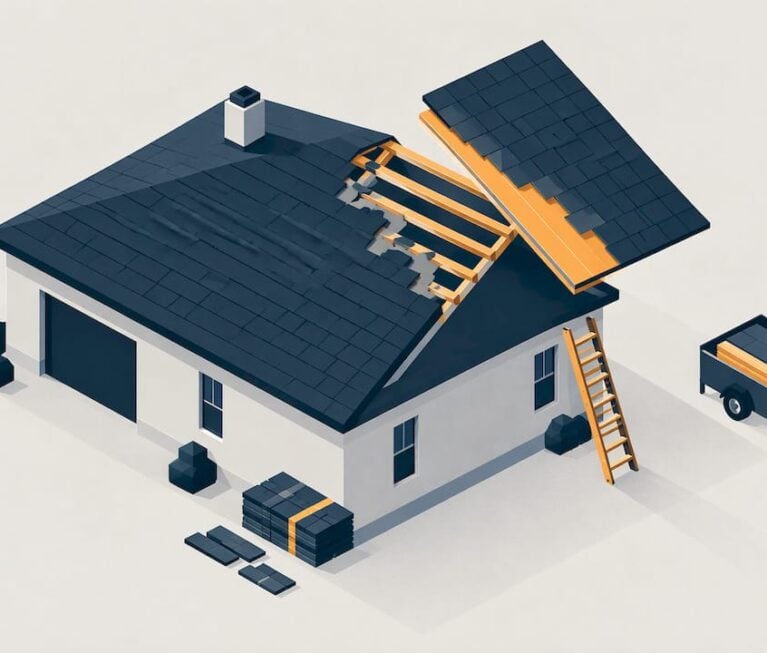
Same day roof repair usually means a roofer comes out within hours to stop water from getting in, then either completes a small permanent fix on the spot or installs a temporary protection such as a tarp or sealant until a lasting repair can be scheduled. Small, well-defined problems can often be finished in one visit. Larger storm damage is typically handled in two stages: protect the home today, repair it properly once materials, approvals and weather allow.
This guide explains which roof problems justify an urgent call, what happens during a visit, what drives the price, and what you can safely do while you wait. It is written for homeowners, business owners and property managers in Florida, Missouri and similar storm-prone areas.
TL;DR
- Active leaks, missing shingles or tiles, storm punctures and fallen limbs are the problems that most often justify a same day call.
- A same day visit commonly ends with a temporary seal. A permanent repair depends on the damage, the roofing material, parts availability and weather.
- Stay off the roof. Contain water indoors, photograph everything and call a licensed, insured roofer.
- Emergency pricing is the repair cost plus an urgency premium, so ask for both to be itemized in writing.
- We handle emergency leak detection and repair for homes and commercial buildings in Florida and Missouri.
Table of Contents
- What same day roof repair actually means
- Which roof problems need urgent attention
- What to do while you wait for the roofer
- How an emergency repair visit works
- What can be finished in one day, and what usually cannot
- When a same day fix is only temporary
- What same day roof repair costs
- Who should repair a leaking roof
- Our perspective on urgent roof repair
- Get help with an urgent roof problem
- How to avoid the next emergency
- FAQ
- Sources
What same day roof repair actually means
“Same day” describes how fast a roofer responds, not a promise that the whole roof is fixed by evening. In practice, a same day call covers three jobs:
- Assessment. A roofer finds where water is entering and what is damaged.
- Stopping the water. This may be a repair of a small area or a temporary measure such as tarping.
- A plan for the permanent fix. This includes scope, materials, timeline and a written estimate.
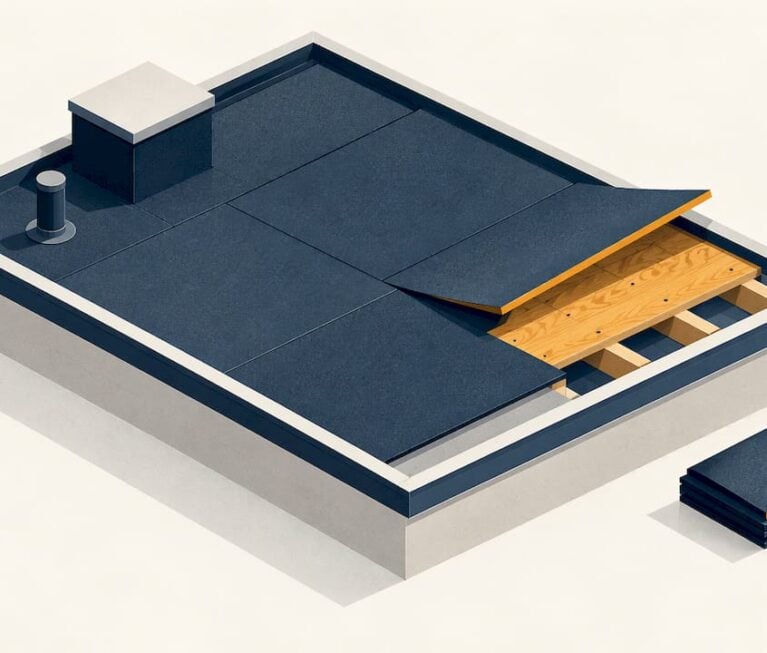
The distinction matters because roofs fail in different ways. A lifted flashing strip near a vent can often be resealed or replaced within a single visit. A section of torn decking beneath missing shingles needs structural work and matching materials, and that rarely fits in an afternoon.
Which roof problems need urgent attention
Not every roof issue is an emergency. These are the ones where waiting a few days can turn a modest repair into a larger one:
- Active leaks or dripping ceilings. Water travels along rafters and insulation, so the stain on your ceiling is often some distance from the actual opening.
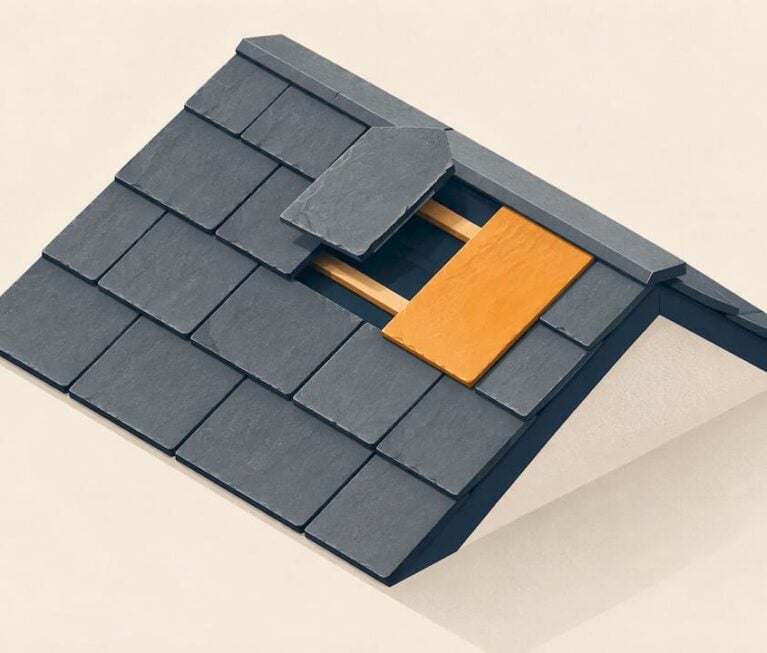
- Missing shingles, tiles or metal panels after wind. The underlayment beneath is not designed to be the final barrier against rain.
- Punctures from branches, hail or debris. Even a small hole lets in water with every storm.
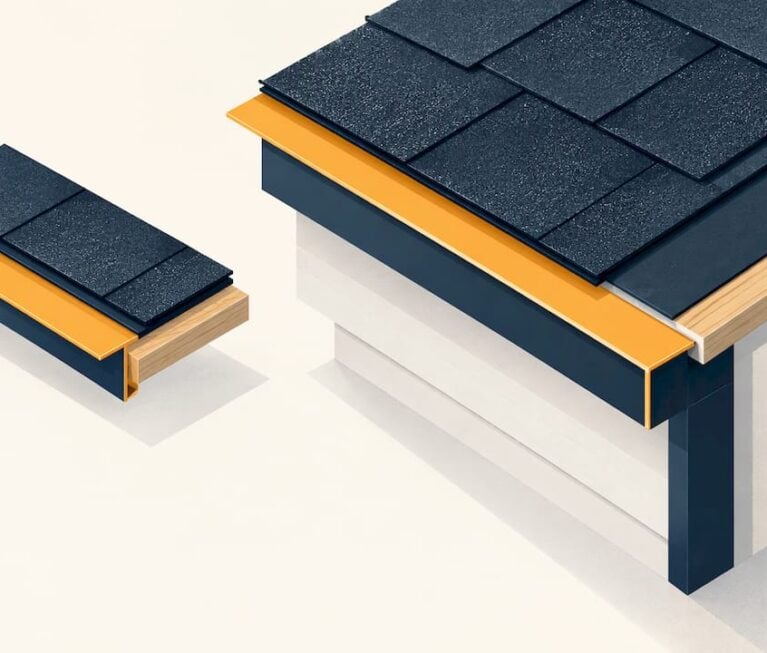
- Damaged flashing around chimneys, vents, skylights and valleys, which are common entry points.
- Sagging areas or bulging ceilings. These can mean trapped water or structural strain. Keep people out of the room and call right away.
- Storm damage on a commercial roof, where interior water can interrupt operations, damage inventory and affect tenants.
Slower problems such as aging granule loss, minor cosmetic wear or a small stain that has not changed can usually wait for a scheduled inspection. If you are unsure, describe what you see by phone and a roofer can help you judge the urgency.
What to do while you wait for the roofer
Your priority is limiting damage inside without taking risks outside.
Stay off the roof
Wet roofing, steep pitches and storm debris make falls a real danger. Leave the roof work to a crew with the right equipment and training. You can photograph the exterior from the ground, and a phone zoom shows a lot.
Contain the water indoors
- Move furniture, rugs and electronics out from under the leak.
- Place buckets or tubs under drips and lay towels around them.
- If water is pooling in a ceiling, keep people away from that area. If lights, outlets or fixtures are wet, switch the circuit off at the panel only if you can do so safely, and call an electrician if you have any doubt.
- Open nearby doors or run a fan to help the area dry once the water has stopped.
Document everything
Take dated photos and short videos of the damage inside and outside before you clean up. Keep receipts for any emergency measures. If you file a claim, your insurer will ask what happened and what it cost, and clear records make that conversation simpler. Check your own policy or ask your agent what it requires for temporary repairs.
Dry out interior materials quickly
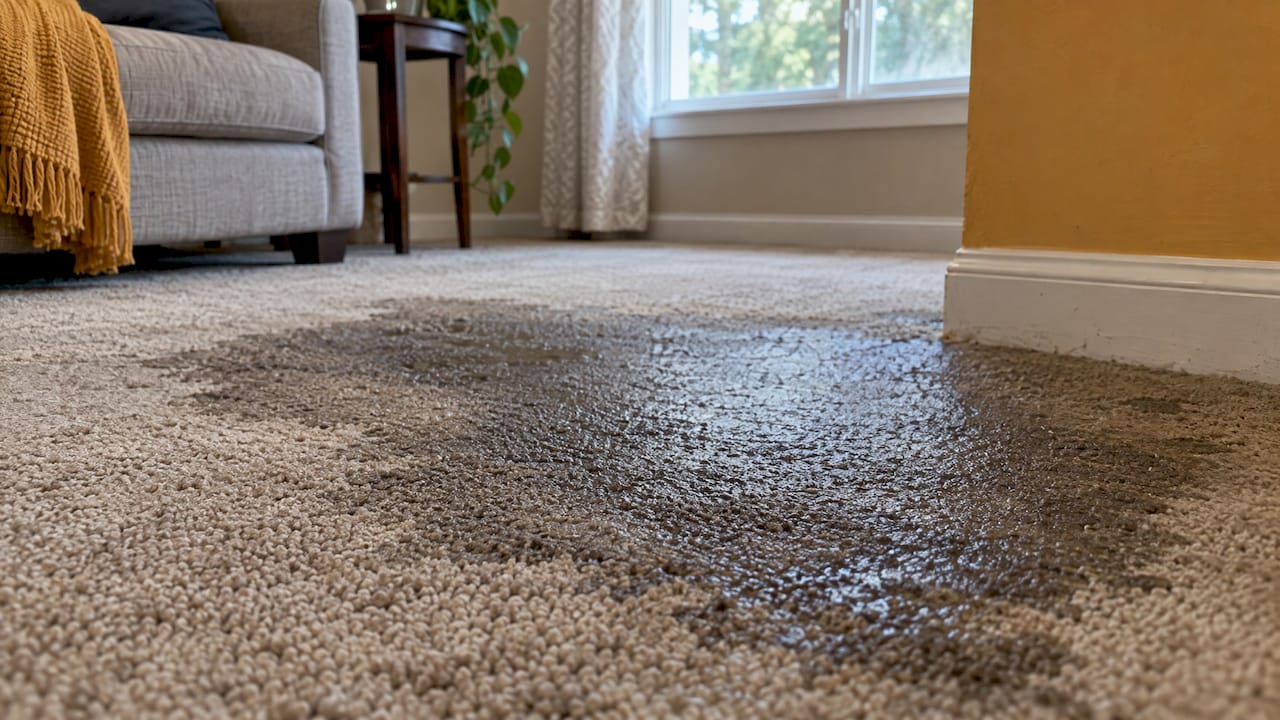
Water that reaches ceilings, insulation and floors can cause lasting damage when it sits. Soaked carpet in particular is time-sensitive, and this guide on what to do with water damaged carpet in the first 48 hours shows why acting promptly on the inside matters as much as stopping the leak above it.
How an emergency repair visit works
A typical visit follows a predictable order, though the details change with the roof type and weather.
- Safety check. The crew looks at access, wet surfaces, electrical hazards and any visible structural concern.
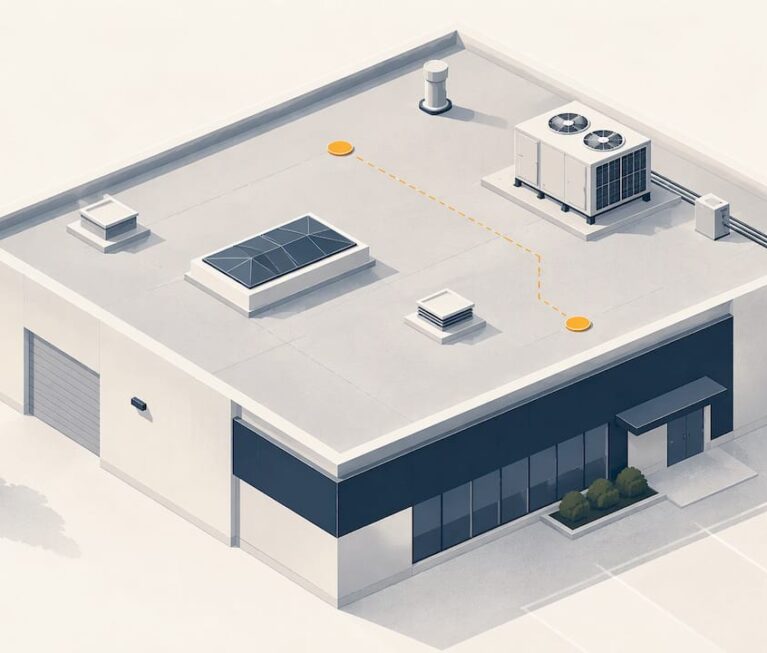
- Inspection. They trace the leak from the interior and then examine the roof surface, flashing, penetrations, valleys and gutters. Our page on roof leak detection explains how the source is usually found and what follows.
- Immediate protection. Depending on the damage, this might be replacing a few shingles, resealing flashing, or securing a tarp or similar covering over the opening.
- Findings and options. You should get a clear explanation of what was done today, what remains, and what a permanent repair involves.
- Written estimate. The scope, materials, labor and terms for the permanent work should be put in writing before the next step begins.
What can be finished in one day, and what usually cannot
| Situation | Often possible the same day | Usually needs a follow-up visit |
|---|---|---|
| Small leak at a vent or chimney | Resealing or replacing flashing and sealant | Hidden decking rot found after removal |
| A few missing or lifted shingles | Replacing the affected shingles | Matching discontinued shingle types |
| Wind-lifted tile or metal panel | Securing or replacing a few pieces | Replacing many pieces or special-order panels |
| Puncture from a branch | Temporary cover or small patch | Structural repair to rafters or decking |
| Widespread storm damage | Tarping to protect the home | Full section repair or replacement |
| Persistent leak with unclear source | Initial inspection and temporary protection | Testing and complete repair of the source |
The common thread: a repair can be finished the same day when the damage is small and the materials are on hand, the decking underneath is sound, and the weather allows safe work. When any one of those conditions is missing, a temporary measure is the responsible first step.
When a same day fix is only temporary
A temporary repair is not a lesser service. It is what keeps water out while the permanent work is planned correctly. But it should not become the long-term plan. Tarps can shift in wind and sealants can wear, so ask your roofer for a realistic timeframe for the permanent repair.
What decides whether a repair can be permanent that day:
- Weather. Many roofing materials and sealants need dry conditions to be installed correctly.
- Material availability. Tile, metal panels and specific shingle lines may need to be ordered to match.
- Hidden damage. Saturated insulation or soft decking only shows once the surface is opened.
- Scope and approvals. Larger storm claims may need an insurance adjuster before the work proceeds.
- Roof age. On an older roof, a patch can be a poor investment compared with a planned replacement. A roofer can walk you through both.
If the roof is near the end of its service life or repeatedly leaking, a permanent fix may mean roof replacement rather than another patch. Our 2026 roof replacement timeline shows what that process looks like.
What same day roof repair costs
Prices vary by region, roof type, height, access and the extent of damage, and we do not publish fixed prices because every roof is different. For general context, one industry cost guide puts emergency roof repair at roughly $250 to $3,200 for common problems, professional tarping at about $200 to $1,500, and major storm or tree damage at $5,000 to $15,000 or more. The same guide notes that emergency crews may add a same-day surcharge, a call-out fee or an after-hours labor premium. Treat these as ballpark figures, not quotes.
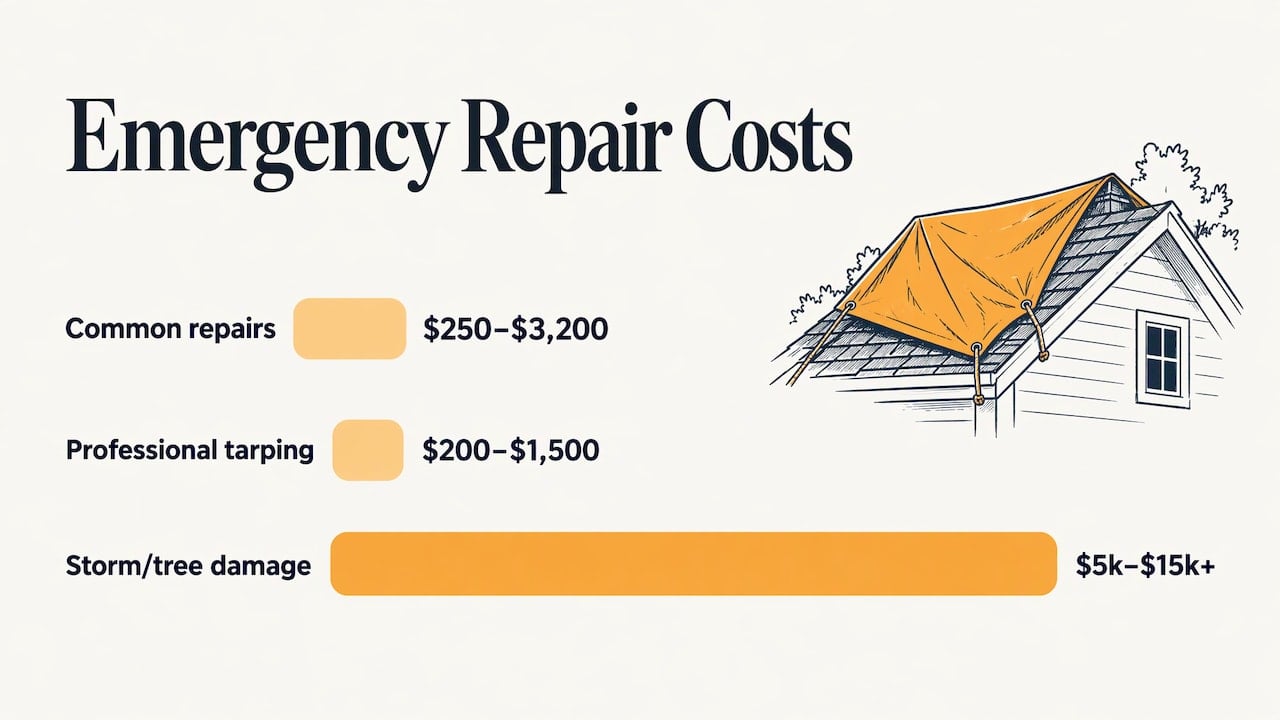
A useful way to read an emergency quote is to see two prices stacked together: the cost of the repair itself and the cost of the urgency. When both appear as separate lines, you can compare them fairly and understand what you are paying for.
What a good estimate includes
According to one roofing estimate checklist, a complete repair estimate should contain:
- The scope of work in plain language
- Materials specified by product and brand
- Labor priced separately from materials
- Access and disposal costs
- Warranty terms
- The total, including tax
- License and insurance information
- Photos of the damage
- Change-order terms for hidden damage found during the work
That last item is worth discussing before work begins. If the crew opens a section and finds rot, you should already know how the additional work will be priced and approved. Approving added cost mid-project is a decision homeowners and property managers face often, and this walkthrough on approving a repair that goes over budget outlines how to handle it. For more on how roofing costs add up, see our guide to hidden costs in roofing estimates and our overview of roof repair costs in Tampa Bay.
Who should repair a leaking roof
Hire a licensed and insured roofing contractor, not a door-to-door crew that appears after a storm. Licensing rules differ by state and sometimes by city or county, so confirm what applies where your property is. As one example, Oregon’s state construction board notes that hiring a licensed contractor gives homeowners access to dispute resolution and lets them check a contractor’s license status and complaint history. Look up your own state or local licensing office before you sign anything.
Before you agree to work, ask for:
- The contractor’s license and proof of liability and workers’ compensation insurance
- A written scope and estimate
- Photos of the damage and of the temporary protection
- A clear statement of what the temporary fix does and does not cover
If water has already damaged a ceiling, you may also need drywall repair after the roof is sealed. Finishing trades such as ceiling repair and drywall specialists handle that stage once the source of the leak is resolved.
Our perspective on urgent roof repair
Roof emergencies rarely arrive at a convenient time, and the first call is usually made under stress. Over more than 20 years working in Florida and Missouri, we have seen that homeowners and property managers want the same few things: someone who explains what is happening, an honest estimate, and a repair built for the weather the property will face again.
That is why we treat an urgent visit as the start of a plan, not a quick patch. We aim to stop water entry, explain what we found in plain terms, and lay out the permanent repair so you can make a decision with full information. In hurricane and storm regions, a repair that ignores the next season’s wind and rain only moves the problem.
We also believe the right fix depends on the roof. Sometimes that is a flashing repair or replacing a few shingles, tiles or metal panels. Sometimes it is an upgrade, such as impact-resistant shingles, improved ventilation or better waterproofing at valleys and transitions, so the same damage is less likely to return.
Our crews are licensed and insured, and we work on both residential and operating commercial sites, where minimizing disruption matters as much as the repair itself.
the author
Get help with an urgent roof problem
If water is getting in, we can inspect the roof, find the source and tell you what can be done now and what should follow. Our roof repair services include emergency leak detection and repair, storm and wind damage restoration, shingle, tile or metal panel replacement, and flashing and sealant repair around vents and chimneys. For businesses, we also offer commercial roof replacement and preventative maintenance plans.

In the Tampa Bay area, see our page on emergency roof repair with licensed roofers, or start from our roofing services overview to contact us.
How to avoid the next emergency
Most urgent repairs trace back to something that could have been caught earlier. A few habits make a difference:
- Schedule inspections after major storms and as part of a regular maintenance plan. We offer roof inspection and maintenance plans for homes and commercial properties.
- Keep gutters and drainage clear. Blocked gutters push water toward the fascia, soffit and roof edge.
- Repair small flashing and sealant problems early. They are among the cheapest fixes and among the most common leak sources.
- Consider upgrades where your roof is exposed: impact-resistant shingles or metal roofing, better ventilation and waterproofing at valleys.
- Know your plan before a storm. Keep your roofer’s number, your insurance policy details and a folder for photos and receipts in one place.
For more on timing and costs of delay, read the real cost of delaying roof repairs in Florida and our guide to storm damage roof repair and who to call.
FAQ
Can a roof really be repaired the same day?
Often yes, when the damage is small, the materials are available, the decking underneath is sound and the weather is dry. Replacing a few shingles or resealing flashing are typical examples. Larger damage usually gets a temporary seal first, followed by a permanent repair on a scheduled date.
How long does a temporary roof repair last?
It depends on the method, the weather and the roof. A temporary cover is meant to bridge the gap until the permanent repair, not to last through another season, so ask your roofer for a recommended timeframe and book the permanent work promptly.
Should I call my insurance company or a roofer first?
If there is active water entry, protecting the home comes first, so contact a roofer and photograph the damage. Then read your policy or call your agent about reporting requirements and what temporary repairs are covered. Keep all receipts and photos for the claim.
Is it safe to patch a leaking roof myself?
We do not recommend it. Wet surfaces, height and storm debris create a serious fall risk, and an improvised patch can hide the real source of the leak. Contain water inside the home and let a licensed, insured roofer handle the roof.
What should I ask a roofer on an emergency call?
Ask for their license and insurance, what they will do today, what remains afterward, and how hidden damage found during the work will be priced and approved. Request the estimate in writing with labor and materials listed separately.
Sources
- Emergency Roof Repair Cost 2026: $250–$3,200 + What to Do
- Roof Repair Estimate: What It Should Include (2026)
- Oregon Construction Contractors Board homeowner newsletter
Recommended
- Your Go-To Emergency Roof Repair Solutions for Quick Relief
- Find the Best Roof Repair Companies for Your Home Today
- Expert Emergency Roof Repair Services in Tampa Bay
- 10 Signs Your Roof Needs Repair or Replacement Now