 Post by
A commercial roof inspection is a systematic review of the whole roof system: the membrane or metal panels, flashing, drainage, rooftop equipment and the interior ceilings below. Done at least twice a year and after severe weather, it finds small defects while they are still small repairs. Done by a licensed, insured roofing contractor who documents what they find, it also gives you the paper trail that warranties and insurers look for. At GenX Roofing, we offer commercial preventative maintenance plans and commercial roof replacement for properties in Florida and Missouri, so the inspection leads straight to a decision, not just a report.
TL;DR
- Inspect a commercial roof at least twice a year, ideally spring and fall, and again after hurricanes, tornadoes, hailstorms or other severe weather, as the National Roofing Contractors Association (NRCA) recommends.
- A good inspection covers the roof cover, drainage, perimeter flashing, rooftop equipment, skylights and hatches, plus the ceilings and walls inside.
- Standing water, punctures, failed seams, loose flashing and water stains below the deck are the findings that most often lead to repair.
- A leak at the ceiling is rarely where the water enters the roof, so a leak investigation should be systematic, not a spot patch.
- Written and photo records of every inspection and repair protect your warranty and strengthen an insurance claim.
Table of Contents
- Why a commercial roof needs regular inspection
- How often to inspect a commercial roof
- What a commercial roof inspection includes
- What makes a commercial roof fail an inspection
- Finding and fixing a commercial roof leak
- What affects the cost of an inspection and of leak repairs
- Keeping records that protect your warranty and claims
- Our perspective on commercial roof inspections
- Schedule your commercial roof inspection
- FAQ
- Sources
Why a commercial roof needs regular inspection
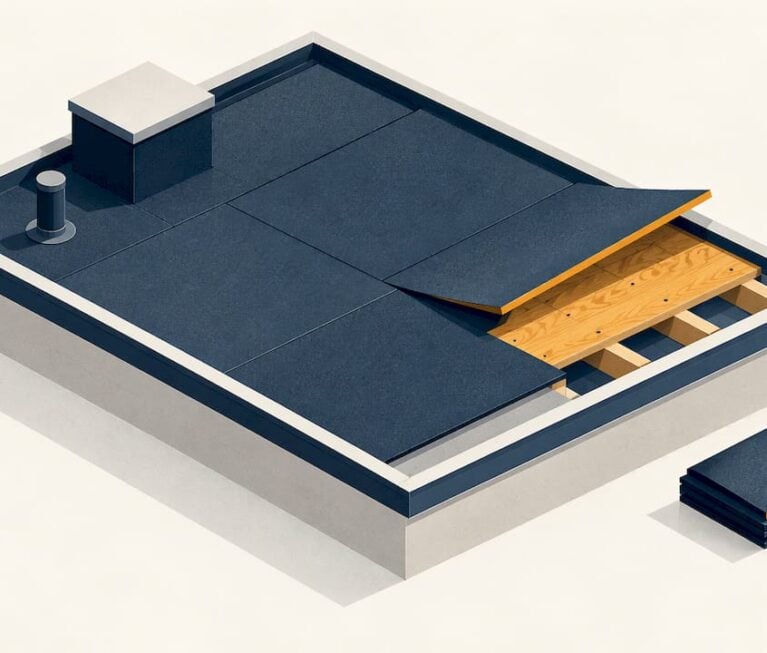
Most commercial roofs are low-slope or flat. Water sits on them longer than it does on a pitched residential roof, and the rooftop is crowded with HVAC units, vents, drains and penetrations. Every one of those is a place where the roof cover is cut, sealed and expected to stay sealed for years.
The cost of ignoring this adds up. The NRCA’s view is that preventative maintenance reduces the extent and cost of repairs because problems are identified before they spread. Insurance risk consultants at Chubb make a related point: visible interior leaks may appear only after an underlying roof problem has become acute. By the time a tenant calls about a stained ceiling tile, the insulation above it may already be saturated.
There is also a coverage side. Manufacturer warranties and insurance policies commonly expect documented upkeep, and a missing maintenance record can make a severe-weather claim harder to defend. That is the practical reason property managers keep inspection reports on file, not only the roof itself.
How often to inspect a commercial roof
The baseline is twice a year. The NRCA recommends preventative inspections at least twice yearly, preferably in spring and fall, with additional inspections after severe weather such as hurricanes, tornadoes and hailstorms.
Why spring and fall? Spring shows what winter did: freeze-thaw cracking, ice and wind damage, clogged drains. Fall gets the roof ready for the next season by clearing debris and fixing weak points before cold or storm weather arrives. In Florida, where hurricane season shapes the calendar, that second inspection belongs well before the season peaks. In Missouri, the spring thunderstorm and hail season makes a post-storm check just as important.
Some roofs need more. Chubb advises that frequency should vary with roof material, age and geographic location. A loss-control guide from the insurer Everest goes further, suggesting more frequent checks for older, altered or heavily trafficked roofs, and for operations highly sensitive to water damage such as data rooms, food storage or medical supplies.
A simple way to set your own schedule:
- Start with two professional inspections a year.
- Add an inspection after every named storm, tornado warning, hail event or high-wind event that affects your area.
- Add extra checks if the roof is past mid-life, has had equipment added or removed, or sits above water-sensitive contents.
- Keep rooftop equipment on its own service routine. The logic is the same one used in this commercial maintenance checklist: scheduled, recorded visits catch faults before breakdowns.
A recurring plan removes the need to remember any of this. Our commercial preventative maintenance plans are built around that kind of scheduled routine for commercial properties, and our article on preventative maintenance for commercial roofs in Florida explains what it looks like in a hurricane climate.
What a commercial roof inspection includes
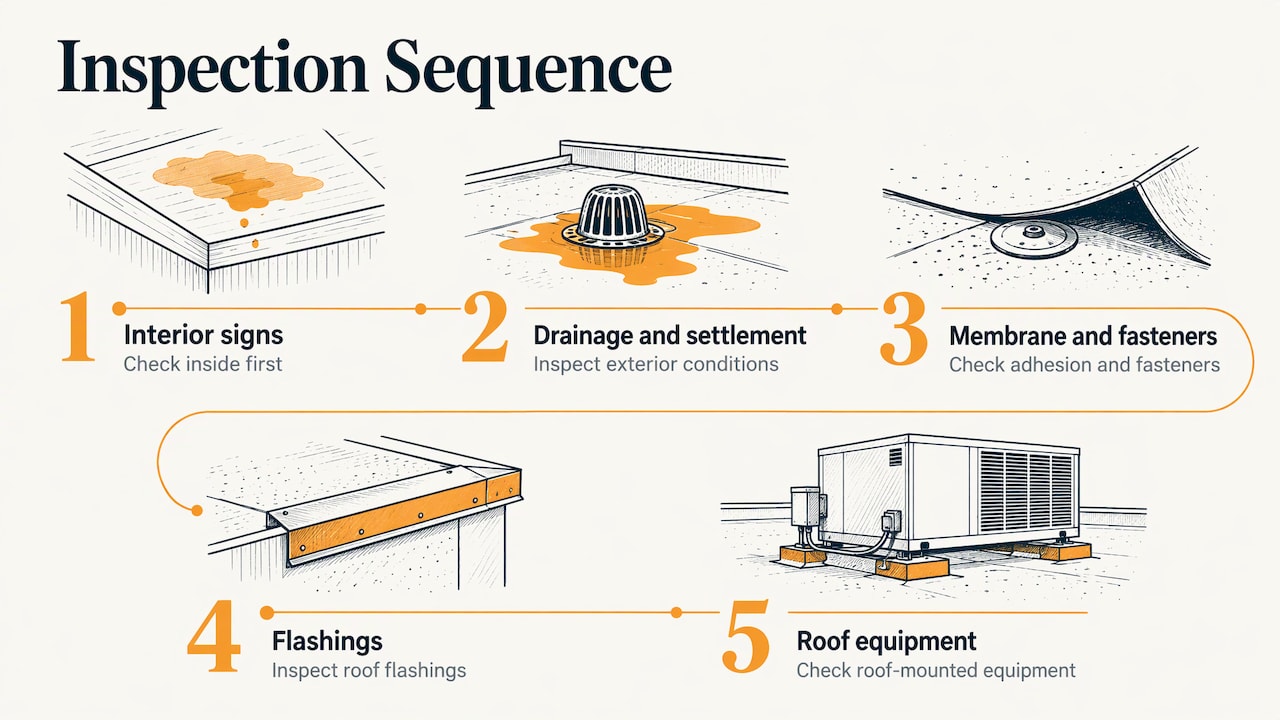
A thorough inspection works from the inside out and from the edges in. Chubb’s guide describes a methodical sequence: interior signs first, then exterior drainage and settlement, membrane adhesion and fasteners, flashings, and roof-mounted equipment. A practical checklist, such as the one in ICLR’s roof inspection guide, covers the roof cover, drainage, perimeter flashing, rooftop equipment, lightning protection, skylights and hatches.
Inside the building
The inspector looks at ceiling tiles, walls near the roofline and around penetrations for stains, sagging, mold or peeling paint. These are the first visible signs that water is getting through, and they tell the inspector where to look on the roof.
On the roof surface
What counts as a defect depends on the roof system. ICLR lists these system-specific checks:
| Roof system | What the inspector looks for |
|---|---|
| Metal | Loose screws, deteriorated washers, worn paint, rust |
| Built-up or modified bitumen | Blisters, cracks, punctures, weathering |
| Single-ply (TPO, PVC, EPDM) | Tears, seam failure, gaps, backing-out fasteners, brittleness |
If your roof is modified bitumen, our guide to modified bitumen roof repair covers methods and timing in more detail.
Drainage
Drains, gutters and downspouts should be free of leaves, sticks, construction debris, dirt and granules. ICLR also says standing water should be corrected by removing blockages or confirming that gutters have the right slope. Long-term ponding adds weight and speeds up membrane wear, so it is one of the findings worth acting on first.
Flashing, penetrations and rooftop equipment
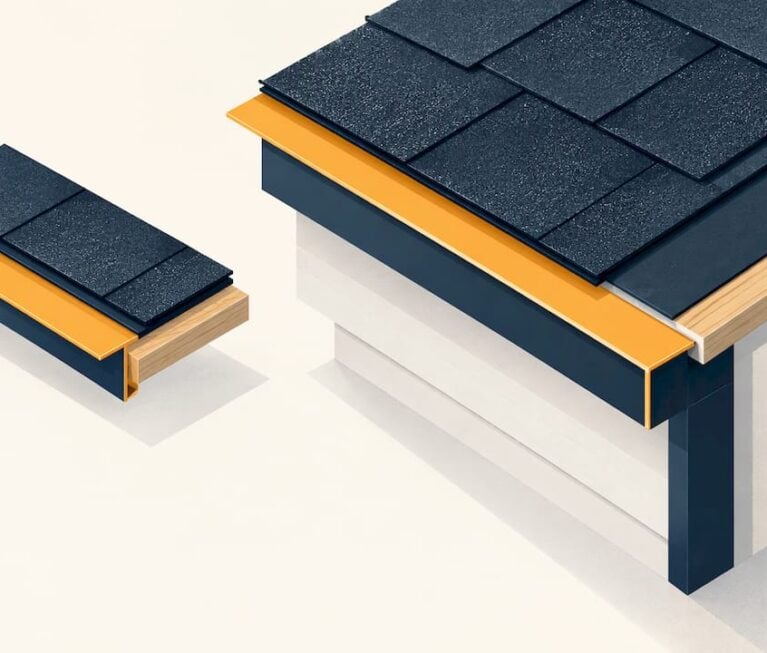
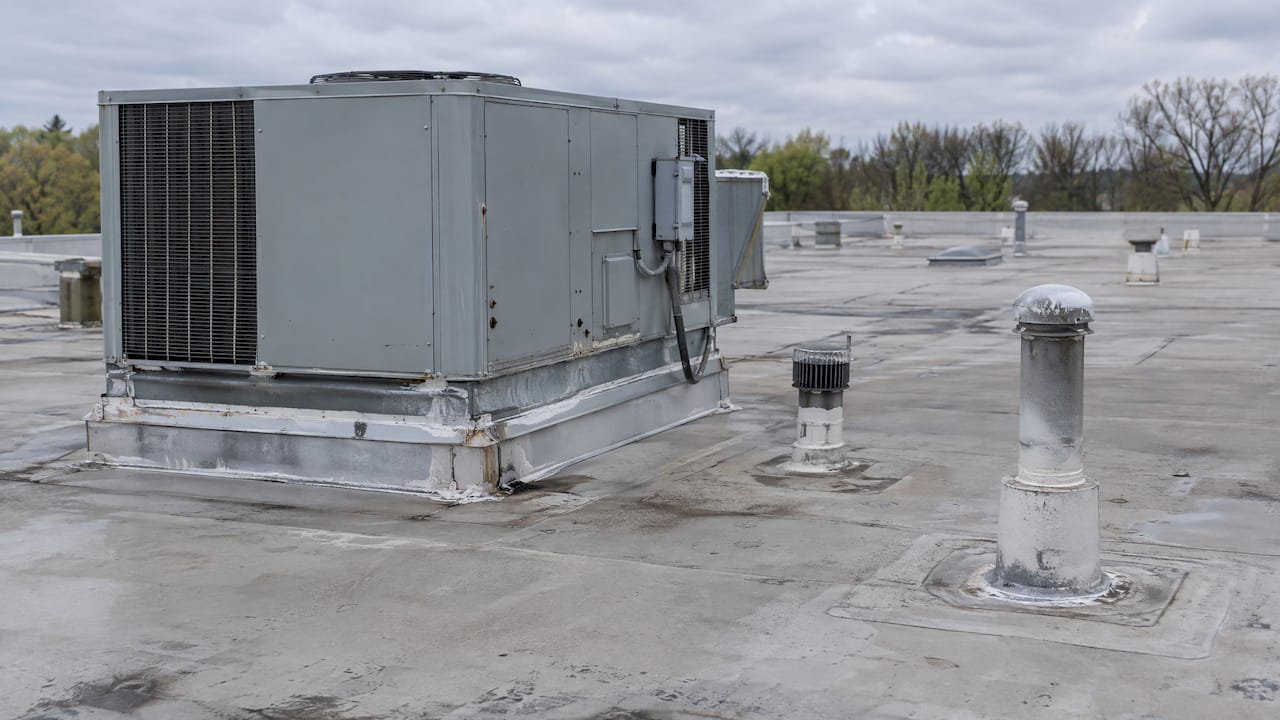
Perimeter flashing, pipe boots, curbs, skylights and the areas around HVAC units are where most leaks begin. An article in Roofing Contractor notes that weak spots and improperly sealed seams can cause leakage and increase vulnerability to wind and hail, which is why punctures, ponding and equipment areas get attention first when deciding between repair and restoration.
What makes a commercial roof fail an inspection
A roof does not pass or fail in a single moment. The inspector rates condition and sorts findings by urgency. The signs that usually trigger repair, according to ICLR, include:
- Long-term standing water
- Mold, mildew or vegetation growing on the roof
- Water damage beneath the roof, such as stained decking or wet insulation
- Tears, punctures, cracks and blisters in the cover
- Failed seams, gaps and backing-out fasteners
- Rust on metal components
- Loose flashing and exposed membrane
The finding to treat as urgent is any sign of trapped moisture. Wet insulation does not dry on its own under a sealed membrane, and it keeps lowering the roof’s performance while hiding the problem.
For storm-related damage, our guides on hail damage roof inspection and storm damage roof repair explain what to check and the order to act in.
Finding and fixing a commercial roof leak
A leak is often where an inspection becomes a repair project. The hard part is that water travels. It can enter at a seam or a curb, run along the deck or insulation, and drip from a ceiling many feet away. Patching where the drip appears is the most common reason leaks come back.
The Western States Roofing Contractors Association has issued a technical bulletin, reported by Building Enclosure in August 2026, recommending comprehensive leak investigations by qualified roofing or building-envelope professionals using ASTM D7035 for systematic evaluation of mechanically attached roof systems. ASTM D7035 is a standard test method for finding leaks in low-slope roofs, and the point of it is a repeatable process instead of guesswork.
A sound leak response runs in this order:
- Document the interior. Photograph stains and note where and when water appears, including whether it follows rain, wind direction or HVAC operation.
- Contain the damage. Move contents, protect equipment and place temporary protection if water is active.
- Investigate the roof systematically. Work from the interior location up and back along drainage paths, checking seams, flashings, penetrations, drains and equipment curbs.
- Decide: repair, restore or replace. More on this below.
- Repair, then verify. Confirm after the next rain that the interior stays dry, and record it.
We cover the process in detail in our guide to roof leak detection, and our commercial roof leak repair services for Florida businesses page describes how leak calls are handled. Emergency leak detection and repair is part of our roof repair services.
Repair, restore or replace
Roofing Contractor’s 2023 assessment article draws a useful line. Minor leaks and limited damage may be patched, while significant leaks may require restoration or tear-off and re-roofing. Restoration is presented as suitable when the roof is in good condition, needs repair on less than 25% of its area, and the owner wants another 10 to 20 years of service.
A worked example: a 20,000 square foot roof with three failed seams and one damaged curb flashing is a repair job. The same roof with wet insulation across a third of its area is no longer a patching question, because more than a quarter of the roof needs work. In that case the inspection report should lay out restoration and replacement side by side, with the scope of each, so you can compare them on the same terms. Our guide to commercial roof replacement: costs, timing and process walks through what that decision involves.
What affects the cost of an inspection and of leak repairs
Prices vary too much by region, roof size and access to quote a single figure responsibly, and we do not publish a price list for inspections or repairs. These are the factors that move the number:
- Roof size and complexity. More square footage, more penetrations, parapets and multiple roof levels all add time.
- Roof system and age. A mechanically attached single-ply roof, a metal roof and a built-up roof each call for different checks and different repair methods.
- Access and safety. Roofs without fixed access, or with limited fall-protection points, take longer to survey.
- Scope of the investigation. A visual condition survey is lighter than a leak investigation with systematic testing.
- Extent of damage. A repair that stays local is a different cost class than one that exposes wet insulation or deck damage.
- Urgency. Emergency leak response outside normal hours is scoped differently from a scheduled repair.
The cheapest way to cut repair costs is the one the NRCA points to: find problems early. A written estimate that names the scope, the materials and the area covered lets you compare quotes fairly. Honest and accurate estimates are something we put weight on at GenX Roofing, because a repair priced low and expanded later costs you more than one priced right.
Keeping records that protect your warranty and claims
An inspection is only as useful as what is written down. The NRCA guidance says conditions should be documented in writing and with photographs, debris removed during the visit and repairs made promptly. Everest recommends that your roof file hold the warranty, installation date, contractor, manufacturer, system and components, leak history, repair cost and repair duration.
For a property manager with several buildings, that file is what lets you plan capital spending. A roof with a clean inspection history and documented repairs is easier to budget, easier to insure and easier to sell.
Owner housekeeping has a place too. The NRCA notes that owner responsibilities can include removing rooftop debris and trimming overhanging branches, while repairs beyond basic housekeeping should go to qualified roofing professionals, especially when a warranty applies. Chubb adds that a service agreement with the roof installer is the best choice for routine maintenance.
Our perspective on commercial roof inspections
We think of an inspection as the start of a plan, not a standalone report. A roof in Florida faces hurricane-driven wind and rain, and a roof in Missouri faces storms and hail. Both are better served by a contractor who knows the local weather, not a generic checklist.
With more than 20 years in the industry, we have worked on residential roofs and operational commercial job sites. That matters because an inspection on an occupied building has to be coordinated with tenants, deliveries and daily operations.
Three things guide how we work: transparent communication throughout the project, honest and accurate estimates, and licensed and insured crews. When the inspection finds something, you should know what it is, what it will take to fix, and what happens if it waits.
That is why we pair inspection with repair, upgrade and maintenance plan options under one roof. The same team that finds the problem can fix it, and can keep the roof on a schedule afterward.
the author
Schedule your commercial roof inspection
If your roof has not been inspected this spring or fall, or if a storm has passed through since the last visit, the next step is a scheduled inspection with a written report. GenX Roofing provides commercial roof replacement and commercial preventative maintenance plans for properties in Florida and Missouri, along with leak detection, storm damage restoration and roof upgrades. See our commercial roofing services or contact us through genxroofing.com to set up an inspection.
FAQ
How often should a commercial roof be inspected?
At least twice a year, preferably in spring and fall, according to the NRCA. Add an inspection after any hurricane, tornado, hailstorm or other severe weather. Older roofs and roofs over water-sensitive contents call for more frequent checks.
What is included in a commercial roof inspection?
A thorough inspection covers the interior ceilings and walls, the roof cover, drainage, perimeter flashing, rooftop equipment, skylights and hatches. The inspector looks for standing water, debris, leaks and defects, and should record findings in writing with photographs.
What is the 25% rule in roofing?
It is a rule of thumb for deciding between restoration and replacement. Roofing Contractor describes restoration as suitable when the roof is in good condition and less than 25% of it needs repair. Beyond that, restoration or full replacement is usually compared on cost and expected service life.
Why does a commercial roof leak keep coming back after a repair?
Usually because the repair was made where the water appeared inside, not where it entered the roof. Water can travel along the deck or insulation before it drips. A systematic leak investigation traces the path back to the entry point, and a follow-up check after rain confirms the fix.
Can I inspect my own commercial roof?
Owners can handle housekeeping such as clearing debris from drains and trimming overhanging branches, and can photograph conditions. Repairs and condition assessments belong with a qualified, licensed roofing contractor, particularly when a warranty applies.
Sources
- The benefits of maintenance, NRCA
- 3 steps to plan your commercial roof inspection, Chubb
- Planning Roof Condition Inspections, Everest
- How to inspect and maintain your commercial roof, ICLR
- Roofing Assessment: To Repair, Restore or Replace?, Roofing Contractor
- Western States Roofing Contractors Association technical bulletin on roof leak investigation, Building Enclosure
- Commercial maintenance checklist
Recommended
- Don’t Overlook These 7 Signs of Roofing Leaks and Damage
- Ensure Longevity with Expert Roof Inspection Services
- 10 Essential Signs Your Roof Needs Repair or Replacement
- Roof Leak Repair: What You Need to Know